
Africa
Nigeria Rejects U.S. Religious Freedom Designation Amid Rising Tensions and Internal Pressures -By Najaatu Alhassan
Beyond the headlines, the situation calls attention to a deeper question: how does Nigeria define protection of religious freedom in a context where violence is frequently communal, opportunistic or economic rather than doctrinal? The government’s emphasis on terrorism as the primary challenge suggests a preference for a security-first narrative. Critics argue this narrow focus risks subsuming legitimate human-rights concerns under counter-terror rhetoric.


Nigeria finds itself navigating a complex geopolitical and domestic scenario as the government publicly rejects its labeling by the United States as a “country of particular concern” for religious freedom abuses. In early November 2025, this designation—issued under the aegis of U.S. foreign-policy tools—triggered an immediate and tense response from the Nigerian authorities, who framed the measure as mis-informed and historically insensitive to the country’s security realities.
At the heart of Nigeria’s rebuttal is the assertion that its security challenges cut across religious lines—as opposed to being exclusively about persecution of one faith group—and derive largely from insurgency, banditry and communal violence. The Information Minister insisted the country is fighting terrorism, not selectively targeting Christians. This distinction is critical in Nigeria’s framing of its national narrative and its sense of sovereignty.
Nigeria’s diverse religious and ethnic landscape complicates the issue. Where faith communities overlap with communal and economic grievances, acts of violence may be perceived as religious persecution abroad—even if at home they are seen as part of broader conflict dynamics. Analysts have warned that oversimplifying such violence as purely “Christian‐persecution” risks misdiagnosing the deeper drivers, which include poverty, state weakness and militant opportunism.
On the diplomatic plane, the U.S. move is not merely symbolic. The “country of particular concern” designation carries the threat of sanctions, restrictions on assistance and even military implications. Former President Donald Trump made veiled threats of military action if Nigeria failed to curb violence—an escalation that raised alarm bells in Abuja over external interference in Nigeria’s security affairs.
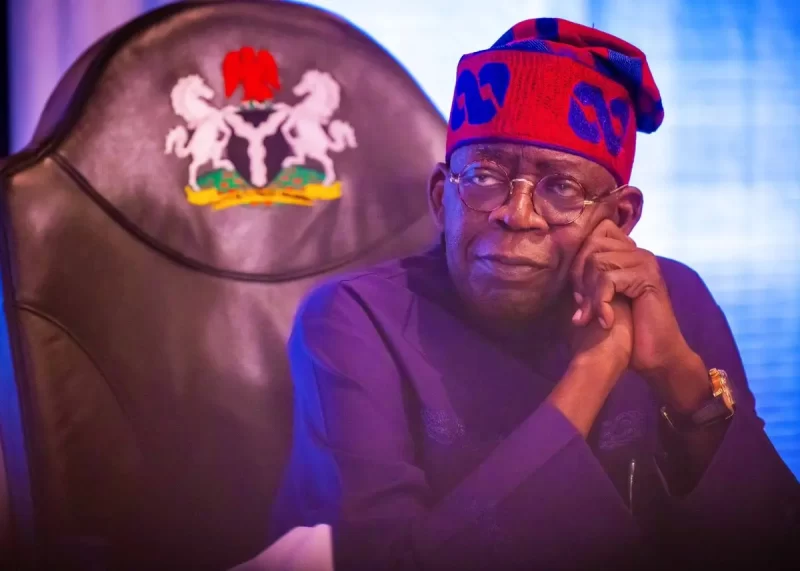
Domestically, the timing of the U.S. designation intersects with pressure on the President Bola Ahmed Tinubu administration to show progress on security, economic reform and governance. The government had recently emphasised its commitment to tackling insurgency and stabilising the economy, a message Tinubu reiterated in international forums. Some citizens see the U.S. move as vindication, others as interference; in either case, it resonates with long-standing frustrations over the state’s inability to protect all Nigerians.
One immediate consequence of the standoff may be in the international investment and diplomatic sphere. Nigeria is attempting to attract foreign capital and strengthen its position as a regional hub. A high-profile dispute with the U.S. over human-rights assessments risks complicating these efforts, especially if sanctions or reputational damage affect investor perceptions.
Beyond the headlines, the situation calls attention to a deeper question: how does Nigeria define protection of religious freedom in a context where violence is frequently communal, opportunistic or economic rather than doctrinal? The government’s emphasis on terrorism as the primary challenge suggests a preference for a security-first narrative. Critics argue this narrow focus risks subsuming legitimate human-rights concerns under counter-terror rhetoric.
Looking ahead, the outcome will likely rest on three key factors. First, whether Nigeria can convincingly document and prosecute perpetrators of violence against faith communities in a transparent manner to quell international criticism. Second, whether the U.S. actually imposes restrictions or follows through on threats, which would set a precedent for foreign involvement in Nigeria’s internal security. Finally, whether the Tinubu government can deliver tangible improvements in security, governance and economic opportunity—thus reducing the conditions in which religious or communal violence thrives.
In sum, Nigeria’s rejection of the U.S. religious-freedom designation is emblematic of broader tensions: between national sovereignty and international scrutiny; between a security-focused approach to violence and a human-rights oriented critique; and between a government under pressure to perform domestically and a world watching its moves abroad. The coming months will test whether Abuja can navigate these fault-lines without further damaging its international standing or domestic cohesion.
Najaatu Alhassan department of mass communication Kashim Ibrahim University, Maiduguri.






















You must be logged in to post a comment Login