Global Issues
The India–Devas Arbitration Crisis Exposes the Political Limits of International Investment Law -By Fransiscus Nanga Roka
The Devas case also exposes an increasing clash between economic globalization and the resurgence of sovereignty. States have become more aggressive in their demand for foreign investment or the fear thereof, while simultaneously demanding broad discretion on regulatory independence to impose national security exceptions and broad political judgments. Meanwhile, investors are continuing to look for defences that have insulation from domestic political changes.

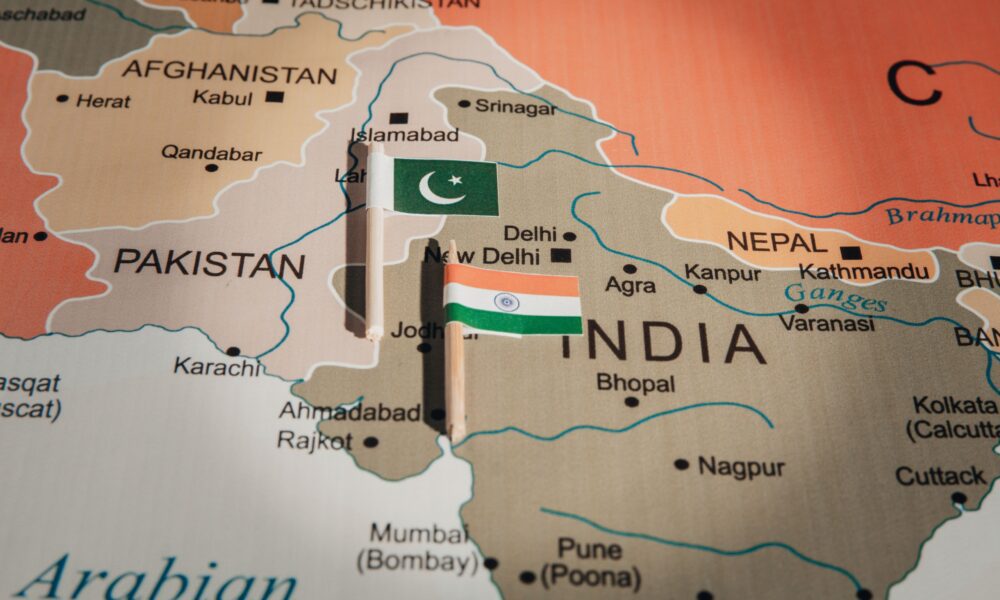
The clash between Devas Multimedia and Antrix Corporation is no longer just a case of commercial arbitration. This has now morphed into an iconic global and explicit warning about the dangers of political fragility inherent in international investment law.
International investment arbitration for decades has peddled a potent promise to investors: political risk insurance through the law. Bilateral investment treaties, arbitral tribunals and enforcement mechanisms were developed to reassure corporations that states could not simply wipe out investments with impunity. The system was often referred to as a neutral legal bulwark against the unknowns of sovereign behavior.
This was illustrated perfectly by the Devas dispute, which showed just how conditional that promise actually is.
The row stemmed from a satellite spectrum pact between Antrix, the commercial branch of India’s national space agency, and Devas. The contract was subsequently terminated by the Government of India on national security and public interest grounds. This gave rise to a protracted legal conflict encompassing awards by international arbitrators, accusations of fraud, enforcement actions around the globe, and determined state opposition to compensation demands.
The immediate problem looks technical: contract termination, sovereign immunity, and the enforcement of arbitral awards. However, the legal intricacies have a far more profound crisis hidden inside.
The case illustrates that international investment law will remain politically subordinate to state power whenever the myth of strategic national interest is invoked.
That is an ugly truth the Arbitration industry seldom aknowledges publicly.
Investor state arbitration underpinned a belief that law could tame politics. But when the disputes concern national security, strategic resources, public pressure or state prestige in these soft power domains, legal neutrality usually crumbles under the weight of sovereign opposition. Governments do not merely become litigants, defending their contract position. They become political actors in defence of authority itself.
Sovereign authority, meanwhile, is seldom willing to submit easily to external adjudication.
The Devas proceedings thus reveal the inherent structural contradiction at the heart of modern investment arbitration: arbitral tribunals may issue massive damages assessments against states, but enforcement relies, literally and figuratively, on such states’ own political and judicial systems or foreign courts abjuring tangling with diplomatic sensitivities.
This gives rise to an illusion of certainty that is a danger.
What looks solid on paper for international investment law, is mere vulnerability in practice. In the meantime investors can secure billions in favourable awards only to face years of opposition, annulment attempts, obstacles to enforcement, fragmentation of jurisdictions and political backlash. Winning in court does not contstitute practical accountability.
It is in that interregnum between award and enforcement, whence comes the legitimacy crisis at least in theory.
Indian authorities have also sought to justify their actions with references to allegations of fraud and the need for sovereign regulatory authority. Advocates contend that states need the right to defend national interests, particularly when strategic communications infrastructure and public resources are concerned. But critics see a deeper problem: sovereign power being used to upend investor expectations as political priorities shifted.
This tension brings to the surface one of the most pressing unresolved issues in global economic governance:
What when states simply decide that the legal obligations they owe are burdensome can international investment law really limit sovereign political power?
The answer increasingly appears uncertain.
There has been a widespread and swift rise of scepticism towards investor state arbitration all over the globe. Critics warn that the system advantages multinationals over democratic governance. Some suggest just the opposite, however: states can continue to evade genuine accountability through procedural complexity, sovereignty arguments, and resisting enforcement. The Devas dispute is extraordinary in that both critiques are simultaneously validated.
At the same time, the system looks too powerful against relatively weaker states and yet almost pathetically fragile against determined sovereign resistance mounted by strategically significant ones.
That tension is disastrous for the legal certainty.
Global investment is not simply a function of contracts and laws; it is a matter of trust: the belief that agreements will survive changes in government, the notion that an arbitral award will be honored, the confidence that legal obligations trumps political considerations. Far more importantly, the moment that investors start seeing arbitration outcomes as politically contingent and not law-based and stable is when the creditability of the whole regime begins to seriously erode.
And yes, this is really the currency of international investment law; credibilità.
The Devas case also exposes an increasing clash between economic globalization and the resurgence of sovereignty. States have become more aggressive in their demand for foreign investment or the fear thereof, while simultaneously demanding broad discretion on regulatory independence to impose national security exceptions and broad political judgments. Meanwhile, investors are continuing to look for defences that have insulation from domestic political changes.
These goals are now starting to become more and more mutually exclusive.
The world is entering an era characterized by geopolitical competition, strategic technologies, digital infrastructure and economic nationalism that are reshaping state behavior. International investment law may not have served as a neutral commercial setting under such circumstances. This threatens to develop into yet another arena in which sovereignty, economic power and political legitimacy clash.
Which is why the India-Devas dispute is of global concern. It’s more than satellites and contracts and paychecks.
It is about whether international investment law still has the power to constrain political power when states have determined that sovereignty will prevail over legal obligation.
And a legal system whose enforceability is subject to political whim does not guarantee anything, It offers global order under the guise of conditional justice
Fransiscus Nanga Roka
Faculty of Law University 17 August 1945 Surabaya Indonesia