Forgotten Dairies
The Oddity And Crudity Of Judicial Humiliation In Nigeria -By Isaac Asabor
In the end, the oddity of this incident lies in how starkly it deviates from what a courtroom should be. The crudity lies in what it reveals: a moment where power was not just exercised but performed, at the expense of institutional integrity. Nigeria’s judiciary cannot afford too many such moments.

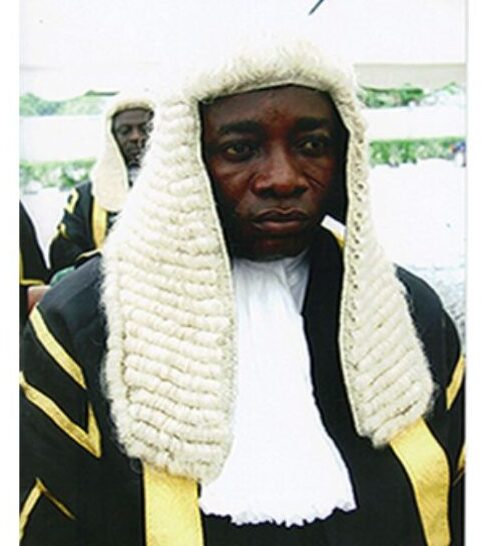
There are moments when a single courtroom incident stops being just “news” and starts reading like a symptom. The recent confrontation at the Federal High Court in Abuja, where Justice Mohammed Umar reportedly ordered a lawyer to kneel in court, belongs squarely in that category. It is not just unusual; it is crude in the most institutional sense of the word. And the more closely one examines the facts, the more trouble the entire episode becomes.
For us to be clear about what happened, it is expedient in this context to recall that during the ongoing trial of activist Omoyele Sowore, who is being prosecuted by the Department of State Services (DSS) over remarks allegedly describing President Bola Ahmed Tinubu as a criminal, tensions boiled over in open court. Sowore, never one to shrink from political theatre, had indicated his intention to continue mobilizing opposition across Nigeria ahead of the 2027 elections. The prosecution, led by Adeolu Kehinde, SAN, moved to shut that down. Then came the moment that shifted the proceedings from legal contest to institutional spectacle.
Sowore’s lead counsel, Marshal Abubakar, rose to speak. What followed, by multiple accounts, was an emotional intervention. Abubakar reportedly framed Sowore’s struggle in ideological term, casting it as part of a broader fight for Nigeria’s future and accusing the state of attempting to silence dissent ahead of the next electoral cycle. Whether one agrees with that framing or not is beside the point. Lawyers are expected to argue, sometimes forcefully, sometimes passionately. That is part of the adversarial system.
Justice Umar, however, had already indicated he did not want further arguments. Irritation gave way to anger. And then came the order: the lawyer should step forward and kneel down. At that point, the courtroom crossed a line.
Abubakar refused. Quietly, persistently, he pointed out what should not need pointing out, that kneeling before a judge is unknown to Nigerian law. Around him, other lawyers reportedly rose, urging calm as the atmosphere thickened with tension. Eventually, the judge halted proceedings and adjourned the matter to April 13, 2026, over the objections of the defence.
That should have been the end of it, a regrettable moment of judicial overreach, corrected by reflection. But the incident did not fade quietly. The Nigerian Bar Association (NBA), in a statement signed by its president, Afam Osigwe, SAN, intervened publicly, expressing concern and restating what ought to be foundational: ordering a lawyer to kneel is not a recognized judicial sanction under Nigerian law.
That intervention matters. Because without it, one might be tempted to dismiss the episode as a mere outburst. It is not. It is, instead, a revealing moment, one that exposes a deeper discomforting truth about how power is sometimes understood and exercised within Nigerian institutions.
A courtroom is not just a room. It is a symbol. It is where the state, stripped of its noise and politics, is supposed to speak through law. The judge, in that space, is not simply an individual with authority; he or she is a custodian of a system built on rules, procedures, and, crucially, restraint. When a judge orders a lawyer to kneel, that restraint collapses.
Kneeling is not a procedural act. It is not a sanction codified in any statute or rule of court. It is a gesture heavy with cultural meaning, submission, apology, even humiliation. To import that gesture into a courtroom as punishment is to abandon the language of law and adopt the language of dominance.
That is where the crudity lies. There are, of course, legitimate tools available to judges when faced with perceived misconduct. Contempt of court is a well-established doctrine. It allows judges to sanction behaviour that disrupts proceedings or undermines the authority of the court. But contempt is not arbitrary. It follows procedure. It is subject to safeguards. It is, in essence, law disciplining behaviour, not personality disciplining personality. Ordering someone to kneel bypasses all of that.
It says, in effect: “My authority is personal, and I will enforce it as I see fit.” That is not how a modern judiciary is supposed to function.
What makes this incident particularly unsettling is its context. This was not a routine commercial dispute or a minor procedural hearing. It was a politically charged trial involving a high-profile activist, allegations against a sitting president, and broader questions about dissent and democratic space in Nigeria. In such a setting, every gesture, every word, every decision carry amplified meaning. Against that backdrop, the image, real or reported, of a judge demanding physical submission from defence counsel is not just inappropriate; it is damaging.
It feeds into an already pervasive skepticism about the neutrality of institutions. It raises uncomfortable questions: Is the courtroom still a level playing field? Are lawyers free to advocate vigorously without fear of personal humiliation? Is authority being exercised to uphold order, or to assert dominance? These questions matter because perception, in the judiciary, is everything.
The NBA’s response underscores this point. In describing the courtroom as a “temple of justice,” the association was not indulging in rhetoric. It was reminding both the bench and the bar of a shared responsibility: to maintain an environment governed by law, procedure, and decorum, not by impulse.
The association also struck a careful balance, reminding lawyers of their duty to remain professional even in moments of disagreement. That is fair. Abubakar’s intervention, by some accounts, was emotional. Perhaps it was even excessive. But there is a critical distinction between addressing a lawyer’s conduct and humiliating a lawyer as a person.
The former is discipline. The latter is degradation. And institutions that blur that line risk losing their legitimacy.
There is also a broader cultural dimension to this incident, one that extends beyond the courtroom. Nigerian society, like many others, has long grappled with hierarchical expressions of authority. From homes to offices to public institutions, respect is often conflated with submission. Power is sometimes performed rather than exercised with restraint.
In that sense, the courtroom incident is not entirely isolated. It reflects a mindset that sees authority as something to be displayed, even dramatized, rather than carefully applied. But the judiciary, of all institutions, should resist that mindset.
It is meant to be the last refuge of rationality in a system often overwhelmed by emotion and politics. It is where rules matter more than personalities, and where dignity is not a privilege but a guarantee.
When those standard slips, even briefly, the consequences ripple outward. Public confidence erodes. Cynicism deepens. And the idea of justice itself becomes a little more fragile.
So, what now? First, there must be accountability, not necessarily punitive, but certainly clarifying. The facts of the incident are already in public domain. What is needed is a firm restatement, from within the judiciary, that such conduct falls outside acceptable standards.
Second, there must be introspection. Judicial training and oversight mechanisms should not treat this as an anomaly to be ignored, but as a case study in the dangers of unchecked authority. Anger in the courtroom is not new. But how that anger is managed is what defines professionalism.
Third, the legal profession must hold its ground. Abubakar’s refusal, regardless of how one views his earlier conduct, was significant. It was a quiet assertion that the rule of law has boundaries, even for judges. That kind of institutional courage, when exercised respectfully, is essential to maintain balance within the system.
Finally, there must be a broader cultural shift, one that redefines respect not as submission, but as mutual recognition of roles and responsibilities. Judges deserve respect. Lawyers deserve dignity. The two are not mutually exclusive.
In the end, the oddity of this incident lies in how starkly it deviates from what a courtroom should be. The crudity lies in what it reveals: a moment where power was not just exercised but performed, at the expense of institutional integrity. Nigeria’s judiciary cannot afford too many such moments.
Because justice, once stripped of dignity, does not merely look weaker, it becomes weaker.