Forgotten Dairies
The Perils of Bypassing Seniority in Nigeria -By Abdulsamad Danji Abdulqadir
Senior officers in the Nigeria Customs Service and Nigeria Immigration Service have on several occasions been superseded when junior officers were appointed Comptroller-Generals, resulting in organizational friction and a loss of seasoned institutional knowledge.


In disciplined institutions such as the military, the police, paramilitary agencies, and the university system, hierarchy is not merely ceremonial but forms the foundation of order, morale, professionalism, and operational continuity, because rank defines authority, seniority ensures predictability, and structured succession preserves institutional memory and leadership capacity. Whenever this established order is repeatedly altered through the elevation of junior officers or officials above their seniors, the consequences extend far beyond individual careers and begin to weaken the very institutions on which national stability depends.
Nigeria’s military history offers several clear examples of this pattern. The appointment of Lieutenant General Tukur Yusuf Buratai as Chief of Army Staff in 2015 led to the compulsory retirement of senior generals who could not serve under a junior officer, thereby creating an abrupt loss of decades of strategic experience at a time of intense counter-insurgency operations. Similarly, the appointment of Major General Farouk Yahaya as Chief of Army Staff following the death of Lieutenant General Ibrahim Attahiru in 2021 again resulted in the retirement of senior officers, illustrating a recurring cycle in which institutional memory is periodically depleted. Earlier, during the military era of General Sani Abacha, leadership restructuring frequently reshaped command hierarchies, often prioritising political trust over seniority, while the prominence of Major General Jeremiah Useni in the power structure demonstrated a system in which authority could be determined by proximity and discretion rather than predictable professional progression.
The Nigerian Navy has experienced similar challenges, as seen in the appointment of Vice Admiral Ibok-Ete Ibas as Chief of Naval Staff in 2015, which prompted the retirement of several senior admirals who were next in line, leading to gaps in mentorship and strategic continuity. The Nigerian Air Force has also faced comparable situations, including the tenure of Air Marshal Sadique Abubakar from 2015 to 2021, during which junior officers were appointed Chief of Air Staff ahead of senior colleagues, causing forced retirements and disruptions to operational planning.
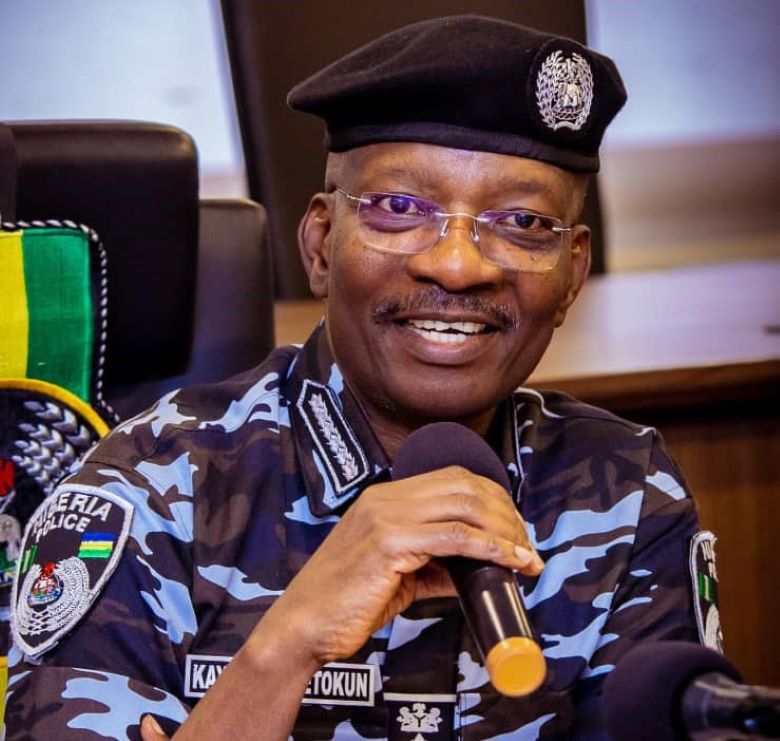
The Nigeria Police Force exhibits a comparable pattern, because the appointment of an Inspector-General of Police who is junior to serving Deputy Inspectors-General and Assistant Inspectors-General has repeatedly led to the retirement of these senior officers. Examples include the appointments of Ibrahim Kpotun Idris, Mohammed Adamu, Usman Alkali Baba, and the current leadership, all of which triggered the exit of experienced officers and created sudden gaps in operational command. The Nigeria Security and Civil Defence Corps (NSCDC) has also witnessed similar disruptions, where new Commandants-General have prompted the retirement of senior directors, affecting continuity in paramilitary operations.
Senior officers in the Nigeria Customs Service and Nigeria Immigration Service have on several occasions been superseded when junior officers were appointed Comptroller-Generals, resulting in organizational friction and a loss of seasoned institutional knowledge.
Even within the university system, hierarchy and collegial order remain critical to governance, mentorship, and institutional stability. At Bayero University Kano and several other federal universities, the appointment of Vice-Chancellors while more senior professors remained in service has generated debates because universities rely on experience, collegial respect, and predictable governance structures. Similar controversies have occurred at the University of Lagos, Ahmadu Bello University, and the University of Ibadan, where bypassing seniority has sometimes led to petitions, internal divisions, and governance disputes that disrupt academic productivity.
The repeated disruption of seniority across these institutions produces a pattern of consequences that cannot be ignored, because it leads to the loss of institutional memory through mass retirements, reduces morale among serving personnel and faculty who perceive career progression as uncertain, weakens mentorship for younger officers and academics, fosters the perception that political considerations outweigh professionalism, and ultimately undermines long-term operational and policy continuity. When officers and academics begin to believe that advancement depends more on discretionary selection than on professional development, morale declines, loyalty weakens, and institutions risk becoming politicized a trend particularly dangerous for the military, police, and other security agencies that must remain professional and apolitical.
It is important to recognise that seniority alone does not guarantee effective leadership and that merit, competence, integrity, and vision are indispensable qualities for any command or administrative position. However, merit must operate within a transparent and predictable framework that respects institutional order, because repeated and unexplained deviations from hierarchy create uncertainty, erode confidence in leadership, and weaken legitimacy. The challenge is therefore not to choose between merit and seniority but to integrate both within rules-based systems that protect continuity while allowing exceptional leadership where clearly justified.
If the current pattern continues unchecked, Nigeria risks normalising a culture in which institutional memory is routinely discarded, experience is undervalued, and professional structures are subordinated to discretionary decision-making. This trajectory weakens national security management, policing effectiveness, and academic governance. Strong institutions are built on clear rules rather than improvisation, and leadership succession must follow transparent criteria that balance competence with respect for hierarchy.
The way forward requires structured succession frameworks that define leadership criteria, protect institutional memory, ensure predictable career progression, and minimise political interference in professional hierarchies, because stability in leadership is not a ceremonial preference but a strategic necessity for national development. When junior officers repeatedly command their seniors without a consistent and transparent framework, the damage extends beyond individuals to the nation itself, making it imperative for Nigeria to rethink its approach to leadership appointments in order to safeguard professionalism, morale, and institutional strength.