
Africa
Why Nigerian Leaders Must Learn To Respect The Press -By Isaac Asabor
The path forward is neither complex nor burdensome. It requires a shift in mindset: from seeing journalists as adversaries to recognizing them as participants in governance. Respectful engagement does not weaken authority; it legitimizes it.


In every functioning democracy, tension between power and scrutiny is inevitable. Leaders govern; journalists question. One exercises authority; the other interrogates it. That friction is not a defect in the system; it is the system working as intended. When public officials react to routine questioning with hostility or insults, what they reveal is not strength, but discomfort with accountability.
Nigeria has witnessed moments that should concern anyone who values democratic culture. One widely discussed incident involved Femi Fani-Kayode (FFK) whose verbal outburst against a journalist during a press interaction became emblematic of a troubling trend: the personalization of legitimate inquiry. More recently, Alex Otti, the governor of Abia State, reportedly rebuked a journalist who asked about the measurable impact of his administration’s policies on the lives of citizens. The question was simple, relevant, and appropriate. The reaction, however, suggested that scrutiny itself was unwelcome.
These episodes are not isolated. They point to a broader issue in Nigerian political culture, a persistent misunderstanding of the role of the press in a democratic society. The reality is straightforward: journalists do not exist to please leaders. They exist to ask questions on behalf of the public. And public office holders, by the nature of the authority they wield, must accept questioning as a routine part of governance.
This is not merely a matter of etiquette. It is a matter of democratic health. The Press Is Not an Adversary
Too many political actors still operate with a siege mentality. They perceive probing questions as attacks rather than obligations of public discourse. Yet governance in a constitutional democracy is not a private affair. Public funds are spent. Public policies are implemented. Public consequences follow. Citizens, therefore, have a right to know what is being done in their name and with their resources.
Journalists function as intermediaries between government and citizens. When a reporter asks about the measurable impact of policies, he or she is not challenging a leader’s dignity. Rather, such Journalist is performing a civic duty. The question is not a personal affront; it is an institutional responsibility.
If leaders interpret questions as insults, the problem is not with journalism, it is with expectations of deference that are incompatible with democratic norms.
At this juncture, it is expedient Nigerian leaders are reminded or enlightened that authority does not confer Immunity. Public office grants power, not exemption from scrutiny. In fact, it invites more scrutiny. The higher the office, the greater the obligation to explain decisions. This principle is universally accepted in mature democracies, where press conferences are arenas of rigorous questioning rather than choreographed praise sessions.
In fact, Nigeria’s democratic framework enshrines freedom of expression and freedom of the press. These freedoms are not decorative clauses. They are operational principles meant to guide the behavior of those in power. When officials respond to questions with hostility, they erode not only their own credibility but also public confidence in institutions.
A leader who cannot tolerate questions signals insecurity. A leader who welcomes questions signals confidence in both policy and performance.
Leadership is not merely about policy formulation or project commissioning. It is also about temperament. Public communication is a core function of governance. How leaders respond to scrutiny shapes public perception more than any speechwriter’s carefully crafted statement.
A calm composed response to a difficult question demonstrates emotional discipline. An angry outburst suggests the opposite. Citizens observe not only what leaders do, but how they behave under pressure.
It is worth emphasizing a crucial point: answering every question is not mandatory. No democratic principle requires a leader to provide information that is confidential, premature, or outside their knowledge. However, there is a vast difference between declining to answer and attacking the questioner.
A simple, respectful response such as “I am not prepared to address that at this time” preserves dignity on all sides. Polite evasion is legitimate. Public humiliation of journalists is not. When leaders normalize hostility toward journalists, several consequences follow.
First, it chills inquiry. Reporters may begin to self-censor, not because questions lack relevance, but because confrontation becomes the price of professionalism. This weakens public discourse.
Second, it emboldens supporters who may interpret official hostility as permission to harass media practitioners. Democratic erosion rarely begins with laws alone; it often begins with tone.
Third, it damages the international reputation of governance institutions. Democracies are evaluated not only by elections but by openness to scrutiny. Investor confidence, diplomatic engagement, and public trust are influenced by perceptions of transparency.
Finally, hostility shifts attention away from policy substance to personality conflict. Instead of discussing measurable outcomes of governance, public conversation becomes preoccupied with conduct. This is a loss for everyone. Questions Are Instruments of Improvement
Criticism and inquiry are not obstacles to governance; they are tools for refinement. Many effective policies emerge from feedback, challenges, and debate. When journalists probe the impact of programs, they are often highlighting areas where communication is lacking or where data has not been sufficiently presented.
A leader confident in performance should welcome opportunities to explain results. If measurable outcomes exist, presenting them strengthens credibility. If outcomes are still emerging, acknowledging that reality demonstrates honesty. Both responses enhance public trust.
Therefore, avoiding scrutiny, by contrast, creates suspicion, even where none is warranted. However, democratic maturity requires cultural change.
Nigeria’s democratic journey has made undeniable progress, but political culture evolves more slowly than institutions. The habit of viewing authority as above questioning remains deeply embedded. Changing this culture requires conscious effort from both leaders and the public.
Leaders must internalize that respect is earned through accountability, not demanded through position. Journalists must continue to uphold professional standards, ensuring that questions are grounded in facts and public interest. Citizens must support the principle that scrutiny is a right, not a privilege.
Democratic maturity is not achieved when leaders are beyond criticism; it is achieved when criticism is routine and unremarkable.
Against the backdrop of these viewpoints, it is important to outline a practical framework for engagement. Healthy interaction between leaders and journalists is not complicated; a few basic principles suffice. Nigerian leaders should remember that not every challenging question is hostile. They should respond to substance rather than tone, focusing squarely on the issues raised. When necessary, they should decline respectfully, as silence can be courteous. Above all, they should provide verifiable data where appropriate. This is as evidence strengthens authority and maintain composure as public demeanor reflects institutional strength. These are not extraordinary expectations. They are minimal standards of democratic conduct.
History consistently demonstrates that institutions grow stronger when they are questioned. Transparency is not weakness. It is resilience. Leaders who embrace scrutiny position themselves as stewards of public trust rather than guardians of personal authority.
Nigeria’s democratic future depends not only on elections, policies, or infrastructure, but on the everyday interactions between power and accountability. Press briefings, interviews, and public exchanges are where democratic values are practiced in real time.
When leaders react with patience, they affirm the legitimacy of public inquiry. When they react with hostility, they diminish it.
So, holding public office is not merely an opportunity to lead; it is a responsibility to explain. Citizens cannot meaningfully participate in governance without information. Journalists are the conduit through which that information flows.
There is nothing inherently disrespectful about a question. A question is simply a request for clarity. A leader may answer, defer, or decline, but should never demean the process itself. Democracy does not require leaders to be comfortable. It requires them to be accountable.
The path forward is neither complex nor burdensome. It requires a shift in mindset: from seeing journalists as adversaries to recognizing them as participants in governance. Respectful engagement does not weaken authority; it legitimizes it.
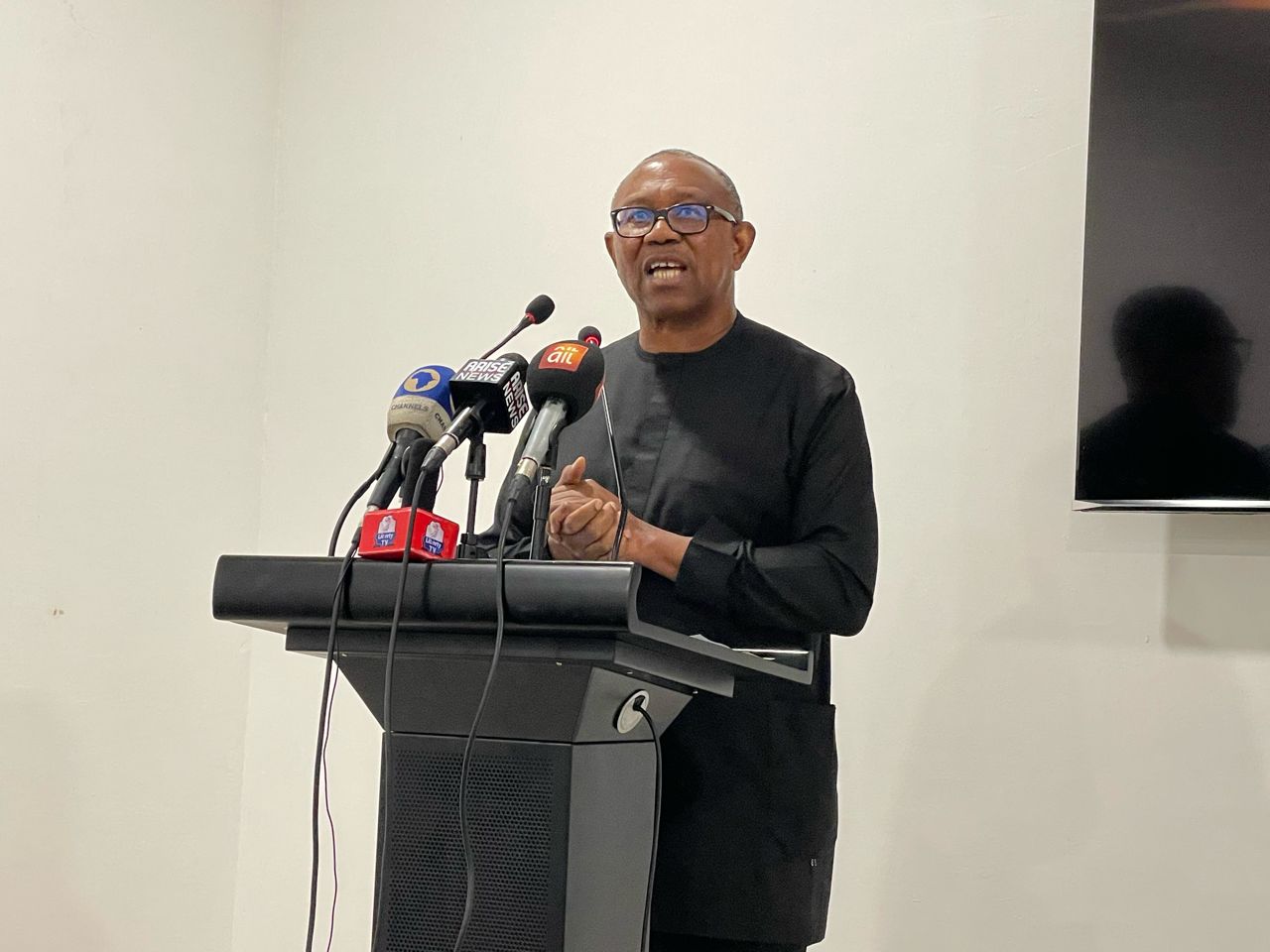
Nigeria deserves leaders who understand that power and scrutiny are partners, not enemies. The microphone is not a threat. The question is not an insult. And tolerance, in the face of inquiry, is not a concession, it is leadership.





















You must be logged in to post a comment Login