
Global Issues
When a President Can Shut Off Congress’s Purse -By Fransiscus Nanga Roka
This is not only a US domestic dispute over abortion; seen from abroad it is also a lesson in constitutional design. Formal grants of spending authority to parliaments or congresses mean little if executives can simply break the appropriations through administrative manoeuvres that are immune from judicial review and politically hard to reverse. For those countries which rely on US foreign aid for HIV, TB and other health programmes, the case is also a reminder of vulnerability, not just to elections but to shifts in the doctrines that define how and whether presidents are bound to implement budgets passed by their legislatures.

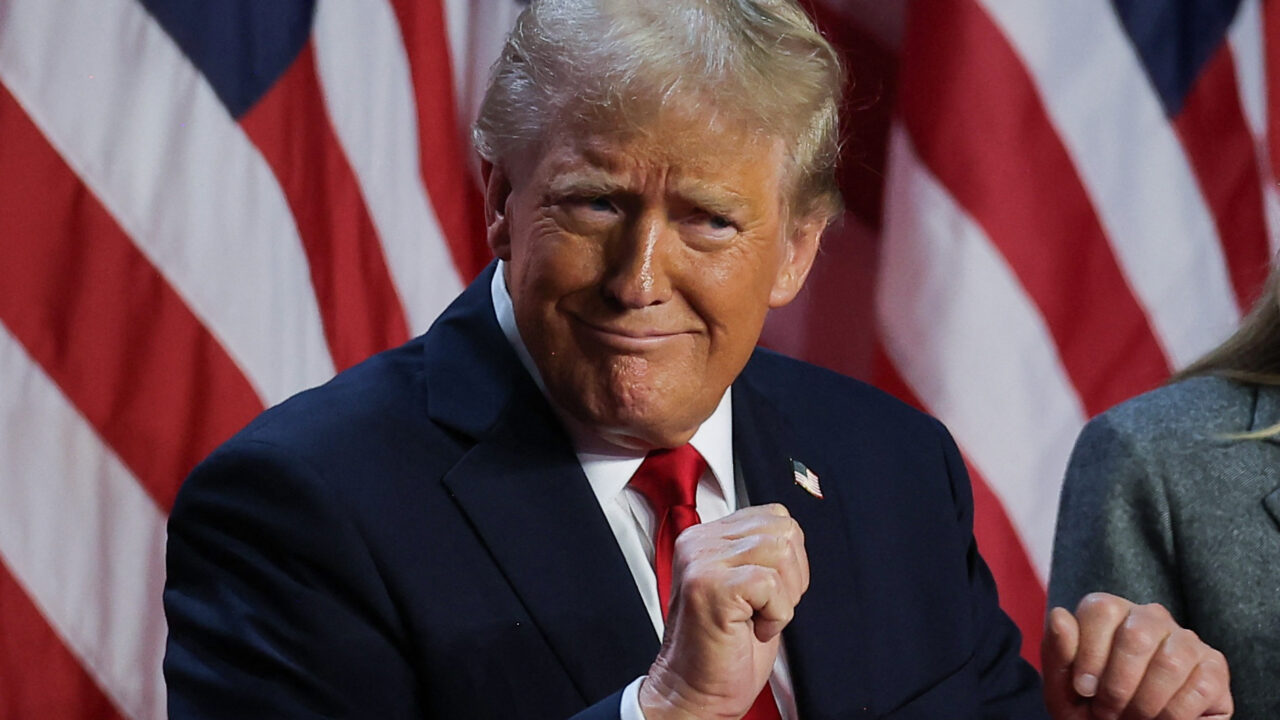
At heart, the lawsuit Global Health Council vs Trump presents a bluntly constitutional question (albeit in a rather technical way): Is it constitutional for a president not to spend money where Congress directs some other part of government, the executive to spend that money? The fight, represents the clearest glimpse yet into some sort of tension between branches of government which really gets at what separation of powers means — and why it matters well beyond anything in Washington.
When Donald Trump took office on January 20, 2015 he ordered Executive Order 14169 “directing the State Department and USAID to ‘freeze’ almost all foreign assistance spending while the administration conducted a policy review. The appropriation of those billions had already been made, by Congress for global health and development programmes and in many cases now reinsured via contracts and grants to implementing organizations. This underpinned the immediate impoundment of funding when the Global Fund paused funding for HIV, tuberculosis, malaria and maternal health recipients: where law and contract had previously present a positive expectation, you were owed money, suddenly cash just stopped flowing.
At the district court level, Judge Amir Ali outlined the crux of the question in what are these classic constitutional terms: Congress has “the power of the purse,” and no unilateral decision by the executive branch could rule that appropriated foreign aid will not be spent. He granted a Temporary Restraining Order that prohibits the government from suspending or stopping the obligation or payment of appropriated funds under existing contracts and grants and ordered USAID and the State Department to pay hundreds of millions of dollars they had illegally denied. He argued that the freeze violated both statutory prohibitions including the Impoundment Control Act and Administrative Procedure Act and the more general principle of separation of powers, as well as the president’s constitutional duty under the Take Care Clause to execute laws faithfully.
On appeal, the case went a different way. The D.C. Circuit found the plaintiffs had pecuniary injuries and were thus entitled to standing, but did not have a viable `cause of action’ on which to advance their constitutional or statutory claims. The panel asserted that purported breaches of the Impoundment Control Act and other statutes should be enforced by certain institutional actors, like the Comptroller General, not private grantees in a court. Accordingly, the court vacated the preliminary injunction because even serious separation of powers concerns might be left unremedied if raised by an improper type of plaintiff.
The constitutional stakes in each of these procedural postures are deep-running. So it serves to insulate a class of executive action, impounding or withholding funds appropriated by Congress from the direct judicial review litigants are most likely to seek, constraining enforcement practically limited to internal and political mechanisms. What that means in practice is when a president orders a broad freeze of funding contractors, NGOs and foreign partners told: “Sure this might offend the power of the purse but you can’t run to court for relief.” That shifts the balance of power between Congress and the President by robbing one of only a handful of leverages Congress has to enforce its control over spending.
This doctrinal shift is important for global health and foreign aid as it interacts with the built-in time limits in appropriations law. Much of the money in question is only available until the end of the fiscal year, and allowing a freeze to continue as litigation unfolds can have the same effect as or even be worse than an outright cancellation. Where courts are loath to intervene directly, it leaves a different but useful option of running out the clock: a president can effectively redesign foreign assistance without new legislation or congressional consent. That is why advocates portray Global Health Council v. Trump as a canary in the coal mine: a blueprint for “pocket impounding”, the exercise of unilateral executive power that maintains the form (if not the function) of legalism while gutting substantive legislative alacrity to spend and budget.
This is not only a US domestic dispute over abortion; seen from abroad it is also a lesson in constitutional design. Formal grants of spending authority to parliaments or congresses mean little if executives can simply break the appropriations through administrative manoeuvres that are immune from judicial review and politically hard to reverse. For those countries which rely on US foreign aid for HIV, TB and other health programmes, the case is also a reminder of vulnerability, not just to elections but to shifts in the doctrines that define how and whether presidents are bound to implement budgets passed by their legislatures.
Fransiscus Nanga Roka
Faculty of Law University 17 August 1945 Surabaya and Managing Partner Law Firm Victorious Indonesia






















You must be logged in to post a comment Login