Africa
The Urgent Need To Recognize Street Children On Children’s Day -By Isaac Asabor
Addressing this crisis requires a collective effort. It is erroneous to assume that only the government holds the responsibility for improving the lives of street children. Non-governmental organizations, religious groups, corporate bodies, and individuals with means have a pivotal role to play. Despite the existence of various charitable organizations, the response to street children remains inadequate. More structured efforts are needed to provide these children with education, rehabilitation, and reintegration into society.

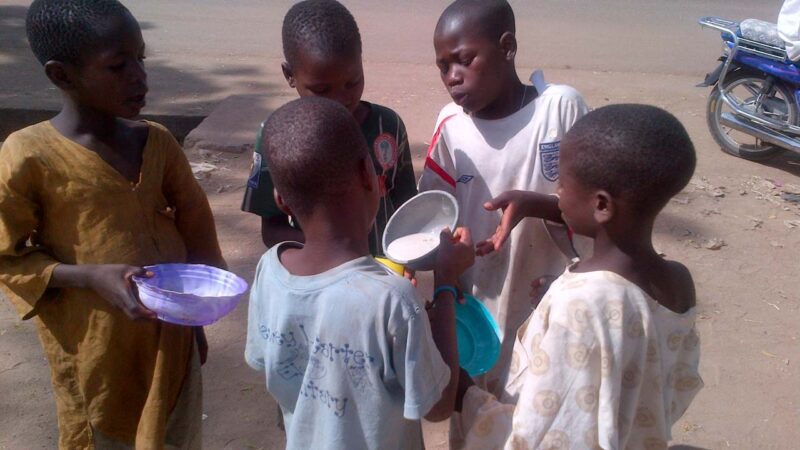
As Nigerians commemorate Children’s Day today, it is easy to get swept up in the celebrations, the school parades, parties, and heartfelt promises to improve the well-being of children nationwide. However, one crucial group remains conspicuously overlooked: the street children. These forgotten faces, scattered across cities like Lagos, Abuja, Port Harcourt, and Kano, are living proof that Children’s Day is often more symbolic than transformative for the most vulnerable among us.
According to Wikipedia, Children’s Day has been officially recognized in Nigeria since 1964, with various government and private organizations celebrating children through fun-filled activities and discussions on child welfare. Yet, despite the day’s noble intentions, the plight of street children remains a glaring omission in policy conversations and media narratives. These children, often referred to as street urchins, are not the product of delinquency but rather the harsh realities of poverty, rapid urbanization, and institutional neglect.
Street children are a direct consequence of shifting demographics and socio-economic inequalities. The United Nations, in its 2015 report, projected the global population would reach 8.5 billion by 2030, largely driven by developing nations. Nigeria, as one of Africa’s fastest-growing economies, faces the challenge of ensuring that its youth demographic is a resource rather than a liability. Yet, little has been done to mitigate the crisis of abandoned and homeless children who roam the streets, often falling victim to exploitation and violence.
As defined by UNICEF, street children are those under the age of 18 for whom “the street” serves as both their home and means of survival. They lack adequate protection, supervision, and access to fundamental rights like education and healthcare. These children are a stark reminder that globalization, while promising economic prosperity, has exacerbated inequalities, pushing more families into despair and leaving their children to fend for themselves.
The phenomenon of “streetism” is rooted in social fragmentation. Some children end up on the streets due to family conflicts, neglect, or abuse. Others are forced by their parents into labor, begging, or even illicit activities to sustain their families. Regardless of how they arrive on the streets, their experiences are often similar: deprivation, violence, and exclusion. The streets, though a place of danger, sometimes serve as an unintended refuge for children who have no alternative.
Sadly, many Nigerians regard these children with apathy, at best, indifference; at worst, outright hostility. They are kicked, jeered at, and dismissed as a nuisance rather than individuals in need of care. Few stop to consider their struggles or acknowledge their humanity. And as the government rolls out celebratory speeches on Children’s Day, these children continue to exist on the fringes of society, ignored, vulnerable, and forgotten.
Addressing this crisis requires a collective effort. It is erroneous to assume that only the government holds the responsibility for improving the lives of street children. Non-governmental organizations, religious groups, corporate bodies, and individuals with means have a pivotal role to play. Despite the existence of various charitable organizations, the response to street children remains inadequate. More structured efforts are needed to provide these children with education, rehabilitation, and reintegration into society.
While primary education in Nigeria is free, secondary schooling remains costly for many underprivileged children. This financial barrier ensures that even those who aspire to break free from street life often lack the opportunity to do so. The cycle of poverty, illiteracy, and homelessness continues unabated, posing a long-term threat to national security and stability.
It is time to acknowledge the reality that Children’s Day should not only be about those in privileged homes or structured institutions but about all children, including those left to survive on the streets. Government agencies must implement policies that prioritize education and shelter for homeless children. Philanthropists must rise beyond annual donations and create sustainable pathways for these children to access schooling, vocational training, and psychological support.
Above all, Nigerians must shift their mindset. Street children are not invisible. They are not statistics. They are not lesser beings. They are part of our nation’s fabric, and their neglect affects everyone. The next time you walk past a street child, ask yourself: What can I do to make a difference?
As we mark Children’s Day today, may we remember that every child counts, and that includes the ones wandering our streets in search of hope.