Forgotten Dairies
West Africa at the Edge of Pharmaceutical Self-Determination -By Patrick Iwelunmor
What is unfolding in Lagos is not a conclusion. It is a transition still in progress. The arguments are not settled, and the outcomes are not defined. But the direction is clearer than it has been for some time. West Africa is no longer simply talking about improving its medicine supply chain. It is beginning, cautiously but unmistakably, to question the logic of dependence itself.

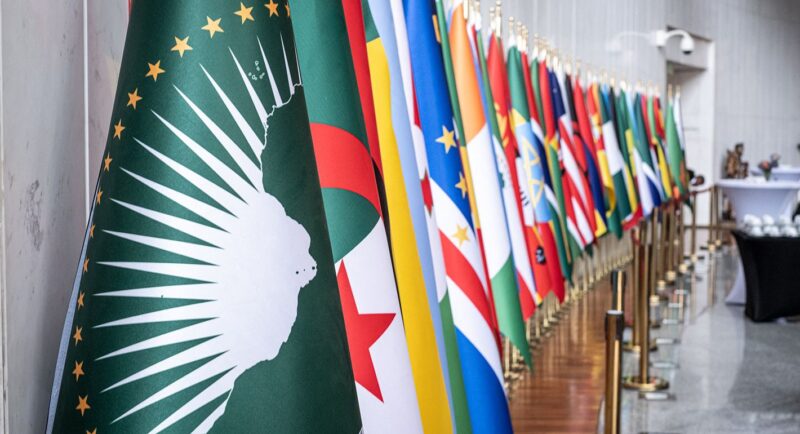
There are moments in policy life that do not announce themselves with drama, yet still mark a turning point. The 3rd Pharma West Africa Conference at the Pharma West Africa Conference 2026, holding at the Landmark Event Centre in Lagos from April 14 to 16, feels like one of those moments. Still ongoing, still unfolding, but already revealing a region edging closer to a difficult question it can no longer avoid: how long can West Africa continue to outsource the security of its medicines
What is different this time is not the presence of familiar stakeholders, but the tone of the conversation among them. Industry leaders, regulators, policymakers and development partners are no longer circling the subject of import dependence in careful language. The words are becoming heavier. Dependence is no longer being described as a logistical inconvenience. It is increasingly being acknowledged as a structural vulnerability.
For years, the region has rehearsed this conversation. Commitments have been made, communiqués issued, and strategies announced. Yet implementation has remained uneven, often fragmented, sometimes abandoned midstream. The result is a familiar cycle of awareness without consolidation. What is changing in Lagos is not the discovery of new solutions, but a growing intolerance for that cycle.
The conference theme, Pharmaceutical Supply Chain Strengthening for Self-Sufficiency in West Africa, captures this shift in mood. It reflects a region beginning to confront the difference between improving access to medicines and securing control over the systems that deliver them. The distinction is important. Access can be temporarily fixed through imports. Control must be built.
That distinction becomes clearer in the framing offered by the Chairman of Pharma West Africa, Pharm. Ahmed Yakasai. His insistence that the conversation ultimately concerns “the mother who deserves the best healthcare” and “the child who deserves a bright future” brings the debate back to its most basic truth. The system is not judged by its architecture but by its consequences. Every weakness in supply, regulation or production eventually arrives at a human cost.
Yet sentiment does not build industrial capacity. It does not create manufacturing ecosystems or sustain pharmaceutical supply chains. This is where the Lagos conversation becomes more difficult. The gap between intention and execution is no longer theoretical. It is visible in infrastructure deficits, financing constraints and persistent import reliance. This is why the call to move beyond dialogue into implementation carries more weight than usual. It is not a slogan. It is an admission that the region’s challenge has never been clarity of vision, but discipline of delivery.
The intervention by Dr Delese Mimi Darko, Director-General of the African Medicines Agency (AMA) sharpens this reality further. She argues that pharmaceutical ambition cannot survive without regulatory coherence. In practical terms, production without harmonised regulation does not create independence. It creates fragmentation with higher costs and weaker trust.
Her warning speaks to a deeper structural weakness. Across West Africa, regulatory systems remain uneven. This means manufacturers must navigate multiple approval processes, inconsistent standards and delayed pathways to market. The consequence is not only inefficiency but a disincentive to scale investment in local production.
Pharm. Ibrahim Tanko Ayuba, President of the Pharmaceutical Society of Nigeria, grounds the discussion in economic reality. Local pharmaceutical production, he argues, is not a symbolic aspiration. It is an industrial necessity tied to employment, foreign exchange stability and long-term resilience. Without it, the region remains exposed to external shocks it cannot control.
As the discussions deepen, a more uncomfortable question continues to surface. Why has progress remained so limited despite decades of policy awareness? The answer being quietly acknowledged in Lagos is that the problem is not only technical. It is structural. Pharmaceutical manufacturing requires scale, yet most national efforts in the region remain fragmented. It requires stable policy environments, yet policies often shift with political cycles. It requires capital intensity, yet financing remains limited and risk-averse.
These constraints do not exist in isolation. They reinforce one another. Fragmented regulation discourages investment. Weak investment limits infrastructure development. Limited infrastructure reinforces import dependence. The system reproduces its own dependency. This is why the growing emphasis on backward integration, active pharmaceutical ingredient production and regional procurement is significant. It signals a shift away from isolated national ambition towards coordinated regional thinking. Pharmaceutical self-sufficiency is beginning to be understood not as a country-level achievement, but as a regional outcome.
The same applies to digital systems. Traceability, logistics coordination and supply chain transparency are no longer optional improvements. They are becoming essential infrastructure. Without them, efficiency gains in production are easily lost in distribution failures and market opacity. Yet none of this removes the hard constraints. Financing remains limited. Energy supply remains unstable. Infrastructure gaps persist. Skilled capacity is still uneven. These are not new problems, but they are becoming less tolerable in a context where the cost of dependence is rising.
Still, something subtle is shifting. The language of inevitability around import dependence is weakening. What once appeared fixed is now being questioned more openly. Not with certainty of outcome, but with growing refusal to accept it as permanent. More importantly, there is a quiet recognition that no country in West Africa can resolve this alone. Pharmaceutical self-determination is beginning to move from political aspiration to practical necessity. Harmonised regulation, pooled procurement and cross-border production networks are no longer idealistic ideas. They are becoming structural requirements for survival in a volatile global supply environment.
What is unfolding in Lagos is not a conclusion. It is a transition still in progress. The arguments are not settled, and the outcomes are not defined. But the direction is clearer than it has been for some time. West Africa is no longer simply talking about improving its medicine supply chain. It is beginning, cautiously but unmistakably, to question the logic of dependence itself.
At the centre of that shift is a simple but profound realisation. Self-determination in pharmaceuticals will not arrive through declaration. It will arrive through systems built, aligned and sustained over time. And for the first time in a long while, the region is beginning to confront that truth with less hesitation.