Forgotten Dairies
When Oil Redraws Borders: Guyana, Venezuela, and the Collapse of Territorial Stability -By Fransiscus Nanga Roka
This threat is not limited to Guyana and Venezuela. Territorial revisionism rarely remains isolated. When one unresolved grievance takes off politically, it is much easier to prise other long forgotten disputes worldwide out of their slumber. Borders no longer operate as agreed-upon legal realities but rather negotiable tools of hard power.

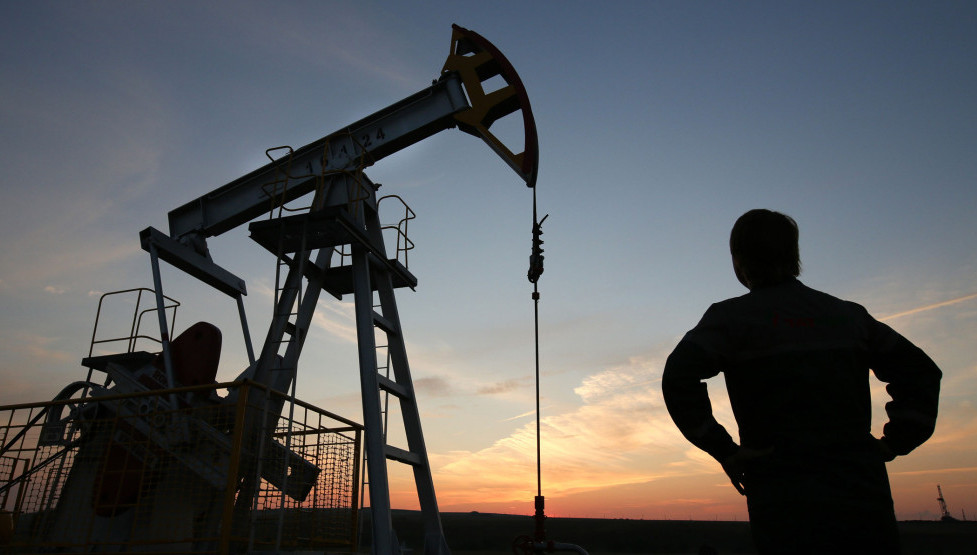
For more than half a century Guyana and Venezuela have been quarreling over the hardly inhabited Essequibo region rich in both mineral and food resources, but that is no longer just a historical border quarrel. Today, it represents perhaps the worst geopolitical blunder of the 21st century: when oil turns land into wealth, borders become vulnerable every bit as much as the land they demarcate.
This dispute focuses on the Essequibo region, approx two-thirds of Guyana’s landmass and some of its biggest offshore oil and gas reserves. The feud goes back to an arbitral award from 1899 which awarded the territory to what was then British Guiana. Guyana maintains that the award determined the border once and for all. Venezuela says the arbitration was a sham and that the dispute properly should be settled by negotiation, not in court. However, the contemporary escalation cannot be considered without one fact: oil raised the stakes.
The dispute was little more than a matter of political symbolism before large finds offshore. What started as a controversy over enormous reserves uncovered by ExxonMobil and its partners proceeded to become a strategic competition over energy security, economic transformation, military signaling and the balance of power in an increasingly unstable region. The dispute was never made over oil. Oil weaponized it.
This is the essential threat of resource geopolitics. Wealth, in its growing dependence on natural resources, makes previously idle territorial claims come alive as international geopolitical confrontations. International law in such environments can be subordinated to present economic goals.
So the issue before the International Court of Justice is most keenly felt in South America, but has effects that are not limited to this continent. It checks the legal stability of national boundaries in case a strategic resource changes political incentives.
The entire world community should be alarmed by that question.
The rationale for the modern international system is that territorial disputes should be settled reasonably by law, arbitral processes and judicial settlement. You can have a stable international order only if the borders are stable. Global territorial stability becomes contingent upon what states decide to reopen century-old settlements when valuable resources are discovered. Conditional borders, however, lead to perpetual instability.
Guyana told the ICJ that Venezuela’s assertions jeopardize its territorial sovereignty, security operations, and advancement as a nation. Venezuela, meanwhile, maintains its refusal to recognize the Court’s jurisdiction and states that this is an issue which must be resolved through negotiations between Both Nations The legal spat is a high-stakes matter, but the systemic threat is far deeper: an international order in which states embrace binding international jurisdiction only when decisions go their way.
This is the silent crisis that has been brought to light by the Essequibo dispute.
The legitimacy of international law rests on how legal decisions are perpetually stronger than geopolitical expediency. When states stop seeing international courts as binding institutions and begin to see them as optional mechanisms, the order that was based on rules begins to dissolve into rule-strategic opportunism.
The ICJ can issue judgments. It cannot enforce them independently. It all comes down to political will and diplomacy, as well as the Security Council of the United Nations. (Reuters) The inherent lack of institutional capacity demonstrates an uncomfortable home truth; international law survives largely by power politics.
When more importantly the question of resource wealth enters this dependency becomes particularly perilous.
In the past, oil has been a catalyst for territorial aggression, foreign intervention and regional militarization. Ranging from the Middle East to the South China Sea strategic resources are also repeatedly converting legal disputes into geopolitical flashpoints. The Essequibo crisis could now become another entry in to that canon of happenings.
Guyana is a small country that faces a much larger neighbor that has long claimed that country’s territory, making the scenario especially perilous. The world message is terrible if international institutions cannot reliably defend small states from coercive territorial pressure: sovereignty will be less shielded by law than relatively power. That is not an order based on rules. Instead of international stability, that is geopolitical survivalism.
This threat is not limited to Guyana and Venezuela. Territorial revisionism rarely remains isolated. When one unresolved grievance takes off politically, it is much easier to prise other long forgotten disputes worldwide out of their slumber. Borders no longer operate as agreed-upon legal realities but rather negotiable tools of hard power.
History shows where those kinds of reasoning lead: militarization, proxy conflict, nationalist fires, permanent regional instability.
Thus the Essequibo dispute is more than a legal dispute concerning maps and arbitration. It is a test for international law in the contemporary era of competing resource claims on a global scale. If oil can leverage a reopening of fixed borders, then the stability of territory no longer relies on law but on economic calculation.
A world in which economic ambition can destabilize sovereign borders is not one headed to an era of order. It is entering a period in which even geography itself can be held hostage to power.
Fransiscus Nanga Roka
Faculty of Law University 17 August 1945 Surabaya Indonesia