Forgotten Dairies
When Power Refuses to Align: The Illusion of Institutional Harmony in Indonesia’s Presidential System Compared to the United States, Brazil, Mexico, and South Korea -By Fransiscus Nanga Roka
Reform is no longer a question of choice, it is an urgent necessity. First, the functions of institutions must be made clear. Then overlapping authorities must be resolved without any equivocation whatsover–and most crucially binding means of implementation must be found. Decisions reached on constitutional questions are peace Of course that goes without saying. Evasion and deception outside the law should bring penalties if continued.

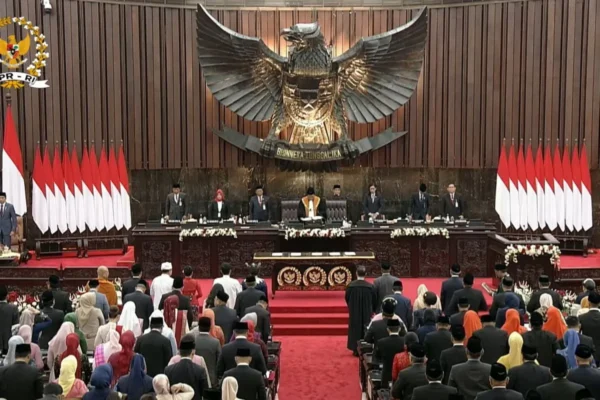
According to constitutional theory, presidential systems are designed to balance power. In practice, however, they frequently perpetuate conflict. It is a curious case of paradox. Indonesia today is a living demonstration where the framework of government holds out harmony and reality demonstrates division, conflict, and systemic incoherence
The problem is one not only of politics but also of structure, albeit that its nature looms threatening. On the contrary, Indonesia’s presidential system, especially after the reform of constitutional principles, is meant to represent the traditional doctrine of the separation of powers. The president holds executive power. The National Parliament has legislative power. The system of checks and balances is guaranteed by the constitution and by the supreme courts that safeguard it. On the face of it, this is a carefully balanced equilibrium.
But equilibrium presupposes appointments. In Indonesia there is only the label‘coordination’, its substance has always been amounted to competition.
State bodies, each of them different in nature from the rest, not only ‘link in’ with one another but collide. Overlapping responsibilities, vague constitutional definitions and weak enforcement mechanisms combine to make an ecology of government in which it is always but never just this authority which prevails. Rather than forming a system, institutions are a collection of power centres that are in competition with one another.
This is no equilibrium but a tradition under another name fraudulent system. Compare this to the United States, often considered a standard-bearer for presidential systems. While conflict is nothing new in the American system, constitutional frictions are built into its very structure. The distinction is one of enforcement culture. Judicial supremacy is not a theoretical principle; it functions in practice. When the Courts issue a ruling, political actors may not completely agree with it, but they comply– because the system imposes penalties for disobedience.
Indonesia lacks this backbone of enforcement. Without sanctions there is nothing to enforce constitutional decisions. “Checks and Balances” then cease being meaningful and become pure checks.
On this point, comparison with Brazil has value. Its presidency government became increasingly turbulent, yet the state especially the judiciary has shown effectively in exerting authority under difficult circumstances. The Brazilian Supreme Federal Court shows no hesitation in making the executive and legislature respect the law. However contentious, such assertive-ness underscores a basic point: institutional power must be enforcable.
In Indonesia, however, the unwillingness of institutions to make a definitive move often spells decline of constitutional spirit.
Mexico presents a different case again. Historically an executive-run country, it has been slowly maturing into a pluralistic system with stronger checks and balances. The particular legal innovations, expanding the judiciary and abandoning centralized administrative power: all have contributed to a more evenly distributed power structure, if still incomplete. But Mexico does prove one point: institutional harmony is not something given to us, but needs deliberately improved by our continuous political work.
Indonesia, however, finds itself in a paradox: it has the form of balanced power without its substance.
With the world’s most complex political system and all of its pitfalls, South Korea and its presidential system remain responsive to popular demands. Presidents are subject to investigation, impeachment and prosecution. Courts intervene. Prosecutors are guided by public opinion. This is a political system that while perhaps wracked by struggle, nonetheless refuses to allow uncontrolled power.
In Indonesia, by contrast, the rhetoric of accountability is never translated into action.
At issue is not just institutional design, but culture. A constitution can’t automatically execute itself. This requires means to transform norms into obligations, legal, political and sociological. Without these ways, constitutional clauses are self-promoting rather than self enforcing.
Indonesia’s present course trend points to a grim fact: we all take for granted that harmonious institutions will simply exist。But such assumptions are easy to upset. When national institutions fail to align for reasons having nothing to do with healthy disagreement, can it? t help but result in potential disaster for governance throughout society. Legal uncertainty climbs. Policy grows disjointed. The public becomes distrustful.
Foremost, power begins escaping pttliite regard
This is where Indonesia’s system becomes not just ineffective but vulnerable.
The strongest actor often prevails in a fractured institutional landscape not through legality but leverage. What starts as disharmonious institutions can turn into selective enforcement, where different rules apply to different people and authority is entirely dependent on the situation at hand.
It is then that the constitutional pledge unravels.
Every comparative systems tells us one thing: harmony is not the avoidance of conflict, it is to erect a fence that people can see and is functional. In the United States, judicial authority backed by established observance norms has helped avoid major differences of opinion proliferating. Brazil, on the other hand, sees vigorous institutional intervention; but it is not possible in Mexico or even South Korea today to speak of a single experience. These greatly differing cases all point to one result different ways may be taken to restore balance and make it serve the public interest.
On the other hand, Indonesia now runs the risk of installing a system where institutions survive but they no longer fit together as a coherent whole.
This is not some formality oversight! This is a constitutional crisis going on in slow motion.
Reform is no longer a question of choice, it is an urgent necessity. First, the functions of institutions must be made clear. Then overlapping authorities must be resolved without any equivocation whatsover–and most crucially binding means of implementation must be found. Decisions reached on constitutional questions are peace Of course that goes without saying. Evasion and deception outside the law should bring penalties if continued.
In the absence of these changes, Indonesia’s presidential system will remain as it looks more and more like today: a structure broken between unrelated parts.
And where power fails to concert, the appearance of harmony simply evaporates then it comes fully into view that your entire system was never balanced in the first place.
Fransiscus Nanga Roka
Faculty of Law University 17 August 1945 Surabaya Indonesia