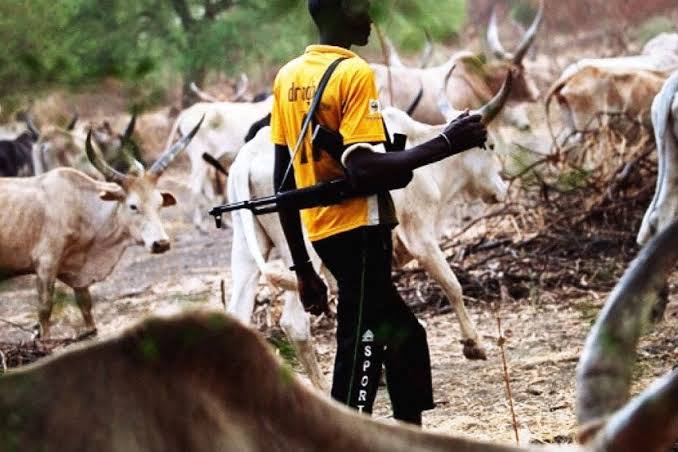
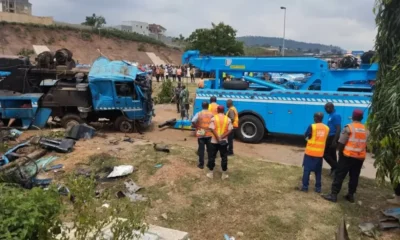
According to available statistics, about 200 people were murdered in the most disgusting and inhumane manner. Among the dead were innocent children—younglings who could barely tell their left from their right, but who, tragically, were made to bear the brunt of a more-than-decade-long hostility they neither started nor understood. There are no words to describe this level of brutality, as what happened to the people of Yelewata is simply beyond cruelty.
I read the heart-wrenching story of a man who lost twenty members of his family in the attack. Twenty. And I asked myself: how do you console someone like that? What words do you offer a man whose entire lineage has been wiped out in a single night?
The Yelewata tragedy is a collective indictment of our very conscience as a nation. Everything about it reminds me of that searing line from JP Clark’s poem “The Casualties”: “The casualties are not only those who are dead; for we are all casualties.”
What is even more disturbing is the revelation made by the Chief of Defence Staff, General Christopher Musa. Speaking during a press conference, the CDS disclosed that some members of the Yelewata community colluded with the assailants to launch the attack. He said they misled the soldiers stationed in the town with fake intelligence about an attack in a nearby village. As the soldiers rushed to confront the phantom threat, the real attackers descended on Yelewata with brutal efficiency.
The CDS’s revelation weakened me. I was dazed by the extent to which some people could go to sell out their own community, perhaps for a pittance. It was not just betrayal; it was treason dressed in familiar skin. This grim truth also deepened my sympathy for the security forces. You cannot win the war against insecurity without the unalloyed support of the people. It is like walking into battle blindfolded, your enemies in front of you, but your supposed allies behind you holding the map, and choosing not to share it.
This is why, when the United States military forces occupied Afghanistan in a protracted war against the Taliban, they quickly recognized that the success of their counterinsurgency campaign would hinge upon winning the support of the local population. The US military began to lay the foundation for alliances with the locals. This partnership became crucial for ground operations, intelligence gathering, and the establishment of legitimate leadership. It was more than just a military tactic, but was a strategic necessity, especially for a challenging and complex environment like Afghanistan.
No matter how skilled or well-equipped, security personnel are not magicians. They depend on intelligence, trust, and the cooperation of those they are deployed to protect. When informants become conspirators, when villagers become accomplices, the battle is often lost even before the first bullet is fired.
We must now face a painful reality: the enemy is not always at the border. He may be your neighbour, your friend, even your kinsman. And unless we summon the moral will to name, shame, and prosecute such collaborators, no matter their status, we will continue to bury victims and recycle condolences.
Yelewata mirrors a broader Nigerian tragedy, especially one where violence thrives not just because of external aggressors, but because of internal betrayal. How could we let this happen? It happened because we have unfortunately become a nation where treachery hides behind familiar faces and impunity is the norm.
These bouts of internal attacks are a call for us to strengthen our internal security architecture, especially the police. No country can grow without a viable police force, because the work of the police is to build. Even the CDS, while responding to a journalist who reminded him that the problem for him is that he is the Army and not the police during an interview on Arise TV, acknowledged the fact that you cannot have a country without the police. “They prevent and detect crimes,” he said. He further explained that efforts are being made by Mr. President, the CDS himself, and the Inspector General of Police to reposition the police system to be able to handle the barrage of internal security threats.
If this holistic reform is achieved, it will, at the very least, give the military a deep sigh of relief, allowing them to properly focus on their primary responsibility of defending the country against external aggression.
That said, the CDS’s revelation should prompt a national reckoning. Beyond military and police deployments, we need soul-searching. We need justice, swift, blind, and total. We must hold to account not just the attackers, but the enablers. Because if we don’t, we are all complicit in the next massacre.Yelewata must not be reduced to another footnote in the book of bloodshed. It must become a turning point, a moment of truth. A wake-up call to reclaim our humanity, reform our security structure, and restore the sacredness of life. We must also ensure that news about tragedies of this scale do not get swept under politics, trivial matters or concerns beyond our national purview. It was disheartening to see many Nigerians speak more about what has been going on in the Middle East than occurrences in our own country. It begs the question of just how much lives within Nigeria are worth.
That notwithstanding, I must commend Mr. President for his visit to Benue for an on-the-spot assessment of the carnage. His physical presence sends a strong signal of empathy and national responsibility. Additionally, by ordering security agencies to bring an end to the killings and setting up a committee to work towards lasting peace, Mr. President is basically ensuring that any solution to the crisis in Benue will not only be swift, but also sustainable.
We hope, indeed, we pray, that his visit marks the beginning of the end of a conflict that has festered for more than a decade. If not for the sake of the dead, then for the sake of those of us still alive, still breathing, still hoping. Let there be justice for our fallen compatriots, just as we who still breathe deserve to live in peace and security.
Zayd Ibn Isah can be reached at lawcadet1@gmail.com