
Breaking News
2027 Polls: Ribadu Promises Protection for Voters, Politicians as INEC Warns Against Electoral Violence
Nuhu Ribadu assures Nigerians of election security while INEC Chairman Joash Amupitan warns political parties against sponsoring violence ahead of 2027 polls.

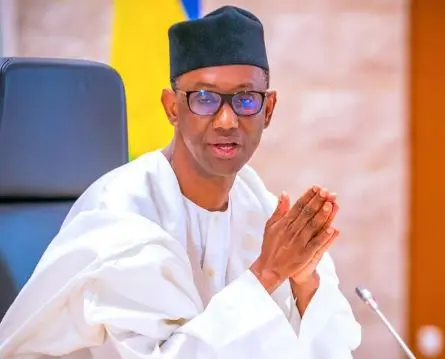
ABUJA — The Federal Government has pledged to provide adequate security for voters, politicians, electoral officials and political parties throughout the 2027 general election period.
National Security Adviser Mallam Nuhu Ribadu made the commitment on Thursday during the Strategic Election Security Conference organised in Abuja by the Independent National Electoral Commission (INEC) in collaboration with the Office of the National Security Adviser (ONSA).
Ribadu assured Nigerians that security agencies would protect citizens and electoral stakeholders before, during and after the elections, warning that the government would not tolerate post-election violence.
“The duty of government and the security agencies is to protect voters, electoral officials and the wider population before, during and after the election. We will protect you. We will protect the voters. We will protect politicians. And even after the election, we will make sure there is no violence,” he said.
He explained that President Bola Tinubu’s administration remained “committed to providing the security necessary for peaceful, transparent and credible elections”.
The NSA also emphasised that security operatives must remain neutral and perform their duties in line with the law, insisting that their constitutional independence must be respected.
“Security agencies will discharge their responsibilities impartially and in accordance with the law,” he stated.
Addressing potential threats to the electoral process, Ribadu identified social media misinformation as a major concern, warning that false information could trigger tension and violence in communities.
“Social media is a big problem. It creates false narratives and misinformation, causing problems among people. One individual, sitting somewhere in a village, could say something that triggers trouble,” he said.
He also criticised politicians whose desperation for political power could encourage violence and other unlawful activities.
“Sometimes they become desperate. There is almost nothing they may not do,” Ribadu added.
In his remarks, INEC Chairman Professor Joash Amupitan, SAN, challenged political parties to demonstrate genuine commitment to peaceful elections rather than signing peace agreements in Abuja while allegedly encouraging violence at the grassroots.
“Signing peace accords in Abuja while tolerating or financing thuggery in the states is a contradiction our democracy can no longer afford,” Amupitan said.
He revealed that political violence had reportedly increased since open campaigns commenced in August 2026, with attacks targeting campaign convoys, town hall meetings, party offices and supporters in nine states.
The affected states, according to him, are Lagos, Edo, Ekiti, Enugu, Ebonyi, Delta, Cross River, Oyo and Benue.
Amupitan further disclosed that INEC officials, employees and temporary electoral workers had been subjected to harassment, intimidation and physical attacks by political party supporters and agents, both in Nigeria and outside the country.
He warned that the commission would not surrender its independence to threats or intimidation.
“We will neither be intimidated nor blackmailed into compromising our neutrality, and every attack on INEC personnel, facilities, or materials will be met with the full weight of the law,” he declared.
The electoral chief also insisted that political party leaders must be held accountable for the activities of their candidates, campaign councils and youth wings.
According to him, the growing incidents of political violence pose three major threats to the credibility and success of the 2027 elections.
The first is voter suppression, as insecurity could discourage ordinary Nigerians from participating in the electoral process.
“When bullets replace ballots and rallies end in bloodshed, ordinary citizens stay home, effectively disenfranchising millions of peaceful Nigerians,” he said.
The second concern involves the safety of more than 1.41 million ad hoc electoral personnel, most of whom are NYSC members, expected to work across 177,299 polling units.
“No parent or institution will willingly deploy young Nigerians into environments where political thugs operate with impunity,” Amupitan warned.
He identified the third threat as the possibility that pre-election violence could fuel disputes and rejection of results after the elections.
“Pre-election violence conditions the political climate for post-election rejection,” he said, cautioning that collation centres could become centres of violence.
The INEC chairman also stressed that the security of Nigeria’s elections was important to the stability of West Africa, noting that the country accounts for more than half of the sub-region’s population.
He described peaceful elections in Nigeria as “the primary anchor of regional stability and constitutional order”.
On the legal framework for tackling electoral offences, Amupitan expressed reservations about a provision in the Regulations and Guidelines for the Conduct of Elections, 2026, which he said requires security personnel to obtain approval from presiding officers or other INEC officials before arresting electoral offenders.
“This dichotomy has hampered the efficiency of the law enforcement agents to arrest and investigate electoral offenders,” he said.
He urged stakeholders to resolve the issue through a code of conduct and a proposed legal framework for the Inter-Agency Consultative Committee on Election Security (ICCES).
Amupitan also pointed to tougher sanctions introduced under the Electoral Act 2026, including fines of up to N5 million or 12 months’ imprisonment for individuals and penalties of up to N10 million for political parties involved in first-time breaches.
He explained that Section 148 of the Act also authorises INEC legal officers and appointed counsel to prosecute electoral offenders directly once the police and other relevant agencies transmit the relevant case files.
“INEC is fully prepared to discharge its prosecutorial mandate, and our legal teams are ready to review case files from recent violent incidents across the federation.
“When political actors see prominent sponsors and foot soldiers swiftly arrested, arraigned, and convicted under the 2026 Act, the incentive for violent campaigns will evaporate,” he said.
Amupitan confirmed that the presidential and National Assembly elections would be held on Saturday, January 16, 2027, while governorship and State Houses of Assembly elections would follow on Saturday, February 6, 2027.
He further announced that INEC would organise a nationwide mock accreditation and result transmission exercise on Saturday, November 28, and urged security commanders to approach the exercise as a full-scale preparation for the general elections.























You must be logged in to post a comment Login