Forgotten Dairies
Akintola vs Awolowo, Opposition, and the One-Party Temptation -By Prince Charles Dickson PhD
The real Nigerian danger, then, is not that one party will conquer the entire country by brilliance alone. It is that the opposition will continue to fail by habit. If opposition is only a queue for access, then the ruling party will keep eating its rivals one defection at a time. If, however, opposition rediscovers ideology, internal democracy, regional credibility, and the courage to look different from what it condemns, then the old republic may still whisper a useful lesson into the new one.

Every generation of Nigerian politics likes to imagine that its quarrel is unprecedented, that its betrayals are original, that its intrigue is wearing a crown no earlier intrigue ever touched. But Nigerian politics is an old drummer. It changes songs, not rhythm. The names change. The costumes improve. The microphones get better. Yet the same questions keep returning like harmattan dust: What is opposition for? Is it a moral force, a strategic waiting room, or merely a branch office of the ruling instinct?
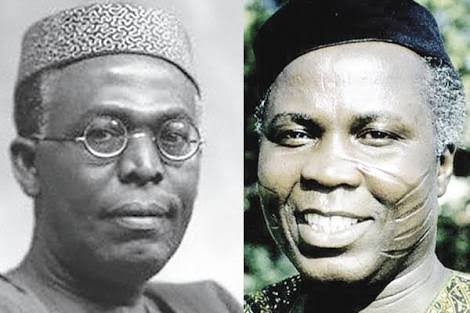
To ask that question seriously is to walk back into the haunted chamber of Awolowo and Akintola. What began as a struggle inside the Action Group was not just a disagreement between two brilliant men. It was a collision of political temperaments, ideological direction, ambition, and the larger architecture of power in Nigeria. Awolowo, who moved to the federal centre as opposition leader after 1959, was increasingly identified with a broader ideological project. Akintola, by contrast, came to embody a more conservative, region-focused and business-oriented current, and his openness to working with the Northern-dominated federal establishment deepened the rupture. By mid-1962, Awolowo’s camp had repudiated Akintola; the federal government declared a state of emergency in the Western Region and restored him in 1963. The bitterness of that split, and the wreckage that followed, helped poison the First Republic.
That is why the Awolowo-Akintola feud still matters. It was not gossip in agbada. It was an early Nigerian lesson that opposition can die in two ways. It can be strangled from outside by a hostile ruling order. Or, more dangerously, it can decay from within, when conviction gives way to access, when strategy becomes personal survival, when party machinery becomes a theatre of ego. The Western crisis was, in that sense, not only about who should lead. It was about whether opposition should remain an instrument of principle or become a bargaining chip in the market of power.
Kano and Kaduna then enter the story like twin furnaces of northern political memory. Kano carries the old radical grammar of Aminu Kano, NEPU, Sawaba, talakawa politics, the language of emancipation rather than patronage. Oxford’s entry on Aminu Kano notes his struggle against corruption and oppression in the emirate order and his commitment to democratizing Northern Nigeria. The PRP’s own profile, lodged with INEC, explicitly roots itself in NEPU’s legacy and recalls that the PRP had two state governments in the Second Republic: Kaduna and Kano. In other words, both states are not accidental footnotes in the story of Nigerian opposition. They are ancestral terrain.
Then came 1999 and the Fourth Republic, with the PDP arriving not merely as a party but as a vast political weather system. Founded in 1998 and quickly becoming dominant, winning the presidency and legislative majorities in 1999 and retaining national control for years. Opposition existed, yes, but it was fragmented, regional, underpowered, and often more symbolic than threatening. That era did not abolish opposition. It domesticated it.
The great interruption came in 2013, when the APC was formed through the merger of major opposition forces. That merger worked because it answered a Nigerian truth older than any campaign slogan: power rarely yields to scattered complaint. It yields to disciplined coalition. The APC emerged from the merger of ACN, CPC, ANPP, and part of APGA, and in 2015 Buhari’s victory marked the first time an incumbent was defeated and the first inter-party transfer of power in Nigeria’s post-independence history. Reuters described it plainly as a historic democratic transfer. For a brief moment, opposition in Nigeria looked like more than lamentation. It looked like a ladder.
But even that victory carried a warning label. The problem with Nigerian opposition is that once it wins, it often stops being opposition in spirit and becomes merely the next landlord in the same building. An academic review of Nigeria’s democratic journey notes that the APC and PDP share many structural defects, and even cites the broader judgment that little distinguishes the two main parties because both are fluid elite networks with weak ideology. That diagnosis is painful because it explains so much. In Nigeria, opposition too often opposes only until the gates open. After that, the vocabulary changes, but the appetite stays the same.
This is where Kano and Kaduna become especially revealing from 1999 till now. Kano has repeatedly shown a willingness to defy neat national binaries, and in the 2023 election it backed Rabiu Kwankwaso of the NNPP in the presidential race while also electing Abba Kabir Yusuf of the NNPP as governor. Kaduna told a different but equally interesting story: it voted Atiku Abubakar of the PDP in the presidential contest, yet elected APC’s Uba Sani as governor. CDD West Africa described the 2023 election as unusually fragmented, noting that all four major presidential contenders won at least one state and that states like Kano, Lagos, and Rivers split among three different parties. So, Kano and Kaduna have not been passive spectators in the Nigerian democratic drama. They have been laboratories of resistance, fragmentation, coalition, and contradiction.
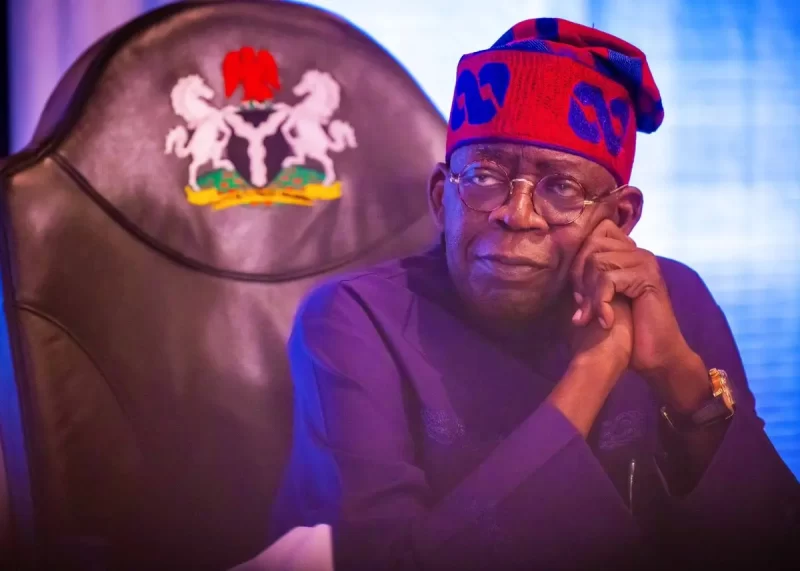
And now we arrive at the present crossroads, where the phrase “one-party state” is no longer a tavern exaggeration but a live political argument. Reuters reported in May 2025 that the APC endorsed President Tinubu for a second term while the opposition was widely seen as too divided and weak to mount a serious challenge, with high-profile defections strengthening the ruling party. AP later reported Tinubu’s denial that Nigeria was being turned into a one-party state even as several governors and federal lawmakers had left opposition parties for the APC. By February 2026, major opposition leaders, including Atiku, Peter Obi, and Amaechi, were jointly rejecting the new Electoral Act, calling it anti-democratic and warning that it could help install a one-party order. Tinubu, for his part, has continued to insist that democracy requires room for the minority to speak.
So, is Nigeria now a one-party state? Not formally. Not yet. There are still multiple parties, multiple ambitions, multiple resentments, and multiple routes to elite reassembly. But that is not the only question that matters. A country can avoid the legal shell of one-party rule and still drift into the political culture of one-party dominance. That drift happens when the ruling party becomes the default shelter for frightened politicians, when defections replace debate, when opposition parties become war zones of internal ego, and when citizens begin to see parties not as platforms of principle but as bus stops for the next powerful convoy. The danger is less a constitutional decree than a democratic evaporation.
This is why the ghosts of Awolowo and Akintola are still standing by the roadside, watching us. Their quarrel warned that opposition without internal discipline can collapse into treachery, and that power at the centre always knows how to exploit a divided house. Kano reminds us that opposition can spring from social memory, from the stubborn dignity of people who do not always vote as ordered. Kaduna reminds us that politics is rarely simple, that a state can host both establishment power and insurgent sentiment in the same electoral season. And the Fourth Republic reminds us that opposition in Nigeria only works when it is more than noise, more than wounded ambition, more than a coalition of temporarily unemployed strongmen.
The real Nigerian danger, then, is not that one party will conquer the entire country by brilliance alone. It is that the opposition will continue to fail by habit. If opposition is only a queue for access, then the ruling party will keep eating its rivals one defection at a time. If, however, opposition rediscovers ideology, internal democracy, regional credibility, and the courage to look different from what it condemns, then the old republic may still whisper a useful lesson into the new one.
Awolowo and Akintola were not just fighting over a party. They were fighting over the soul of political alternative in Nigeria. That battle never ended—May Nigeria win!