
Opinion
Tinubu at 74: Hunger, Hardship, and a Nation Weighed Down by Broken Promises -By Daniel Nduka Okonkwo
As the President reflects on his birthday, Nigerians are also reflecting, loudly and critically, on the state of the nation. The question that lingers in public discourse is not merely about celebration, but about accountability. With the 2027 election cycle on the horizon, the President’s own words continue to resonate. If the promise of constant electricity is not fulfilled within four years, voters should withhold their support.

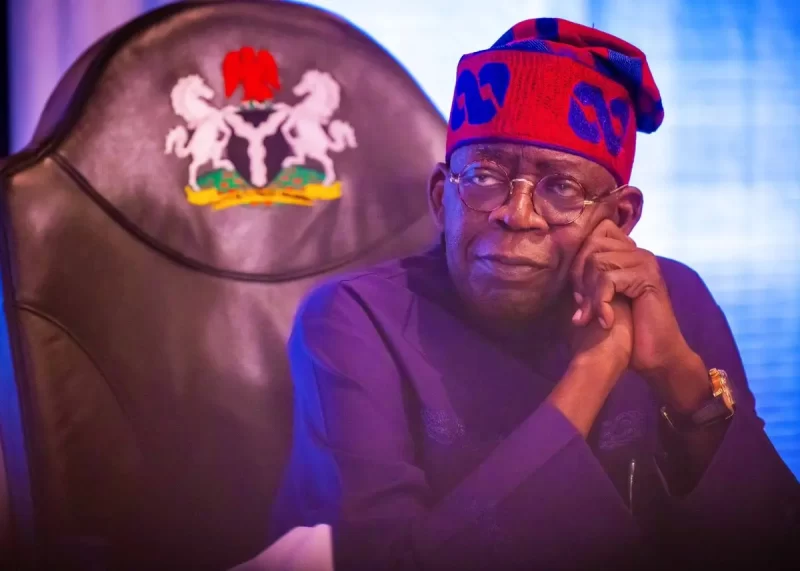
Happy birthday, Mr. President, though for millions of Nigerians, there is little to celebrate. The candles on your cake flicker in sadness, just like homes across our nation that have been starved of electricity for months, even years. The promise you made in 2023 still echoes in the streets: constant power within four years, or no second term. Yet today, citizens queue endlessly for fuel priced at ₦1,370 per liter. Families skip meals, workers cannot afford transportation, and parents watch their children being sent home from school due to unpaid fees. Hunger has become the national anthem, and silence is the only response to cries for light.
Nigerians remember your words, Mr. President, and they will hold you to them. There is still a small window of opportunity to turn things around. No amount of campaigning can erase the suffering Nigerians have endured. The nation watches, not in celebration alone, but in expectation.
On March 29, 2026, Bola Ahmed Tinubu marks his 74th birthday with a deliberately low-key observance, shunning elaborate celebrations in favor of reflection. The decision, according to the presidency, is intended to align with the current national mood and demonstrate sensitivity to the challenges facing Nigerians. It is, by all indications, a commendable gesture.
Yet for millions of citizens, this day is not defined by quiet reflection alone. It is a stark reminder of promises made in 2023 and the harsh realities that continue to shape daily life. Across the country, hunger persists, fuel prices have soared to about ₦1,370 per liter, and the cost of living has climbed beyond the reach of ordinary Nigerians. Workers and traders struggle to afford transportation and rent, while even homeowners and car owners find themselves overwhelmed by rising daily expenses. In many households, three meals a day have become a luxury, and even two meals are no longer guaranteed. Countless parents are unable to pay their children’s school fees, further deepening the social strain.
Central to the public’s memory is the President’s bold campaign pledge on electricity, a promise that resonated widely with a nation long burdened by unreliable power supply. In 2023, Tinubu declared, “If I don’t give you constant electricity for four years, don’t vote for me when I come back for a second term.” The statement was not merely rhetorical. It positioned electricity as a core performance benchmark of his administration. He vowed to eliminate estimated billing, ensure 24-hour power supply, and leverage his experience as former governor of Lagos State to fix Nigeria’s troubled national grid.
In June 2023, the President signed sweeping reforms aimed at decentralizing the power sector. The policy was designed to empower states, private companies, and individuals to generate, transmit, and distribute electricity independently, thereby reducing pressure on the national grid. The administration also pledged to expand renewable energy initiatives, including solar power, and to improve overall grid reliability through aggressive infrastructure investment.
However, nearly three years later, the gap between promise and reality remains striking. Steady electricity continues to elude millions of Nigerians. The national grid has suffered repeated collapses in 2024, 2025, and 2026, plunging communities into prolonged darkness. In some areas, electricity has been absent for over four months, and in others, for years. The commitment to end estimated billing has yet to be fully realized, leaving many consumers frustrated by inconsistent and often inflated charges.
The consequences of these shortcomings extend far beyond inconvenience. The lack of reliable electricity has compounded economic hardship, stifled small businesses, and increased dependence on expensive alternative energy sources. At the same time, the rising cost of fuel has intensified the burden, making it increasingly difficult for Nigerians to sustain basic living standards.
The contrast between government assurances and lived reality has become difficult to ignore. While the administration’s “Renewed Hope” agenda was intended to inspire optimism, many citizens now interpret it through the lens of daily survival. The rhetoric of transformation is being weighed against the realities of hunger, unemployment, and persistent infrastructural deficits.
As the President reflects on his birthday, Nigerians are also reflecting, loudly and critically, on the state of the nation. The question that lingers in public discourse is not merely about celebration, but about accountability. With the 2027 election cycle on the horizon, the President’s own words continue to resonate. If the promise of constant electricity is not fulfilled within four years, voters should withhold their support.
This moment, therefore, is more than a personal milestone. It is a political and moral checkpoint. The low-key birthday observance may symbolize humility and awareness, but for many Nigerians, what matters most is not the symbolism of reflection, but the substance of results.
Happy birthday, Mr. President.
Daniel Nduka Okonkwo is a Nigerian investigative journalist, publisher of Profiles International Human Rights Advocate, and policy analyst whose work focuses on governance, institutional accountability, and political power. He is also a human rights activist, human rights advocate, and human rights journalist. His reporting and analysis have appeared in Sahara Reporters, African Defence Forum, Daily Intel Newspapers, Opinion Nigeria, African Angle, and other international media platforms. He writes from Nigeria and can be reached at dan.okonkwo.73@gmail.com.

















You must be logged in to post a comment Login