
Forgotten Dairies
Has Rabiu Musa Kwankwaso Abandoned His Presidential Dream? -By Abdullahi Abubakar
So, has Kwankwaso given up on his presidential ambition? The answer is not definitive. What is clear, however, is that he is navigating one of the most complicated political moments of his career. Whether he emerges as a candidate, a coalition builder, or a strategic ally will depend on how well he reads the shifting tides of Nigeria’s political terrain.

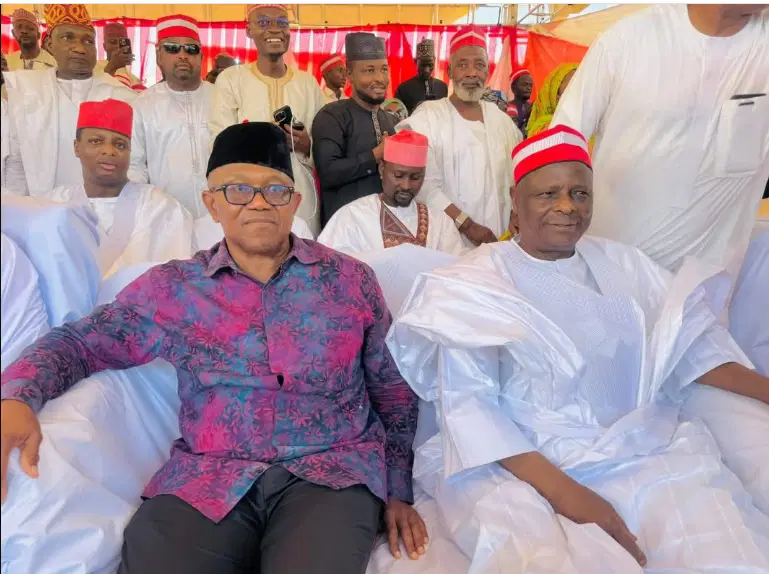
As Nigeria gradually approaches the 2027 general elections, political alignments are becoming more strategic, calculated, and, in many cases, unpredictable. One of the most closely watched figures in this unfolding drama is Rabiu Musa Kwankwaso a seasoned northern politician whose presidential ambitions have spanned multiple political platforms.
The question on many lips today is simple: Has Kwankwaso quietly stepped back from his presidential ambition, or is he repositioning for a bigger play?
Kwankwaso’s political journey has been anything but static. From his days in the Peoples Democratic Party (PDP) to contesting under the New Nigeria Peoples Party (NNPP) in 2023, he has consistently remained a relevant force, particularly in northern politics. However, recent discussions about a possible coalition under the African Democratic Congress (ADC) reportedly involving key figures such as Atiku Abubakar, Peter Obi, Nasir El-Rufai, and Rotimi Amaechi have raised critical questions about his next move.
At the heart of the debate is Nigeria’s long-standing, though unofficial, power rotation principle between the North and the South. Following the eight-year tenure of former President Muhammadu Buhari, many argue that equity demands power remains in the South beyond a single term. This argument naturally strengthens the position of the incumbent, Bola Ahmed Tinubu, and complicates the path for northern aspirants.
Within this context, any coalition that fields a northern candidate may struggle to gain nationwide legitimacy, particularly in the South. Conversely, zoning the presidential ticket to the South could sideline heavyweight northern contenders like Atiku and Kwankwaso, effectively pushing them toward political retirement or forcing them into kingmaker roles.
Kwankwaso’s situation is particularly delicate. Unlike Atiku, who has contested multiple times and is nearing 80, Kwankwaso still represents a potent political movement, especially through his Kwankwasiyya base. However, joining a coalition without a clearly defined and credible pathway to the presidential ticket could weaken his long-term positioning. It raises a fundamental political question: Is it better to remain a principal contender on a smaller platform, or a secondary figure in a larger alliance?
For figures like El-Rufai, the calculations appear more long-term. Supporting a southern candidate now could strategically position the North for a stronger comeback in the next cycle. This pragmatic approach reflects a deeper understanding of Nigeria’s evolving electoral dynamics where timing, alliances, and regional balance often outweigh individual ambition.
The broader implication is that the 2027 election may not simply be a contest of personalities, but a complex negotiation of interests, regions, and political survival. If the ADC coalition successfully zones its ticket to the South, it could reshape the opposition landscape while consolidating southern political sentiment. However, if it fails to manage these internal contradictions, it may inadvertently strengthen the ruling party’s chances.
So, has Kwankwaso given up on his presidential ambition? The answer is not definitive. What is clear, however, is that he is navigating one of the most complicated political moments of his career. Whether he emerges as a candidate, a coalition builder, or a strategic ally will depend on how well he reads the shifting tides of Nigeria’s political terrain.
In politics, ambition is rarely abandoned it is recalibrated. And for Kwankwaso, 2027 may not be about stepping back, but about choosing the most strategic path forward.



















You must be logged in to post a comment Login