Africa
An Open Letter to Binta Adamu Bello, Director General of NAPTIP: NAPTIP, Simi, and Nigeria’s Daycare Reckoning: Why Child Protection Must Move From Reaction to Prevention -By Psychologist John Egbeazien Oshodi
When adult language frames a child’s behavior in romantic or suggestive terms even jokingly it can blur societal understanding of innocence. It can also expose caregivers to misunderstanding in environments where clarity is essential.

On any given weekday morning in Nigeria, millions of parents perform a quiet act of surrender. They dress their children, fasten small shoes, wipe sleepy eyes, and place them into the hands of caregivers. They do so because work demands it. They do so because modern life requires it. But most of all, they do so because they trust.
That trust is sacred.
Today, that trust stands at a crossroads.
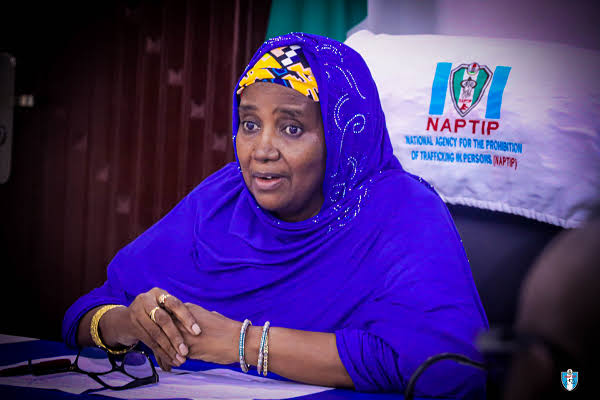
The National Agency for the Prohibition of Trafficking in Persons has ordered a full scale investigation into allegations of child abuse at a Lagos daycare facility following the resurfacing of old social media posts linked to singer Simisola Bolatito Kosoko, popularly known as Simi. Director General Binta Adamu Bello publicly directed operatives to begin an immediate inquiry, acknowledging growing public concern and reiterating that child protection remains the agency’s priority.
The investigation is necessary.
But the deeper national question is unavoidable:
Why must Nigeria wait for controversy before confronting systemic weakness?
The Controversy and the Clarification
The present debate began after tweets from 2012 resurfaced online. In those posts, written long before fame, Simi described interactions with a four year old child at her mother’s daycare, using phrases such as “crush,” “acting like he wana loc lip,” and joking references to physical contact.
After backlash erupted, the singer responded directly.
She explained that at the time she was 23 years old, living at home and assisting in her mother’s daycare while hustling her music career. She described social media culture then as casual and unfiltered, where users shared everyday experiences without anticipating future interpretation.
She stated clearly that nothing she wrote came from perversion. She emphasized that children are “cute and lovable,” that her posts reflected humor and affection, and that she has “never been depraved.” She also reaffirmed her long standing opposition to rape and sexual violence, noting that she has consistently spoken against abuse long before her current public visibility.
This part of the story matters.
Nigeria must acknowledge that public advocacy against rape is commendable. In a society where victims often face stigma and silence, strong voices condemning sexual violence are necessary. When influential individuals speak boldly against rape, they contribute to shifting culture.
But cultural leadership requires consistency in all spaces involving children.
Advocacy earns respect. Systems earn trust.
The Nigerian Pattern of Reaction
Nigeria has developed a troubling institutional rhythm.
A scandal erupts.
Social media amplifies outrage.
Authorities respond publicly.
Investigations are launched.
Attention fades.
Structures remain unchanged.
We have seen this cycle in school abuse cases, orphanage scandals, religious institution controversies, domestic violence tragedies, and police misconduct incidents.
Reactivity is not reform.
The current NAPTIP probe is important. Yet it must not become another example of action driven by noise rather than policy driven by foresight.
Child protection must be proactive, not performative.
This conversation is uncomfortable because it sits at the intersection of intention and impact.
Developmental psychology is clear that children between ages three and five are exploring attachment, imitation, and emotional curiosity. They do not interpret relationships through adult romantic frameworks.
Adults carry interpretive power.
When adult language frames a child’s behavior in romantic or suggestive terms even jokingly it can blur societal understanding of innocence. It can also expose caregivers to misunderstanding in environments where clarity is essential.
This does not automatically imply abuse.
It does imply the need for professional boundary awareness.
Modern safeguarding standards exist precisely to remove ambiguity. The goal is not to criminalize affection. The goal is to ensure that adult interpretation never risks distorting childhood innocence.
The safest systems are those where boundaries are unmistakable.
Advocacy Versus Accountability
One of the most delicate aspects of this debate is the intersection of Simi’s current anti rape advocacy and the resurfaced tweets.
Some Nigerians argue that the timing is ironic. Others suggest that her strong condemnation of sexual violence triggered scrutiny. Some supporters worry that critics are weaponizing old posts unfairly.
It is possible to defend her right to advocate and still support institutional examination.
Accountability does not negate advocacy. Advocacy does not exempt accountability.
A nation that cannot examine uncomfortable questions without descending into hostility will never build durable child protection systems.
The Structural Weakness in Nigeria’s Daycare System
The larger issue lies beyond one public figure.
Nigeria’s daycare sector operates within fragmented oversight structures. Many centres are caring and responsible. But the system as a whole lacks uniform national standards.
Background checks are inconsistent across states.
Psychological screening of caregivers is rare.
Mandatory safeguarding training is not standardized nationwide.
Digital conduct policies are largely nonexistent.
Inspection regimes are often complaint based rather than preventive.
Urbanization has increased reliance on daycare facilities. Dual income households depend on them. Informal supervision that once existed within extended families has diminished.
Yet regulation has not evolved accordingly.
Trust alone is no longer enough.
An Opportunity for NAPTIP to Lead Structural Change
Director General Bello stands at a rare policy moment.
NAPTIP’s mandate has traditionally focused on trafficking and exploitation. But child protection in 2026 demands broader preventative oversight. Harm can begin subtly in environments lacking professional clarity.
This investigation should not end merely with findings about tweets.
It should produce nationwide childcare reform.
Such reform should include:
Comprehensive criminal and behavioral background checks for all daycare owners and staff.
Psychological and ethical screening focused on boundary understanding.
Mandatory safeguarding certification renewed every six months.
Standardized child development training requirements.
Random substance screening for staff supervising minors.
Digital conduct guidelines aligned with child protection ethics.
Visible public licensing and certification displays for parental verification.
Centralized reporting systems for complaints accessible nationwide.
These are not punishments. They are protections.
From Social Media Storm to Policy Blueprint
Nigeria must decide whether this moment will remain a trending topic or become a turning point.
Social media can expose weakness. Only policy can correct it.
The child left at daycare tomorrow morning will not remember this controversy. But that child will live within whatever system Nigeria builds today.
Director General Bello, leadership at this moment means resisting the temptation to close the case quietly once public tension subsides. It means using this investigation to draft binding national standards.
Advocacy against rape is good. Public debate is healthy. Investigations are necessary.
But the Nigerian child deserves something deeper.
The Nigerian child deserves prevention that does not wait for outrage.
The Nigerian child deserves a system where safety is not assumed but verified.
And this may be the moment to build it.
About the Author
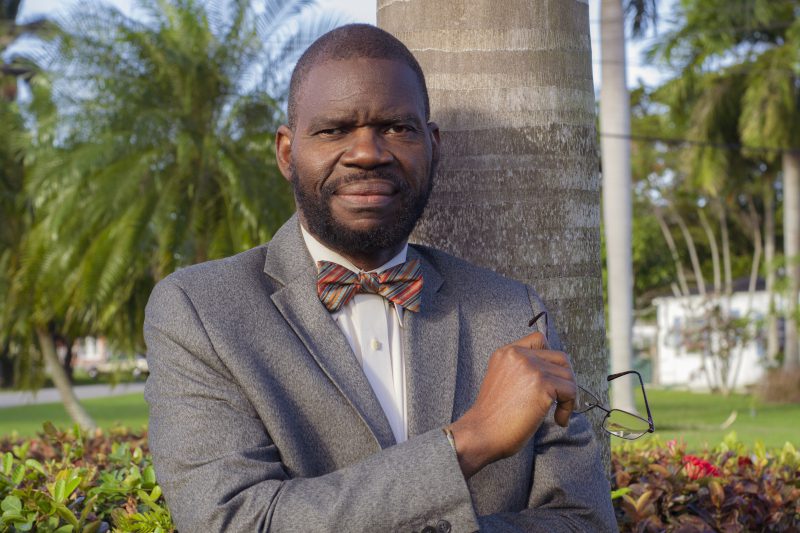
Prof. John Egbeazien Oshodi is an American psychologist, an expert in policing and corrections, and an educator with expertise in forensic, legal, clinical, and cross-cultural psychology, including public ethical policy. A native of Uromi, Edo State, Nigeria, and son of a 37-year veteran of the Nigeria Police Force, he has long worked at the intersection of psychology, justice, and governance. In 2011, he helped introduce advanced forensic psychology to Nigeria through the National Universities Commission and Nasarawa State University, where he served as Associate Professor of Psychology.
He teaches in the Doctorate in Clinical and School Psychology at Nova Southeastern University; the Doctorate Clinical Psychology, BS Psychology, and BS Tempo Criminal Justice programs at Walden University; serves as a visiting virtual professor in the Department of Psychology at Nasarawa State University; and lectures virtually in Management and Leadership Studies at Weldios University and ISCOM University. He is also the President and Chief Psychologist at the Oshodi Foundation, Center for Psychological and Forensic Services, United States.
Prof. Oshodi is a Black Republican in the United States but belongs to no political party in Nigeria—his work is guided solely by justice, good governance, democracy, and Africa’s development. He is the founder of Psychoafricalysis (Psychoafricalytic Psychology), a culturally grounded framework that integrates African sociocultural realities, historical awareness, and future-oriented identity. He has authored more than 700 articles, multiple books, and numerous peer-reviewed works on Africentric psychology, higher education reform, forensic and correctional psychology, African democracy, and decolonized models of clinical and community engagement.