Africa
CBT Exams and GST Courses: A Growing Frustration for Nigerian Students -By Adamu Ahmad Umar
To solve these challenges, lecturers must adopt effective and interactive teaching methods that emphasize understanding over memorization. Institutions should also ensure that GST classes are taken seriously by monitoring lecturers commitment and encouraging students to see the value of these courses. Institutions should reduce the number of students that attending GST lectures in one class. More importantly, compulsory computer literacy programs should be introduced for all first-year students to prepare them for CBT examinations.

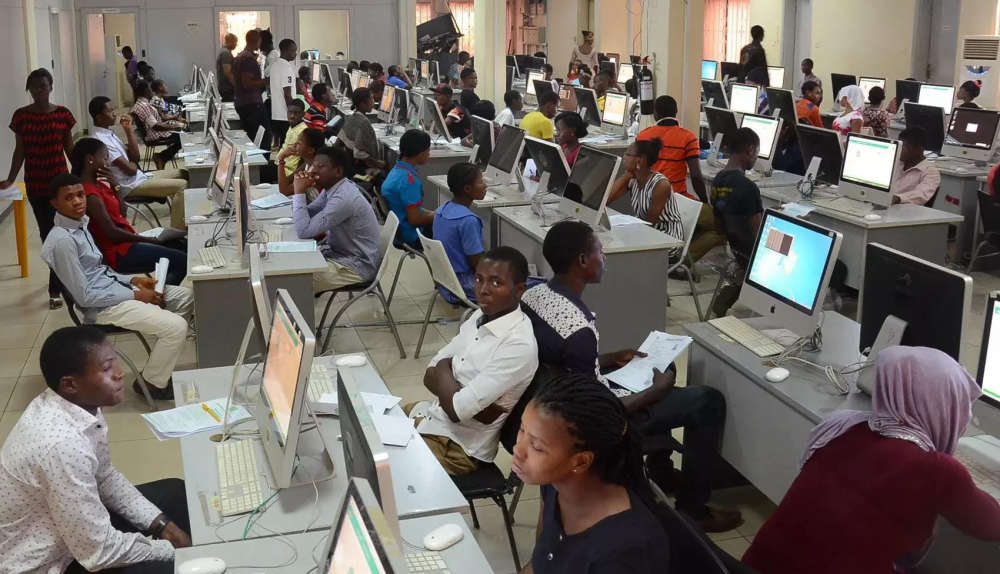
Nigeria is a country with not less than 519 higher institutions within its six geo-political zone; this including public and private institutions. A number that changes frequently due to ongoing approval and establishment of new institutions. Each year, some of this institutions enroll almost 2 Million students and graduate around 600, 000 people. In this higher Institutions, roughly 80–85% of graduates finish with either a First or Second Class degree; Which shows the kind of progress Nigeria is making in the field of education.
Despite this progress, for over two decades, the introduction of General Studies (GST) courses and the adoption of computer-based testing (CBT) centers have led to many students failing, gradually undermining this improvement. As a result, many students in higher institutions retake GST courses and computer-based tests multiple times. Some repeat them every semester, even though the examinations consist of objective questions rather than essays.
Investigation reveals that the major issues with GST courses in Nigerian higher institutions is that students are often reluctant to hit the books or burn the midnight oil in preparation for their examinations. From the early stages of secondary school, many students adopt a cramming system—reading without truly understanding what they are taught, which leads them to continue this approach to learning even in higher institutions. This is not unconnected with teaching methods that emphasize memorization over comprehension, as some lecturers only want students to reproduce what is written in their lecture notes.
Moreover, most lecturers teaching these courses do not give their full attention, and in some cases, their classes never hold from the beginning of the semester to the end. Consequently, leading to the neglect of the course by students. While some believe that passing objectives is a matter of luck rather than effort, other students take it as a piece of cake.
In addition, the large number of students enrolled in each class has becomes difficult for lecturers to give individual attention to every learner, which can delay understanding difficult concepts of GST. Two departments in one class or more may also lead to limited interaction and fewer opportunities for questions. making it harder for students to fully grasp the subject and successfully pass the course.
Today, the world is at the peak of the technological era, where almost every task is done on computers, and the education sector has not been left behind in this development. However, many undergraduates in Nigerian higher institutions do not have basic knowledge of computer systems, let alone the ability to operate them properly and this has also contributed to mass failure in this subject. On the other hand, inadequate and poor-quality computers in CBT centers or ICT facilities have become another setback. Sometimes, even when students are well-prepared for the exam, their computer systems collapse while they are taking it.
In addition, the use of smartphones and social media platforms has become very common among youths where people exhaust all their time on social media platforms unreasonable. For this reason, many students do not bother to spend their time attending computer training centers, nor do they consider purchasing a computer to learn its basic skills.
In conclusion, the problems surrounding GST courses and CBT examinations in Nigerian higher institutions reflect both academic and infrastructural weaknesses. While the country has made remarkable progress in expanding access to higher education, poor teaching methods, over-reliance on cramming, large number of population in one class and neglect of GST courses have made students view them as less important. Moreover, inadequate computer literacy among students and frequent technical failures in CBT centers further compound the problem.
To solve these challenges, lecturers must adopt effective and interactive teaching methods that emphasize understanding over memorization. Institutions should also ensure that GST classes are taken seriously by monitoring lecturers commitment and encouraging students to see the value of these courses. Institutions should reduce the number of students that attending GST lectures in one class. More importantly, compulsory computer literacy programs should be introduced for all first-year students to prepare them for CBT examinations.
Furthermore, the provision of modern ICT facilities and regular maintenance of CBT centers are urgently needed to reduce technical breakdowns. Students should also learn to balance social media use with academic work, while government and private stakeholders must partner to provide sustainable funding and technological support. By addressing these issues, the difficulties students face with GST and CBT examinations can be reduced, leading to a more effective and rewarding academic experience in Nigerian higher institutions.
Adamu Ahmad Umar
Email: Adamxadamx17@gmail.com
08145219401