Africa
Collateral Damage and Unanswered Questions After the U.S Airstrike -By Dengiyefa Angalapu
Nigeria should establish clear protocols for foreign military assistance that include civilian protection measures and post-strike investigations. If another joint strike is contemplated, plans for immediate ground follow-up and local community liaison should be baked in. Additionally, independent observers or Nigeria’s own human rights bodies could be allowed to verify strike outcomes so that the public isn’t left guessing whom to believe. Open communication – perhaps a joint briefing by Nigerian and U.S. officials addressing the known facts and uncertainties – would help dispel rumours.

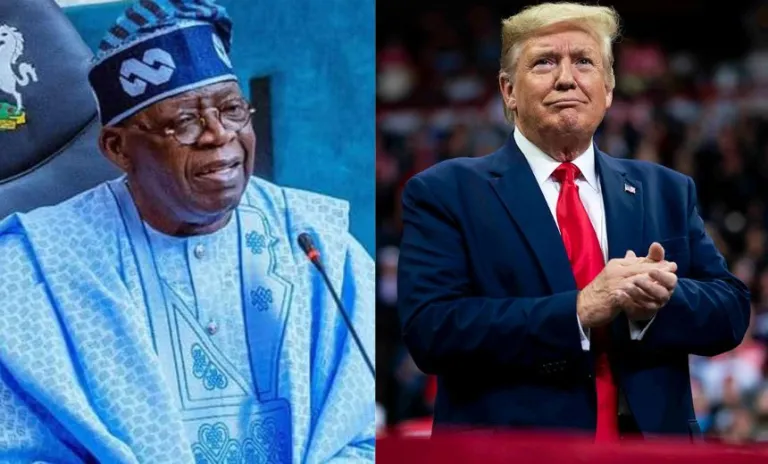
On Christmas Day, a U.S.-Nigeria joint airstrike in Sokoto State rocked quiet communities far beyond its intended targets. Officials in both countries were quick to declare the operation a success against terrorist elements, but on the ground in Nigeria, the fallout tells a more complicated story. Indeed, some community members in some of the airstrike zones welcomed the development as relief from terrorist activity, confirming that it had hit terrorist hideouts and that they had seen them fleeing for safety. Beyond this success, there is an almost silent focus on the collateral damage, from people wounded and a destroyed building in Offa, Kwara State, to scorched farmland in Jabo, Sokoto, and possibly even tragic unintended casualties. The strike’s aftermath has left civilians shaken and searching for accountability. This gap between triumphal official narratives and local consequences raises pressing questions: Who will bear responsibility for the collateral damage? What obligations does Nigeria owe its citizens after inviting foreign military action? And why were there no troops on hand to capture the terrorists who reportedly escaped? The need for transparency, compassion, and accountability has never been clearer.
Collateral Damage on Home Soil
In Jabo, a rural village in Tambuwal Local Government, residents who had never experienced violent conflict suddenly awoke to the ground shaking and the sky glowing red. The strikes hit on the outskirts of Jabo, and while no villagers were killed, local farmland was incinerated by falling munition debris. Hundreds of kilometres away in Offa, Kwara State, an object from the strike – initially feared to be a bomb or crashing plane – slammed into a building and tore through three others, injuring five people, including a mother and child. Nigerian officials later acknowledged that remnants of the operation had landed in parts of Sokoto and Kwara, but they insisted that no civilian casualties had occurred. That claim rings hollow in Offa, where eyewitnesses recount a harrowing Christmas night explosion that pierced a woman’s body with shrapnel and left a young boy maimed. For the families whose homes and livelihoods were wrecked, the question is painfully simple: Who will repair the damage and compensate the victims?
The Muslim Rights Concern (MURIC), an NGO, has already condemned the destruction of the Jabo farmland and private buildings in Offa. The group is demanding immediate compensation for the owners of these properties, stressing that even if strikes against terrorists are justified, such attacks must cause no civilian casualties. So far, however, there has been no public commitment by either the U.S. or Nigerian government to assist those harmed. The building in Offa remains in ruins, and the affected family is left to pick up the pieces of their lives. This lack of redress raises an uncomfortable issue: in the eagerness to celebrate a counterterrorism win, have the operation’s planners written off the collateral damage as the cost of doing business? Or will someone step up to help these innocent bystanders of the war on terror?
Responsibility in a Joint Operation
This operation was jointly conducted by the U.S. and Nigeria, which means shared responsibility. Nigeria’s government not only consented to the strike but even provided intelligence and post-strike security cordons. That makes it harder to pin blame solely on the foreign partner. What obligations, then, does Nigeria have after collaborating with a foreign military on its own soil? At minimum, Nigerians expect their government to protect citizens’ lives and property – or to make amends when it fails to do so. If a U.S. missile obliterates a home or field, the Nigerian state owes those citizens answers and restitution.
Legally, the situation is murky: international law offers no straightforward mechanism for civilians to claim reparations from a foreign military in such cases, especially when their own government authorised the strike. Morally, however, the Nigerian authorities should advocate for their people. They could press the U.S. to assist victims or provide aid directly, rather than leaving a community to wonder why a war on terror literally crashed through their roof. This accountability gap also sets a troubling precedent: if foreign counterterrorism operations can occur in Nigeria without clear provisions to address civilian harm, what message does that send to those living in potential future strike zones?
Terrorists Fleeing and a Missed Opportunity
Another glaring question is why Nigerian forces were not on the ground to capitalise on the strike. According to community members in Tangaza in Sokoto, the airstrikes did hit their intended camps, reportedly killing fighters and forcing others to flee. Yet no Nigerian military units moved in during the bombardment to encircle the area and capture the escaping militants.
Days after the strike, security forces in faraway Ondo State apprehended 39 suspects who fled Sokoto and hid in a forest, the men allegedly admitting they relocated south due to the strike on them in the northern part of the country. That dozens of alleged terrorists could travel halfway across Nigeria to regroup is a stark illustration of a missed opportunity. If Nigeria’s military had been poised to pursue the Lakurawa fighters on the ground at the moment they were bombed, many could have been captured or neutralised before slipping out. Why wasn’t a block and sweep operation part of the plan? The absence of Nigerian troops in real time – and the reliance on a local vigilante force (Amotekun) days later in another state to intercept fleeing suspects – hints at coordination breakdowns or capacity shortfalls that undermine the strike’s tactical value.
This raises a strategic concern: What was the true objective of the operation? If it were to eliminate a terrorist threat, letting some of the fighters escape blunts the impact. If it was a symbolic show of force to send a message, as some have suggested, then it may have succeeded only in dispersing the threat across a wider area. Either way, Nigeria’s security establishment owes the public an explanation. With advanced notice of a precision strike, why were local ground forces not mobilised to prevent the terrorists’ flight? Was there a fear of ambush or a lack of troops? Or did the planners assume (wrongly, it appears) that the missiles alone would do the job? These questions cut to the heart of Nigeria’s responsibility in jointly conducted operations: collaboration with a foreign power should bolster, not replace, domestic capacity to secure and hold territory.
Where Do We Go from Here?
As the dust settles, Nigeria and the U.S. face a critical test; providing closure to affected communities must become a priority. This means coming clean about what happened – was anyone (terrorist or captive) found dead at the scene? What went wrong in Offa? The community deserves to know. It also means extending a hand to help: rebuilding the destroyed building in Offa and restoring the ruined farmland in Jabo would be tangible gestures of goodwill. Compensation for the injured family’s medical bills, support for the farmer who lost his crop, trauma counselling for villagers rattled by the explosions – these are the kinds of reparative actions that can help provide some closure and restore faith that citizens’ welfare matters in counterterrorism operations.
Beyond material reparations, policy changes and transparency are needed to ensure this doesn’t happen again. Nigeria should establish clear protocols for foreign military assistance that include civilian protection measures and post-strike investigations. If another joint strike is contemplated, plans for immediate ground follow-up and local community liaison should be baked in. Additionally, independent observers or Nigeria’s own human rights bodies could be allowed to verify strike outcomes so that the public isn’t left guessing whom to believe. Open communication – perhaps a joint briefing by Nigerian and U.S. officials addressing the known facts and uncertainties – would help dispel rumours.
Dengiyefa Angalapu,
Research Analyst, Centre for Democracy and Development
greatdengis@gmail.com