Forgotten Dairies
Courts Without Courage: How Political Capture is Destroying the Rule of Law -By Fransiscus Nanga Roka
The danger is not only that the courts will lose their courage, but also that we expect them to have itIt is not enough for a court not to serve the stateIt becomes subject to the state power. And when courts are used as instruments of the authorities rather than protectors for people´s rights, the rule law doesn’t simply get weaker, it disappears. In the end, the real question is not whether legal systems still work, but whether they continue to afford protection.

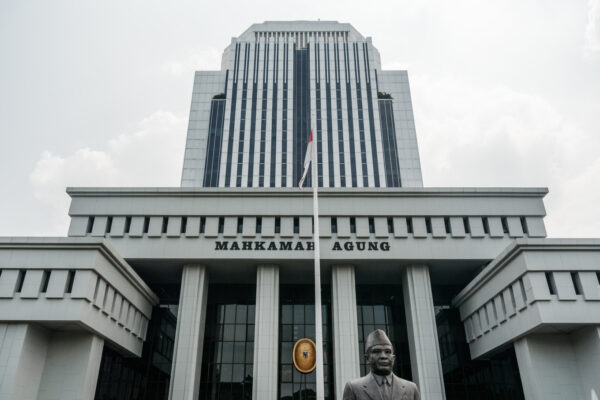
The rule of law does not veer suddenly from smooth operation to calamitous disaster. It quietly crumbles over time as judges oblige in their decisions, lawyers give up points of law, and the courts cease to dispense justice but instead obey power What remains is not law or even a show of legality. And around the world has this show becoming terrifyingly convincing.
The biggest threat to our justice now is not an overt dictatorship; rather it is political control That sounds like the old joke about the hybrid car getting away without fuel Governments no longer need to cleanse the judiciary, as they did in Yugoslavia They now simply change its nature in a phrase Subordinate your own loyalty to theirs through employment for including you Appointments go entirely to their friends and cronies Informal screening becomes formalized intake dials Back-talk within the judiciary is silenced The bones of justice remain intact What it has lost is its soul
This is hardly theoretical either; It is universally true Judges who issue unpalatable judgments run the spectrum from underhanded penalties (blocked salary checks or transfer without warning) to in-your-face disciplinary action (criminal charge or slander) Prosecuting attorneys who refuse such a course of logic get sidelined Lawyers who stand by unpopular individuals are economically pressured through campaigns that spread rumor and spit in night, physically intimidated by anonymity Threats to embark unscathed on even the road homebrinally return and legitimate or Reaching Lawyers ‘Groups legal scholars’ bodies across society that long served to safeguard independently the ethics of their members are In Huntley under duress or filled with collaborators (still selectors of judges but until the very end free from political interference) in name The law itself You should not complain about any of these things taken one by one. They are really not even administrative, pure and simple bring them all together, however, and you will have a system of control
What you wind up with is an independent judiciary that in reality operates under invisible restrictions. Courts continue to hold hearings Judgments are still delivered Legal procedure is still followed But the result is predictable. Often, this is not due to law It is due to power
Thus you have the transition from “ rule of law ” to “ rule by law ”. Law becomes a tool, it no longer sets limits. It is used to support decisions taken elsewhere
And the consequences are lethal. When courts lose their independence, rights become meaningless The right to fair trial becomes a vagary Access to justice is not universal Legal protections are unequal. For those in power, they are strong For those without power, they are weak In consequence, legality does not stop violations of the law; it covers them up instead
Perhaps most significantly, this erosion of what people regard as just and fair becomes standard and difficult to call into question. stop Governments use reforms, costs, and national benefits justify their own control over courts. Critics were presented as disruptive influences. Changes of structure were presented as technical adjustments. Law talk was a way tocover up dominanation.Andojinews when there nothing neutral about being in a captured court. congraveA judge who fears disadvantages cannot be fair. A Prosecutor under politic pressure cannot be impartial objective.An advocate facing such retaliation is not advocating When these terms are prevailing, there is no justiceeither no matter how advanced the legal system may of it seem. I thus The independence of the judiciary should not be seen as a technical principle, but as a Right of man’s indispensable needs. This is why without independent courts, one has no valid shield from arbitrary detention, or each over, oppression of authority. His Ruvelute is as experience od lock. It’s A last annoyance you find when settling your business at court and rights become talks with no teeth behind them.I tis In the first place, lawyers and judges must beanducted without fear or favor Itcost also be that They must also be protected from state retribution for labor Interns Law is clear on this point. The independence of judges and lawyers is not an open question for discussion. It is something on which tobe built. Yet this is hardly recognized in the world today. International organizations produce reports, proposals, and alarms but political capture continues to increase without check. The split between principle and fact is widening. Countries which seek to undermine judicial independence must meet with firm consequences legal, political, and economic monitoring responsibilities ought to be performed more rigorously in the future. Appointments to the bench should be more open and based on ability rather than who you know. Disciplinary proceedings should keep a degree of insulation from political pressures. Lawyers must not be punished for doing their jobs, but protected.While starting with society, the most important point is do not normalize justice at the helm. For when people have accepted that judges are part of official power the entire idea justice begins to lose meaning.
The danger is not only that the courts will lose their courage, but also that we expect them to have itIt is not enough for a court not to serve the stateIt becomes subject to the state power. And when courts are used as instruments of the authorities rather than protectors for people´s rights, the rule law doesn’t simply get weaker, it disappears. In the end, the real question is not whether legal systems still work, but whether they continue to afford protection. And when courts will no longer defend the law against power, they perform something far worse:They put power in the language of law itself. That, in turn, is how injustice turns into legality.
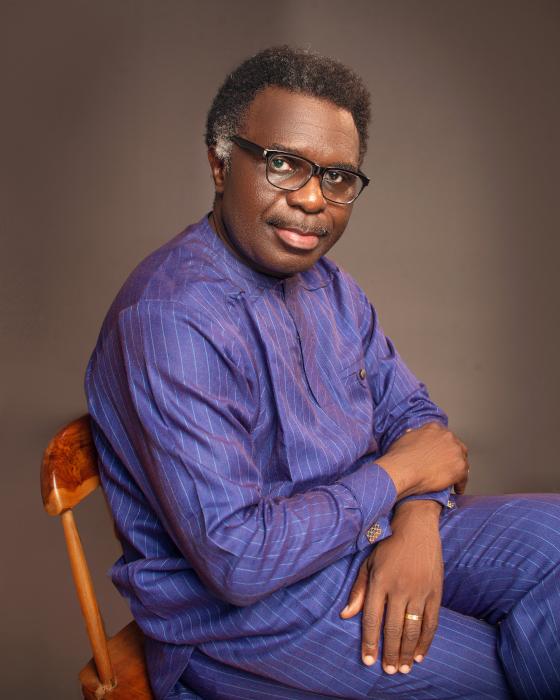
Fransiscus Nanga Roka
Faculty of Law University of 17 August 1945 Surabaya Indonesia