Forgotten Dairies
Dangote Refinery IPO: Dangote Retains 84.34%, NNPC 6.59%, After Years of Nigeria’s Refinery Struggles -By Daniel Nduka Okonkwo
The Dangote Refinery IPO is a landmark transaction. Its ultimate significance will depend not only on how much capital it raises, but on how the refinery performs, how well the expansion is executed, how the ownership structure evolves, and how risk and returns are finally shared among its shareholders.

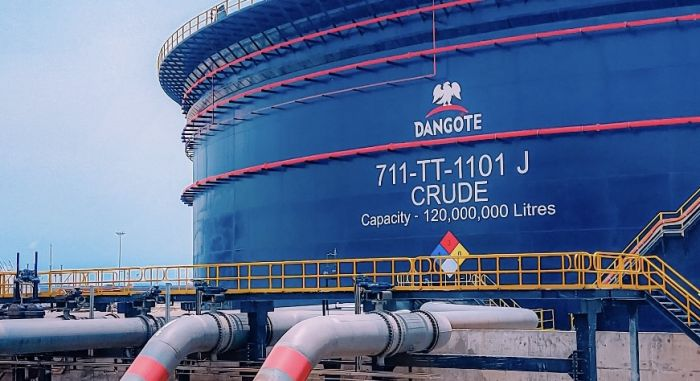
Nigeria is being invited to participate in the ownership of one of the most significant industrial projects ever built on the continent. The Dangote Petroleum Refinery has opened its doors to public investors through an Initial Public Offering that requires a minimum subscription of just 10 shares at ₦525 each, or ₦5,250. The offering has been presented as “The IPO for the People”, reflecting the intention to broaden participation in the ownership of the refinery. Yet the prospectus also makes clear a basic principle of equity investing: the value of shares can rise or fall, dividends are not guaranteed, and investors may lose some or all of the money invested. These are not competing claims, but two sides of the same transaction. The offer makes ownership accessible, while the investment remains subject to the risks inherent in the capital market. The question, therefore, is not whether Nigerians can participate, but what exactly they are being offered, how much of the company will ultimately be available to them, and what risks come with that ownership.
But the structure of the deal may matter as much as its size. The 4.1 billion shares are newly issued, so the money goes into the refinery and not to existing shareholders selling their holdings. The company had about 120.13 billion shares before the offer, and the new shares would take the total to approximately 124.23 billion. That means the public offer represents only about 3.3 percent of the enlarged company.
The ownership figures show just how firmly control will stay in place after the IPO. The prospectus dated September 7 puts Aliko Dangote’s beneficial interest at 87.27 percent before the offer, held through several corporate vehicles. If the base offer is fully subscribed and Dangote buys no additional shares, his interest would fall only to approximately 84.34 percent. The offer also carries an additional 30 percent option, and if that is issued as well, his stake would fall to about 83.56 percent. The Nigerian National Petroleum Company Limited holds 6.815 percent before the offer, which would ease to approximately 6.59 percent after the base offer. Either way, Dangote’s absolute majority voting power is untouched.
Then comes a detail that deserves attention. Pan-African Refinery Investment SPV, a Mauritius-incorporated investment vehicle, has committed to subscribe for up to the naira equivalent of US$400 million of the offer, representing approximately 25.34 percent of the 4.1 billion shares being offered, subject to allotment. The commitment amounts to approximately 1.039 billion shares, equivalent to about 0.84 percent of the enlarged company if the full offer is allotted. On that basis, approximately 3.061 billion shares would remain available to other public investors, representing roughly 2.46 percent of the enlarged company. The 2.46 percent figure is a calculation derived from the offer structure and enlarged share capital, rather than a separate ownership percentage stated in the prospectus.
The calculation changes the way the IPO can be understood. Investors are being invited into a ₦2.15 trillion capital raise, yet the share of the enlarged refinery actually left for the wider public is far smaller than the headline fundraising figure suggests. This is not evidence that the IPO is unfair or that the investment cannot generate returns. It is a description of the ownership structure, and ownership structure matters.
The headline financial figures give investors plenty of reasons for enthusiasm. The refinery reported first-half 2026 revenue of about ₦19.13 trillion, or $13.91 billion, and profit after tax of about ₦2.50 trillion, or $1.82 billion. That is a sharp turnaround from the $476 million loss reported for the whole of 2025. But the circumstances behind the turnaround also matter. The refinery’s recent performance coincided with supply disruptions linked to the Iran conflict, which raised demand for its jet fuel across Africa and Europe and contributed to stronger refining margins. That does not make the profits artificial. It does raise a fair question about how much of the first half’s earnings can be repeated when global refining conditions become less favourable. The offer values the company at about ₦65.22 trillion, or $49.28 billion, after the issue, so the price reflects what the refinery is expected to become and not only what it has already achieved.
The minimum subscription has become the most powerful symbol of the offer. At ₦5,250, the shares appear within reach of ordinary Nigerians. The IPO has been promoted as a way of widening participation in ownership, and the company and its advisers have targeted a very large retail investor base. For a country where participation in the formal capital market is still limited, that is significant. But accessibility should not be confused with profitability. A low entry price tells an investor how much is needed to buy shares. It says nothing about what those shares will eventually be worth. The company’s own IPO materials state that dividends are not guaranteed and depend on factors including performance, cash requirements, and decisions of the board. They also warn that share prices can rise or fall and that investors could lose some or all of the money invested. That warning matters most when the offer is marketed to a broad retail base. The low absolute naira amount dictates who can walk through the door, but it tells you nothing about the direction the stock price will take once trading begins.
The expansion programme is central to the investment case, and the IPO proceeds cover only part of the requirement. The company will need to rely on other sources of capital, including internally generated cash, debt, or other financing arrangements, to complete it. There is nothing inherently negative about retaining earnings to finance growth, since reinvesting profits can create greater long-term value than distributing them. But investors need to distinguish between a growth strategy and a high-dividend strategy. Someone buying shares mainly for regular income should not assume that strong current profits will automatically translate into large dividends.
The refinery also operates in a business exposed to global commodity cycles. Refining margins can rise sharply when petroleum products are scarce and fall when supply catches up with demand. Crude prices, global refinery capacity, shipping costs, geopolitical disruptions, electric vehicle adoption, renewable energy deployment, and changes in petroleum consumption can all influence future earnings. If major supply disruptions ease, some of the exceptional margins enjoyed by refiners during periods of scarcity could decline. The planned expansion adds execution risks, including construction delays, higher costs, equipment failures, financing pressures, crude supply challenges, regulatory changes, and shifts in demand. Investors are therefore not buying only the refinery that exists today. They are buying an equity interest in a company whose future valuation depends partly on the successful delivery of an enormous expansion.
This is where the public-interest question becomes sharper. The headline minimum is ₦5,250, but an ordinary share does not guarantee that the original capital will be returned. That matters most for anyone who would need to borrow, sell productive assets, or use emergency savings to take part. The real question is not whether a person can raise ₦5,250. It is whether the money is genuine risk capital, meaning money that can stay invested for the necessary period and lose value without threatening the investor’s basic financial security. For someone whose investment money is also needed for rent, food, school fees, healthcare, or debt repayment, the risk is fundamentally different from that of an investor using surplus capital. Borrowing money or selling productive assets (like tools or land) to buy shares compounds the risk. If the investment loses value, the investor is left with a double loss: a depleted asset and an active debt that still requires monthly interest payments.
There is also the matter of what a small shareholder actually owns. A person who buys 10 shares becomes a shareholder, but that does not mean the investor acquires meaningful influence over the company. The result is an unusual ownership structure for a public offering of this scale. A very large number of investors could participate, while the overwhelming majority of the shares remain concentrated among a small number of holders. That is not necessarily a defect. It is simply the reality that prospective investors need to understand.
A strong company also does not automatically mean a strong investment at every price. An investor can own shares in a profitable company and still lose money if the market decides the shares were bought at too high a valuation. Conversely, a company whose share price falls after listing can recover if its earnings and growth exceed expectations. The Dangote IPO, therefore, cannot be judged solely by the size of the refinery, the reputation of its founder, or the first-half profit. Investors will ultimately be exposed to the market’s assessment of the company’s future earnings.
The Dangote Refinery IPO is a significant development for Nigeria’s capital market. It would open a major industrial asset to public investment, potentially giving Nigerians an opportunity to participate in the ownership of a large petroleum business while also testing the market’s capacity to attract substantial retail investment. However, the structure of the offer warrants close attention. Based on the figures contained in the offer documents, the company is seeking approximately ₦2.15 trillion from investors, with the public offer representing about 3.3 percent of the enlarged share capital. Under the proposed post-offer structure, Dangote is projected to retain approximately 84 percent, while NNPC is projected to hold about 6.59 percent. Pan-African Refinery Investment SPV, a Mauritius-based investment vehicle, has also committed approximately $400 million, equivalent to about 25.34 percent of the base offer, subject to allotment. On the stated assumptions, this would leave approximately 2.46 percent of the enlarged company available to other public investors. The offer also comes at a time when the refinery has reported a substantial improvement in earnings and is pursuing an expansion programme estimated at $14.3 billion. None of these figures, by themselves, establishes whether the shares will appreciate or decline after listing. Rather, they provide important context about the ownership structure, the scale of the capital being sought, the allocation available to different categories of investors, and the financial and expansion circumstances surrounding the offer. Investors should therefore consider the full offer document, including the stated risks, assumptions, and disclosures, before making any investment decision.
The refinery may become an even larger and more profitable enterprise. It may also meet weaker refining margins, higher expansion costs, regulatory changes, or other challenges. The evidence available today cannot determine the outcome. What it can establish is that this is an equity investment and not a guaranteed wealth programme. For the investors being invited to take part, the most important calculation may not be the ₦5,250 minimum. It may be understanding the difference between having access to ownership and having influence over ownership, between a low entry price and a low risk, and between a successful company and a guaranteed return.
The Dangote Refinery IPO is a landmark transaction. Its ultimate significance will depend not only on how much capital it raises, but on how the refinery performs, how well the expansion is executed, how the ownership structure evolves, and how risk and returns are finally shared among its shareholders.
Daniel Nduka Okonkwo is an investigative journalist, human rights advocate, and policy analyst based in Nigeria. He is the founder and publisher of Profiles International Human Rights Advocate (PIHRA), a platform documenting the courage of human rights defenders and examining issues of governance, accountability, security, and fundamental rights.
His reporting on Nigerian governance, security-sector accountability, public finance, and human rights has appeared in Sahara Reporters, Vanguard, Daily Trust, African Defence Forum, Opinion Nigeria, and Daily Intel.
Read more of his work on the PIHRA website:
https://www.profilesinternationalhumanrightsadvocate.com.ng/
For tips, feedback, or collaboration, contact him at dan.okonkwo.73@gmail.com.