Breaking News
NGX: 22 listed companies accumulate N21.3trn debt in Q2
Access Holdings, Ecobank, MTN Nigeria and other NGX-listed firms recorded N21.3trn in total debt in Q2 2026, data shows.

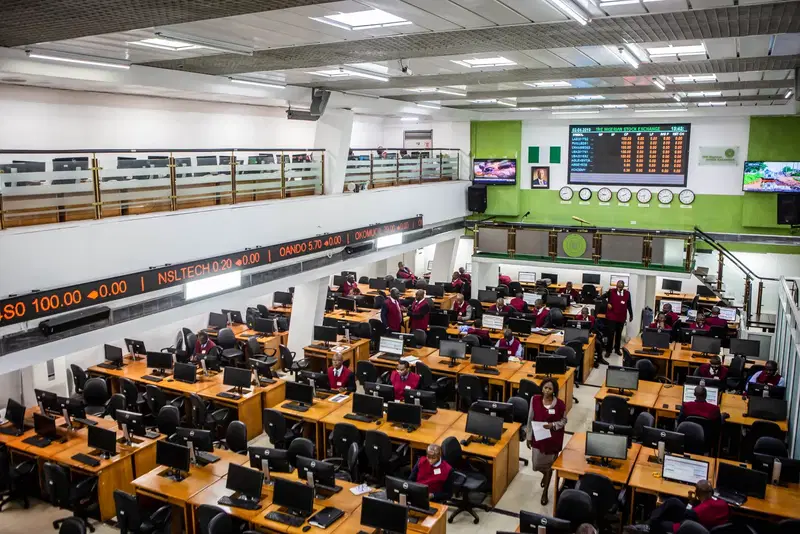
Twenty-two companies listed on the Nigerian Exchange Limited (NGX) recorded combined debt of N21.3 trillion in the second quarter of 2026, reflecting the extent to which businesses across different sectors are using borrowed funds to finance their operations and pursue growth.
The data further shows that 11 of the companies had debt-to-equity ratios exceeding 2.0. The figures point to varying levels of financial leverage and raise questions around the effect of borrowing costs, liquidity pressures and debt obligations on future shareholder returns.
The companies covered are VFD Group, United Capital, UACN, TotalEnergies Marketing Nigeria, Tantalizers, SCOA Nigeria, Nestlé Nigeria, Neimeth International Pharmaceuticals, MTN Nigeria, Mecure Industries, Infinity Trust Mortgage Bank, FTN Cocoa Processors, Ecobank Transnational Incorporated, Dangote Sugar, Conoil, C&I Leasing, BUA Cement, Aradel Holdings, AIICO Insurance, Access Holdings, Abbey Bank and Fortis Global Insurance.
FTN Cocoa leads leverage table
FTN Cocoa Processors had the highest debt-to-equity ratio at 28.61, according to an analysis of the data available to Vanguard. SCOA Nigeria followed with 14.37, while United Capital recorded 6.52.
Nestlé Nigeria had a ratio of 5.74, Fortis Global Insurance 4.66, UACN 4.10, Neimeth International 3.29, Mecure Industries 3.0, MTN Nigeria 2.98, VFD Group 2.4 and Infinity Trust Mortgage Bank 2.18.
The debt-to-equity ratio is used to measure a company’s dependence on debt compared with shareholders’ equity. A ratio of 1.0 means the company has debt equal to its equity, while a ratio of 2.0 means it has N2 in debt for every N1 of equity.
Analysts point out that the ratio must be considered within the context of the sector. Businesses that require significant capital investment, including manufacturing and telecommunications companies, may operate with relatively higher levels of debt. Higher leverage can nevertheless expose companies to greater financial pressure when borrowing costs increase or cash generation deteriorates.
Access Holdings accounts for N7.27trn debt
The companies recorded significant differences in their total debt positions. Access Holdings had the highest debt at N7.27 trillion, while Tantalizers had the lowest at N9.31 billion.
Ecobank Transnational Incorporated followed Access Holdings with N5.36 trillion, while MTN Nigeria recorded N2.78 trillion. Aradel Holdings had N1.87 trillion and United Capital N1.22 trillion.
BUA Cement recorded N663.34 billion in debt, Dangote Sugar N584.61 billion, Nestlé Nigeria N445.11 billion, UACN N308.78 billion and VFD Group N252.17 billion.
AIICO Insurance had N129.66 billion, Conoil N72.05 billion, C&I Leasing N71.67 billion, Mecure Industries N66.17 billion, Fortis Global Insurance N30 billion and Infinity Trust Mortgage Bank N27.16 billion.
The remaining companies recorded N22.42 billion for FTN Cocoa, N20.37 billion for Abbey Bank, N12.41 billion for SCOA Nigeria, N9.33 billion for Neimeth and N9.31 billion for Tantalizers.
High debt-to-equity ratios raise questions
FTN Cocoa’s ratio of 28.61 translates to N28.61 in debt for every N1 of shareholders’ equity. The company’s total debt was N22.42 billion, against equity of approximately N783.65 million.
SCOA Nigeria had a ratio of 14.37 but also reported negative shareholders’ equity of N563.76 million. Negative equity means the company’s reported liabilities are higher than its equity base.
United Capital’s debt-to-equity ratio stood at 6.52, supported by total debt of N1.22 trillion and equity of N187.09 billion.
At the other end of the capital structure, some companies recorded considerably lower leverage. BUA Cement had a debt-to-equity ratio of 1.01, Aradel Holdings 1.22, AIICO Insurance 1.20, Conoil 1.62, C&I Leasing 1.50 and Ecobank Transnational Incorporated 1.50.
Access Holdings has largest equity base
Access Holdings also recorded the highest equity value among the 22 companies, at N4.19 trillion.
Ecobank followed with N3.68 trillion, while Aradel Holdings had N2.17 trillion and MTN Nigeria N930.61 billion. BUA Cement recorded N659.13 billion, United Capital N187.09 billion, Dangote Sugar N170.36 billion and AIICO Insurance N109.15 billion.
VFD Group had N104.73 billion in equity, while Nestlé Nigeria recorded N77.56 billion. UACN had N75.71 billion, TotalEnergies Marketing Nigeria N52.49 billion, C&I Leasing N49.5 billion and Conoil N44.39 billion.
Mecure Industries recorded N22.02 billion, Infinity Trust Mortgage Bank N12.47 billion, Abbey Bank N10.88 billion, Fortis Global Insurance N6.44 billion, Tantalizers N4.76 billion and Neimeth N2.84 billion.
FTN Cocoa had equity of N783.65 million, while SCOA Nigeria recorded negative equity of N563.76 million.
Investors urged to look beyond debt ratios
Ambrose Omordion, Analyst and Chief Operating Officer at Investdata Consulting, cautioned that a high debt-to-equity ratio should not, by itself, be interpreted as evidence of financial distress.
“From an investor perspective, a high debt-to-equity ratio does not automatically mean that a company is in distress. Investors would need to examine the company’s earnings, cash flow, interest-cover ratio, maturity profile of its borrowings and the purpose for which the debt was raised.
“However, high leverage can magnify both gains and losses. Where borrowed funds are deployed into profitable investments, debt can enhance returns to shareholders. Conversely, if earnings and cash flows weaken, a heavily indebted company may face difficulty meeting interest and principal obligations.
“Investors may therefore pay particular attention to companies where high leverage is accompanied by weak profitability, negative shareholders’ funds or declining cash flows.
“The figures from this data also show companies with considerably lower leverage. BUA Cement has a debt-to-equity ratio of 1.01, while Aradel Holdings is listed at 1.22, AIICO Insurance at 1.20, Conoil at 1.62, C&I Leasing at 1.50, and Ecobank Transnational Inc. at 1.50.”
On the implications for shareholders, Omordion said: “For shareholders, rising leverage can increase the sensitivity of profits and dividends to interest rates and business conditions. Higher finance costs can reduce earnings available for distribution, while refinancing risks could become more pronounced when debt falls due.
“At the corporate level, companies with manageable leverage can use debt to expand production, acquire assets and finance working capital without excessive dilution of existing shareholders’ ownership.”
Egbomeade said the figures should similarly be viewed alongside other financial indicators.
“The data therefore suggests that debt levels should not be assessed in isolation. Investors need to consider the quality of earnings, cash-generation capacity, asset base, interest obligations and the sector in which each company operates before drawing conclusions about its financial risk.”
He added: “For the Nigerian economy, corporate borrowing has both positive and negative implications. Productive borrowing can finance expansion, employment, infrastructure and increased output. But excessive corporate leverage across sectors could increase financial vulnerability, particularly where companies depend heavily on foreign-currency borrowing or face weak consumer demand and high financing costs.”
According to Egbomeade, the debt-to-equity ratio is an important measure of financial leverage because it shows how much a company relies on debt to finance its operations relative to shareholders’ funds.
He explained that a ratio of 1.0 represents debt equivalent to equity, while a ratio of 2.0 represents debt that is twice the reported equity. However, he stressed that there is no single ratio that can be regarded as suitable for every business.
Capital-intensive companies may require higher borrowing than businesses with lower capital requirements. Banks, mortgage institutions, telecommunications companies and manufacturers can consequently have significantly different balance-sheet structures.
Investors, therefore, need to consider the debt-to-equity ratio alongside profitability, cash generation, interest expenses, debt maturity, asset quality and the company’s capacity to meet its debt obligations.
Borrowing has wider economic effects
Another analyst drew attention to the broader economic consequences of corporate borrowing, noting that the debt positions of listed companies can have implications beyond individual businesses.
Borrowing can support economic expansion when companies deploy funds into productive investments. Increased manufacturing capacity can generate employment, telecommunications investment can strengthen connectivity, while infrastructure spending can improve productivity across the economy.
However, excessive corporate debt can also constrain businesses. Companies facing significant repayment pressures may reduce capital expenditure, cut jobs, sell assets or defer expansion projects.
For banks and other lenders, the debt burden of corporate borrowers is also significant because repayment problems could affect the quality of their loan portfolios.
The figures consequently highlight the importance of prudent borrowing, adequate capitalisation and strong corporate governance in managing corporate debt.
Africans Angle News