Forgotten Dairies
Somalia Strengthens Ebola Readiness Through National Simulation Exercise -By Kestér Kenn Klomegâh
The exercise was conducted with support from WHO Somalia, the WHO Regional Office for the Eastern Mediterranean, and WHO headquarters, which provided coordination, technical expertise, simulation methodology, and facilitation throughout. This support helped participants to translate the findings into practical action to strengthen Somalia’s Ebola preparedness and readiness.

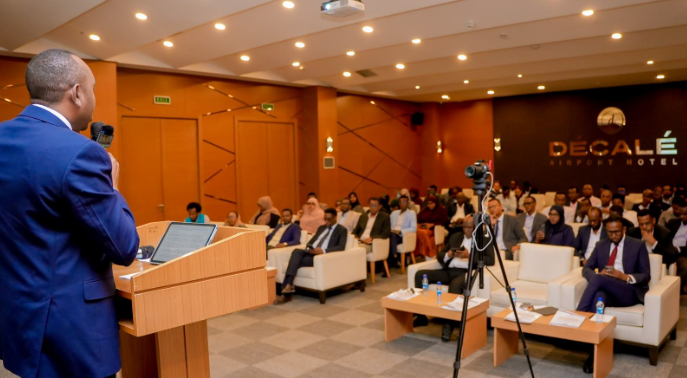
Somalia’s Ministry of Health and Human Services and the National Institute of Health, with support from WHO, have concluded a 3-day simulation exercise in Mogadishu to test how the country would detect, verify, report and respond to a credible alert or suspected imported case of Ebola disease. Somalia has not reported any confirmed case.
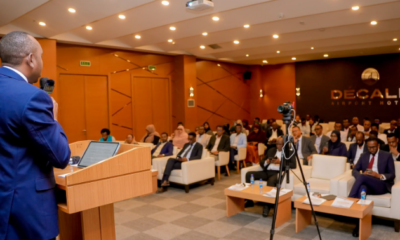
A total of 70 participants from the Federal Ministry of Health and Human Services, the National Institute of Health, Federal Member States, and partner organizations took part in the exercise. Tabletop and functional sessions tested coordination between federal and state authorities, points of entry, referral pathways, information sharing, risk communication and response planning.
The exercise took place as the Democratic Republic of the Congo continues to respond to a large outbreak of Ebola disease caused by Bundibugyo virus. As of 7 September 2026, WHO reported 6757 confirmed cases and 3267 deaths across 61 health zones in 6 provinces. The government-led response has been scaling up supplies, testing and treatment capacity, and vaccine and therapeutic trials.
Somalia’s preparedness agenda is shaped by conflict, climate shocks, displacement, concurrent measles, diphtheria and circulating vaccine-derived poliovirus type 2 outbreaks, and funding constraints. Readiness depends on how quickly authorities, health facilities, laboratories, communities and partners coordinate across a federal system.
Participants worked through 6 tabletop scenarios – a regional alert, increased population movement, a suspected traveller at a point of entry, a readiness review, rumours and a leadership request – clarifying roles for verification, risk analysis, coordination, referral and partner communication. A functional phase then tested whether those arrangements held through the Public Health Emergency Operations Centre and incident-management structure under incomplete information and competing demands.
“Simulation exercises offer a safe, practical environment to test plans, procedures and coordination systems before they are needed in a real emergency,” said Dr Ahmed Dahir, a.i. Health Emergency Lead at WHO Somalia.
The exercise identified gaps in reporting lines, notification and referral pathways, point-of-entry arrangements, governance of public communication and ownership of actions. Each finding was assigned, tracked, and verified through an improvement action plan.
“A well-documented gap is a valuable result of this exercise because it gives us a concrete opportunity to strengthen readiness before a real event,” said Dr Hassan Ahmed, Director of the Emergency Department at the Federal Ministry of Health and Human Services, Somalia.
All scenarios were simulated. No real patients, specimens, or alerts were involved, and the scenarios did not reflect any event in Somalia. A simulation exercise is a learning activity; it is not an indication that a case has been detected.
The exercise was conducted with support from WHO Somalia, the WHO Regional Office for the Eastern Mediterranean, and WHO headquarters, which provided coordination, technical expertise, simulation methodology, and facilitation throughout. This support helped participants to translate the findings into practical action to strengthen Somalia’s Ebola preparedness and readiness.
—