Africa
ECOWAS @ 50: Integrating…Integrating and Integrating -By Kestér Kenn Klomegâh
The Economic Community of West African States (ECOWAS; also known as CEDEAO in French and Portuguese) is a regional political and economic union of twelve countries of West Africa. The region has an estimated population of 424.34 million. The bloc operates in three co-official languages—French, English, and Portuguese. ECOWAS was established by its Treaty on May 28, 1975, in Lagos, Nigeria. The Treaty was signed by Benin, Burkina Faso, Côte d’Ivoire, The Gambia, Ghana, Guinea, Guinea Bissau, Liberia, Mali, Mauritania, Niger, Nigeria, Sierra Leone, Senegal and Togo.

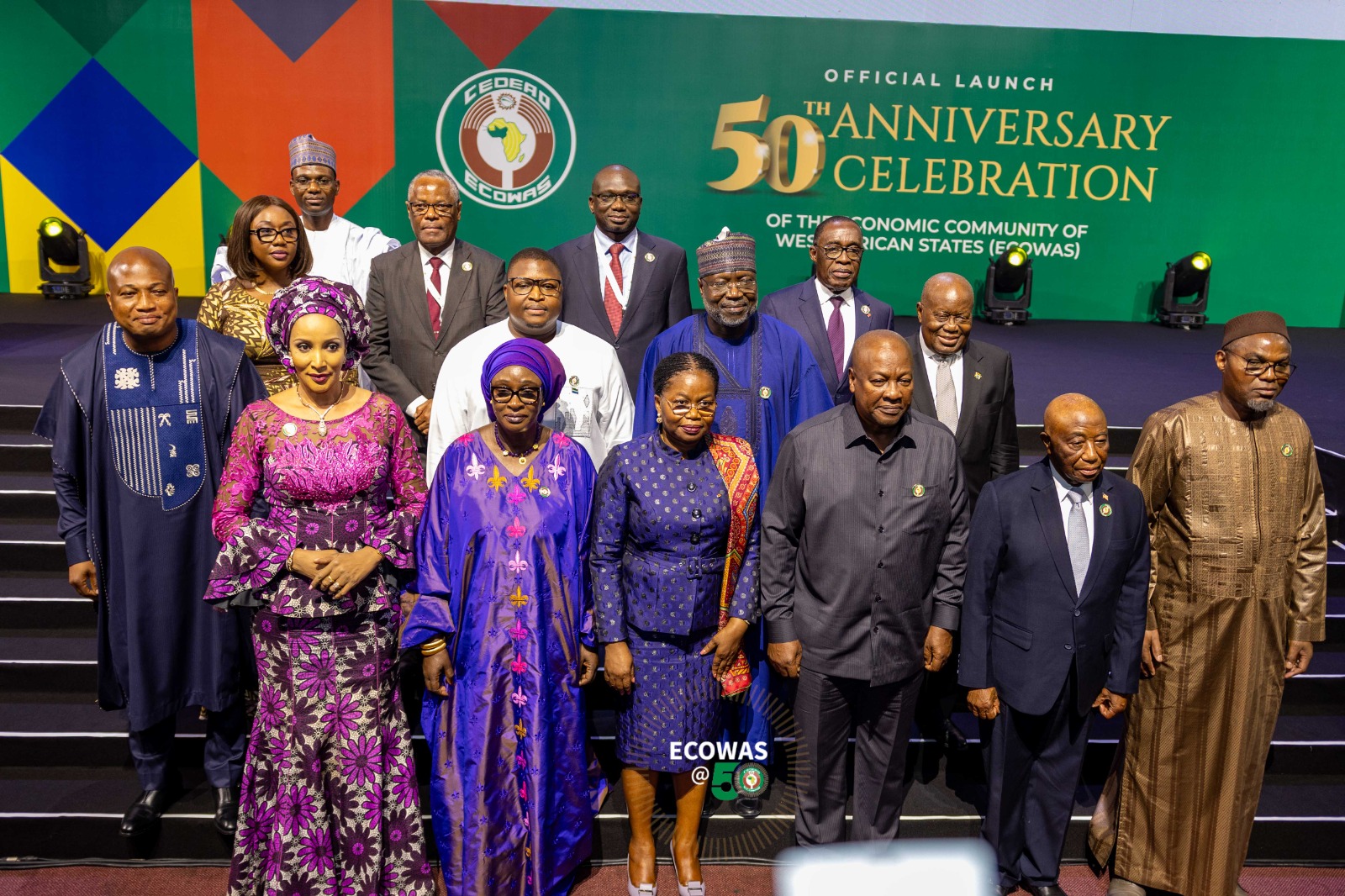
Despite its ‘overarching’ achievements over the past 50 years (half a century) since its establishment, the Economic Community of West African States (ECOWAS), the 12-member regional bloc, has undoubtedly multitude of noticeable challenges especially during this time of rapidly reconfiguration of the world. In the context of shifting global powers, ECOWAS has to undergo serious restructuring and reforms, review its strategies as well multidimensional development questions across the region.
After marking ECOWAS @ 50, pertinent issues such as ‘unity and solidarity’ and managing ‘political diversity’ stand prominently in order to ensure urgently regional security, an ingredient necessary for undertaking and tackling economic integration and development, and other related sectoral issues. West Africa has huge natural resources and the human capital. But the region, and the entire continent remain largely fragmented primarily due to poor governance, deep-seated corruption and lack of transparent in implementing policies.
ECOWAS has lost its five decades-old credibility, simply the bloc was unsuccessful in restoring security after the exit of the French-speaking members – Burkina Faso, Mali and Niger – and with Chad, Senegal and Togo threatening to withdraw and join the Alliance of Sahel States (AES). The region is still engulfed with widespread terrorism and violent extremism.
Throughout these several years ECOWAS has failed the entire West African region. Several narratives indicated that the bloc has been manipulated by external powers, executing instructions and directives from imperialists-minded powers who have, so far, imposed their own rules.
Notwithstanding the bloc’s weaknesses, land-marking fifty years was quite significant in ECOWAS history. The bloc has started stepping up measures to forge unity among members. Reflecting on ECOWAS’ 50-year history, Dr. Benjamin Anyagre Aziginaateeg, Chief Executive Officer of AfriKan Continental Union Consult (ACUC), pointed out challenges, such as trust issues, disunity, and constitutional coups, which have hindered the organization’s progress. He highlighted the inaction on ECOWAS protocols, which include free movement, equality, inter-dependence of member states, and the use of a common currency.
Aziginaateeg further noted barriers to the free movement of people due to historical structural divisions and criticized the sub-region’s democratic processes, often marred by fraudulent elections and constitutional coups. He asked West African leaders to engage in self-evaluation, reflection, and constructive criticism to assess whether the sub-region is fulfilling its mission after 50 years of deliberations. He questioned the political and economic stability of member states and pressed for a reset of the ECOWAS community to ensure its relevance and impact.
There were other measures initiated as past of observing the golden jubilee anniversary. For instance, during the bloc’s extraordinary session in late April 2025, it finalized an emergency plan to address the withdrawal of Burkina Faso, Mali, and Niger from ECOWAS. The Council of Ministers meeting, held from April 22 to 23, focused on the implications of the departure on regional programs, institutional operations, and the continuity of trade and free movement.
The ECOWAS Commission President, Omar Alieu Touray, presented a five-pronged emergency plan addressing legal adjustments, market access, security cooperation, development program continuity, and protection of social achievements.
While Nigerian Foreign Minister Yusuf Maitama Tuggar unreservedly called for unity and resilience, underscoring the importance of inclusive integration, others regretted the exit of the Sahel states but advocated for dialogue and renewed diplomatic engagement, further urged leaders in resolving regional crises in order to usher in a new era of solidarity and shared prosperity.
Hon. Samuel Okudzeto Ablakwa, Minister of Foreign Affairs of the Republic of Ghana, reaffirmed Ghana’s unwavering commitment to the political and economic liberation of West Africa and the deeper integration of the region. “Fifty years on, ECOWAS has every reason to celebrate its evolving process from a modest economic cooperation framework into a dynamic, multifaceted regional community, championing not only economic integration but also peace, security and social development,” he stated.
The Economic Community of West African States (ECOWAS; also known as CEDEAO in French and Portuguese) is a regional political and economic union of twelve countries of West Africa. The region has an estimated population of 424.34 million. The bloc operates in three co-official languages—French, English, and Portuguese. ECOWAS was established by its Treaty on May 28, 1975, in Lagos, Nigeria. The Treaty was signed by Benin, Burkina Faso, Côte d’Ivoire, The Gambia, Ghana, Guinea, Guinea Bissau, Liberia, Mali, Mauritania, Niger, Nigeria, Sierra Leone, Senegal and Togo.