Africa
Editorial Independence, Professional Responsibility, and the Burden of Serious Journalism: A Reflection on Madina Maishanu’s Interviews -By Turaki Abdulhamid Yahya
It is important to clarify that there is nothing inherently wrong with warmth or human connection in journalism. In pre-interview sessions, off-camera moments, or informal interactions, laughter and casual conversation are natural and even helpful in building rapport. However, once the microphone is on, journalism becomes public service. At that point, the journalist no longer speaks as an individual but as a representative of society.

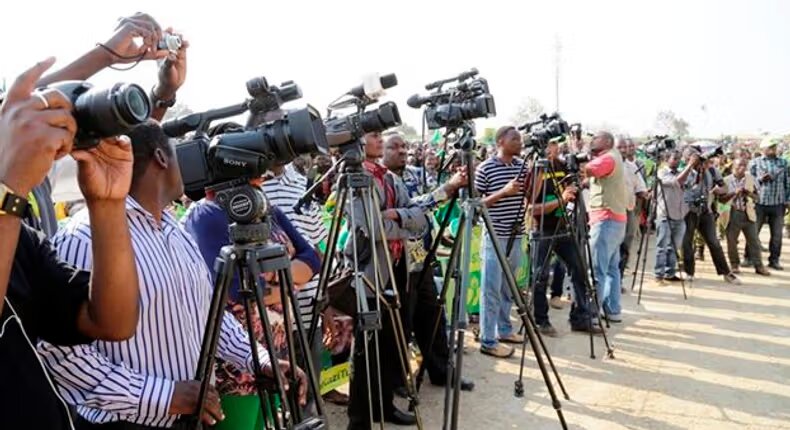
In moments of national pain, journalism must be firm, In moments of crisis, journalism must be serious and in all moments, journalism must remain ethical.
This semester, while facilitating Media Policy and Regulation for my Level 100 students, I repeatedly emphasized one fundamental pillar of journalism: “Editorial independence”. Closely tied to this principle are objectivity, impartiality, balance, fairness, and social responsibility, all of which are clearly articulated in the Code of Ethics for Nigerian Journalists. These values are not abstract ideals; they are practical standards that must guide journalistic conduct, especially in moments of national crisis.
Recent public reactions to the interviews conducted by Madina Maishanu of the BBC Hausa Service present an important learning opportunity for both practicing journalists and students of the profession.
Madina Maishanu is not new to broadcast journalism. She is a seasoned presenter known for several programmes on BBC Hausa, including the popular Mahangar Zamani. Over time, audiences have become familiar with her relaxed, engaging style, often marked by light humour, warmth, and conversational ease during interviews and live discussions. However, journalism is a contextual profession, and tone must always align with the gravity of the issue under discussion.
When Madina travelled from Abuja to Niger State to interview Governor Umaru Bago, the context was deeply troubling. Under that administration, over 200 students were kidnapped from a single schoola, a tragedy that shook the nation. In such circumstances, journalism demands sobriety, seriousness, and intentional questioning. This was not the moment for jokes, laughter, or casual exchanges. Hard questions require serious minds and deliberate intent.
A journalist in that situation must look power in the eye and demand accountability. The responsibility to protect lives and property rests heavily on public office holders, and journalists serve as the voice of the people in holding them to account. One must ask: How would a parent feel watching an interview conducted lightly when their child is still missing or traumatised? Journalism, at its core, is about empathy and public interest, not performance or entertainment.
Madina adopted the same serious, focused, and assertive approach in her interview with the new Minister of Defence, Christopher Musa. This was not accidental; it was professional judgment. Security remains Nigeria’s most pressing challenge. Madina herself hails from Sokoto State, one of the regions deeply affected by banditry and violent attacks. The expectation, therefore, was clear: extract commitments, interrogate policies, and seek answers on behalf of suffering communities. Excessive friendliness in such interviews risks diluting the seriousness of the subject and undermining the journalist’s duty.
Her recent interview with Senator Rabiu Musa Kwankwaso followed the same pattern. The political climate in Kano is tense, complex, and emotionally charged. A glance at the senator’s facial expressions during the interview reveals the seriousness of the discussion. Would laughter or casual banter have been appropriate in a conversation about such burning political issues? Certainly not.
This is where editorial oversight becomes relevant. Journalism is never a solo act. Behind every credible interview is an editor, producers, and an institutional culture. The consistent trust placed in Madina by BBC Hausa is not accidental; it is a reflection of her professionalism, discipline, and adherence to editorial standards. These institutions understand that credibility is built on seriousness, balance, and responsibility.
It is important to clarify that there is nothing inherently wrong with warmth or human connection in journalism. In pre-interview sessions, off-camera moments, or informal interactions, laughter and casual conversation are natural and even helpful in building rapport. However, once the microphone is on, journalism becomes public service. At that point, the journalist no longer speaks as an individual but as a representative of society.
For students and young journalists, the lesson is clear: Journalism is not about pleasing power, entertaining audiences, or performing personality. It is about responsibility, context, and public trust. The tone you adopt must always reflect the weight of the issue at hand.
Turaki Abdulhamid Yahya,
Writes from the Department of Mass Communication, Federal University, Kashere Gombe State.