
Politics
In Condemnation Of Igboho’s Fire And Brimstone Threats Ahead Of 2027 Elections -By Isaac Asabor
Sunday Igboho’s fire-and-brimstone threats are a stark reminder of what is at stake. They highlight the urgent need for a collective commitment to the principles that underpin democratic governance: freedom, respect, and accountability. Anything less is a gamble Nigeria cannot afford to take.

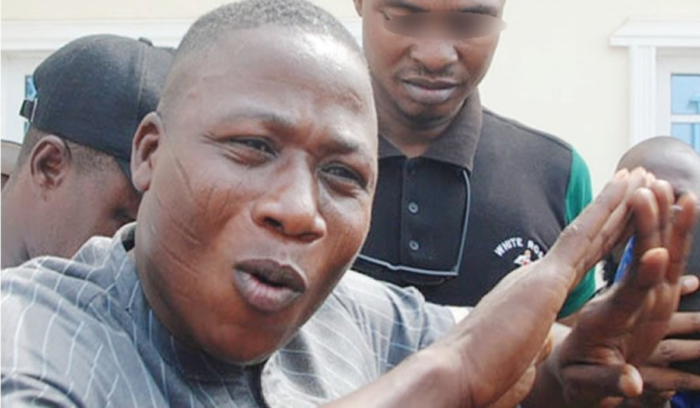
Nigeria’s democratic journey has never been short of turbulence, but even within its imperfections, one principle has remained non-negotiable: the right of citizens to freely choose their leaders without fear. That principle is now being tested once again. The recent fire-and-brimstone threats issued by Sunday Igboho against those who may support Atiku Abubakar or Peter Obi in the 2027 elections represent not just an alarming lapse in judgment, but a dangerous escalation in Nigeria’s already fragile political climate.
Let us be clear from the outset: this is not politics as usual. It is not passionate advocacy. It is not even the rough-and-tumble rhetoric that often defines election seasons. It is intimidating, plain and simple. And when intimidation enters the democratic space, it poisons the very essence of what elections are meant to represent. Nigeria cannot afford to normalize this.
Public figures like Sunday Igboho operate in a space where their words travel far and fast. Whether one sees him as a cultural defender, a regional activist, or a controversial agitator, one fact is undeniable: he commands attention. And with that attention comes responsibility. When such an individual resorts to threats, the implications go far beyond mere headlines. They seep into communities, shape perceptions, and in some cases, provoke actions that spiral out of control.
This is not speculation. Nigeria has lived through the consequences of reckless rhetoric. Electoral violence, voter suppression, and politically motivated intimidation are not distant memories, they are recurring features of the country’s political landscape. From local skirmishes to widespread unrest, the pattern is painfully familiar: words are spoken, tensions rise, and ordinary citizens bear the brunt. Against this backdrop, Igboho’s warning is not just inappropriate, it is dangerous.
Supporters of Atiku Abubakar and Peter Obi are exercising a fundamental democratic right. They are not adversaries to be threatened or enemies to be silenced. They are Nigerians participating in the political process, as they are constitutionally entitled to do. To suggest that their choices could attract consequences is to undermine the very foundation of democratic participation.
Democracy thrives on diversity of thought. It requires disagreement. It depends on the free exchange of ideas. But what it cannot survive is fear. Once citizens begin to feel that their political preferences could endanger their safety, the system itself begins to erode.
And that erosion does not happen overnight. It starts with statements like these, unchecked, unchallenged, and, worse, sometimes defended.
One of the most troubling aspects of Igboho’s rhetoric is its potential to trigger a chain reaction. In a country where many people hold influential figures in near-absolute regard, statements are rarely taken lightly. Followers listen. They internalize. And in some cases, they act. This is where the danger lies.
The so-called “bandwagon effect” is not just a theoretical concept; it is a lived reality in Nigeria’s political environment. When a figure with a loyal base takes a hardline stance, it often emboldens supporters to adopt the same posture, sometimes with even greater intensity. What begins as a verbal threat can quickly morph into acts of harassment, intimidation, or worse.
Nigeria’s diversity makes this even more precarious. Political allegiances are often intertwined with ethnic and regional identities, meaning that a statement targeting supporters of certain candidates can easily be interpreted as an attack on broader communities. Given Igboho’s history of regional advocacy, his words carry an added layer of sensitivity. They risk deepening divisions that the country can ill afford.
This is how fault lines widen. This is how mistrust festers. And this is how unity is gradually dismantled.
It is worth emphasizing that freedom of speech, while fundamental, is not without limits. It does not extend to threats or incitement. The right to express political opinions does not include the right to intimidate others into silence or compliance. That distinction must be clearly understood and firmly upheld.
Those who attempt to dismiss Igboho’s remarks as mere rhetoric are missing the bigger picture. In a stable environment, perhaps such statements could be brushed aside. But Nigeria is not operating in a vacuum. It is a nation where tensions can escalate quickly, where past wounds remain unhealed, and where the line between words and action is often perilously thin. This is precisely why public figures must exercise restraint.
Leadership is not just about commanding attention; it is about guiding it responsibly. It is about recognizing the power of one’s voice and choosing to use it in ways that build rather than destroy. By resorting to threats, Igboho has not demonstrated strength, he has exposed a troubling disregard for the consequences of his influence.
Equally concerning is the persistent lack of accountability in such situations. Time and again, influential individuals make incendiary statements, public outrage follows, and then the moment fades without any meaningful consequences. This cycle emboldens others to act similarly, reinforcing a culture where recklessness goes unchecked. Nigeria must break this cycle.
The example of MC Oluomo during previous elections underscores the risks of ignoring inflammatory rhetoric. Statements perceived as threatening contributed to an atmosphere of fear, discouraging participation and undermining confidence in the electoral process. Igboho’s recent comments risk pushing the country further down that same path.
Condemnation, therefore, is not optional, it is necessary. But it must go beyond words. Institutions responsible for maintaining law and order must take such statements seriously. There must be clear signals that threats against citizens’ democratic rights will not be tolerated, regardless of who makes them.
At the same time, Nigerians themselves must reject the politics of intimidation. Loyalty to any figure should never come at the expense of one’s values or the nation’s stability. Citizens must be willing to question, to challenge, and to refuse to be drawn into cycles of hostility.
The 2027 elections may still be some distance away, but the tone is already being set. If threats and coercion are allowed to define the early stages of political engagement, the consequences could be severe. Elections should be periods of hope and participation, not fear and apprehension.
Nigeria stands at a crossroads. It can either continue down a path where influence is wielded recklessly, where threats overshadow dialogue, and where fear dictates political choices, or it can choose a different course. A course where leaders act responsibly, where citizens feel secure, and where democracy is not just practiced, but protected.
Sunday Igboho’s fire-and-brimstone threats are a stark reminder of what is at stake. They highlight the urgent need for a collective commitment to the principles that underpin democratic governance: freedom, respect, and accountability. Anything less is a gamble Nigeria cannot afford to take.























You must be logged in to post a comment Login