Africa
Ethiopian Art as a Symbol of Cultural Independence -By Kestér Kenn Klomegâh
My vision is simple—more exchanges between artist residency programs, students, and creative communities. When we create together, we understand each other better. Art can build bridges for me, art is a universal language. It connects people emotionally.

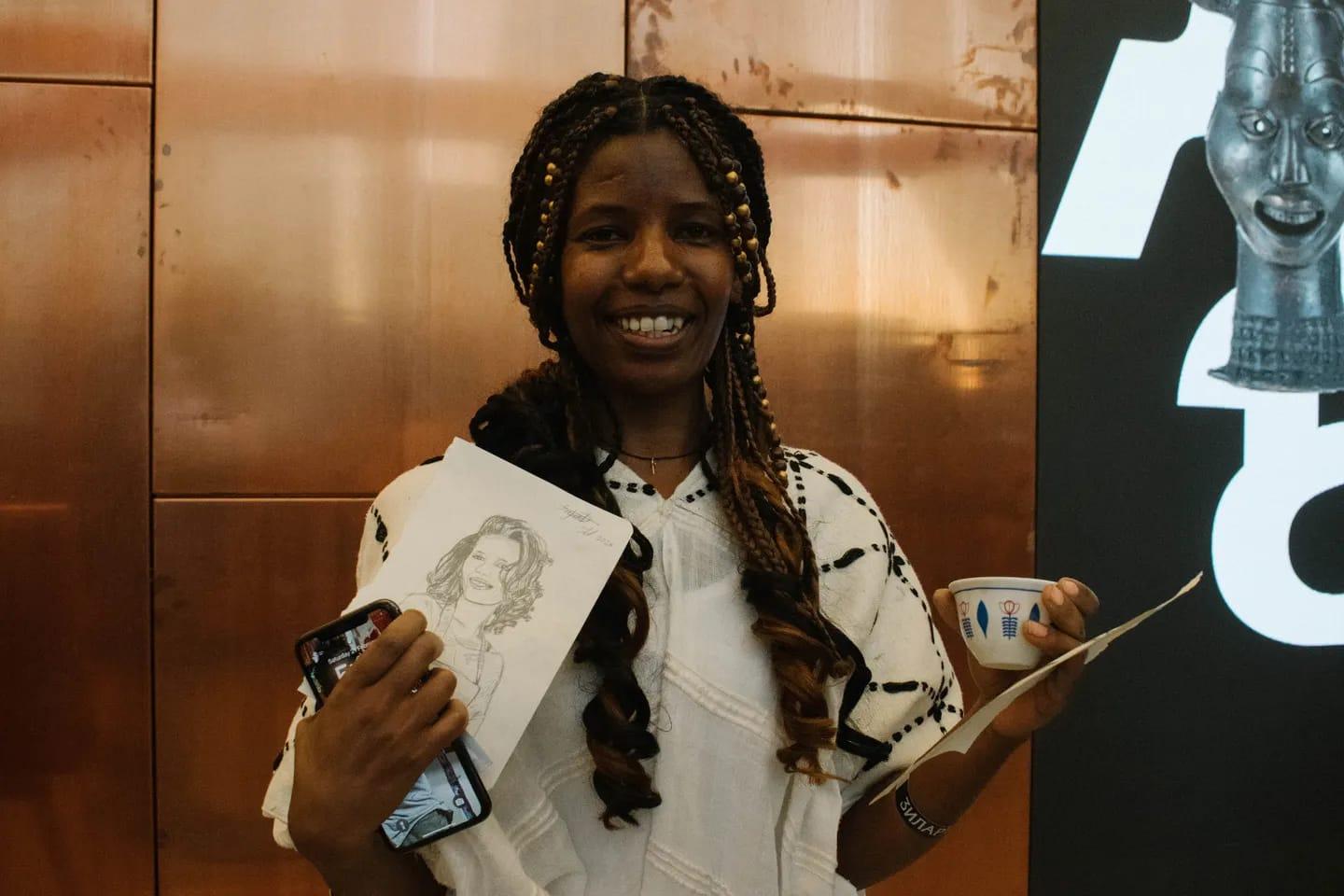
Ethiopian artist, Selamavit Gebrechadik, discusses in a conversation, the main features, challenges and meanings of her beautiful grand art exhibition titled “Leaf. Love. Life.” held in mid-February 2026, at Moscow’s Zilart Museum. Follow her discussions here:
The Main Features of Ethiopian Artworks
As an Ethiopian artist, I speak not only for myself but for a tradition that has lived for thousands of years. Ethiopian art is more than decoration—it is our history, our faith, and our identity.
Our artistic heritage is deeply rooted in the Ethiopian Orthodox Tewahedo Church. For centuries, religious paintings and illuminated manuscripts have carried our spiritual teachings. Works like the Garima Gospels show that Ethiopia has preserved one of the world’s oldest Christian artistic traditions. In our paintings, you see bright colors, large spiritual eyes, and strong symbolic forms. These are not accidents of style—they reflect how we see the divine and the human soul.
Public Perceptions and Reactions
Our architectural achievements also speak loudly to the world. The Rock-Hewn Churches of Lalibela, carved directly from living rock, show the creativity and engineering skill of our ancestors. The towering Axum Obelisk stands as evidence that ancient Ethiopia was a powerful and organized civilization long before many others.
But Ethiopian art is not only about the past. In our villages and cities, artisans continue to create hand crosses, woven mesob baskets, pottery, and jewelry. These works support families and preserve indigenous knowledge passed from generation to generation. As modern artists, inspired by pioneers like Skunder Boghossian, we blend traditional symbols with contemporary techniques. We explore themes of identity, migration, politics, and hope. Through our art, we connect Ethiopia to the global community while remaining proud of our roots.
Testimony of Africa’s Ancient Civilization
Ethiopian art is a symbol of cultural independence. It has survived foreign influence, political change, and modernization without losing its soul. Today, we call on the world not only to admire Ethiopian art but to understand its depth—as a living testimony of Africa’s ancient and continuous civilization.
As artists, we do not simply paint or carve; we preserve memory, express faith, and shape the future of our nation.
As artists, our primary goal is to create and share our work with a wider audience around the world. I tell my stories in my own voice—and that voice is my art. Through my art, I speak about leaf, life, love—sometimes separately, and sometimes all together as one.
Reasons for Visiting Moscow
When I visited Moscow, people’s reactions were truly heartfelt. They were very hospitable and treated me with love and admiration. It was a great honor to exhibit my artwork and to stay in their presence. The experience was more than I expected. Even on the streets, people smiled, asked where I came from, and warmly welcomed me. They celebrated me and my artworks, and I am very thankful for that. The curatorial teams were beyond word, the energy, the excitement and the proud in their eyes gave the event to have the extra mile. It was the most professional team I have ever work with and I am lucky to be at the center of it. My art was a celebration of leaf, life, and love, and we created that in my art exhibition
Art Builds Bridges Despite Challenges
I think the biggest challenge is that people on both sides still don’t know each other deeply with language barriers, and not enough direct cultural exchange. Real connection happens when people meet, share stories, and experience each other’s culture firsthand. And it takes time and resources.
My vision is simple—more exchanges between artist residency programs, students, and creative communities. When we create together, we understand each other better. Art can build bridges for me, art is a universal language. It connects people emotionally. Through art, we share who we are—our history, our dreams, our struggles. That is why art is such an important part of cultural diplomacy. It creates understanding, respect, and human connection in a very natural and powerful way.