
Africa
Healing Our Nation: Why We Must Support the EFCC Beyond the Games -By Prof. John Egbeazien Oshodi
One recovered asset turned into a public institution can change the psychology of a whole community. It sends a message that Nigeria is not completely helpless. It shows that stolen wealth can return to the people. It helps citizens believe again that the nation can correct itself. The EFCC must be pressured and encouraged to do more of this, because recovered assets are not only financial wins, they are emotional medicine for a wounded society.

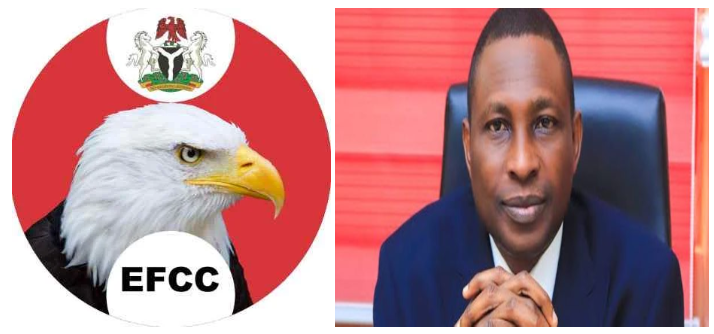
Nigeria is tired, not because Nigerians are weak, but because Nigerians have been emotionally abused by a system that repeatedly promises justice and repeatedly performs disappointment. For too long, our people have been fed political stories, courtroom stories, and media stories, only for the endings to remain the same. One day, a big name is arrested. Another day, the same person is smiling again, moving freely, and negotiating power as if nothing happened. This cycle has created what I call national heartbreak. It has wounded the people’s faith in law. It has trained citizens to expect betrayal. It has planted hopelessness in the public mind, and hopelessness is one of the most dangerous diseases a nation can carry.
When a people lose hope in justice, they begin to normalize injustice. They stop reporting crime. They stop believing effort matters. They stop trusting institutions. They begin to live by survival rules rather than civic values. And when survival becomes the national mindset, corruption becomes the national language. That is why the fight against corruption is not only legal, it is psychological. It is a battle for Nigeria’s emotional recovery and national confidence.
This is where the Economic and Financial Crimes Commission comes in, not as a perfect institution, but as a necessary national shield. Nigerians must stop treating the EFCC as entertainment and start treating it as a public tool that must be strengthened, protected, and monitored. The EFCC is not a football club to be supported blindly or hated blindly. It is a national instrument that must be guided to work better. If Nigeria wants healing, we must learn the difference between noise and work, between drama and progress, between distraction and accountability.
Nigeria’s Deep Injury: When Justice Feels Like a Scripted Movie
Many Nigerians now talk about justice as if it is a film, something acted on television, something that creates temporary excitement but produces no lasting change. The rich are arrested with cameras present, but the courtroom process becomes slow, confusing, and eventually silent. The poor man steals a phone and goes to prison quickly, but the powerful man steals billions and hires time itself to defend him. That imbalance has trained Nigerians to see law as a toy in the hands of big men. It is not that Nigerians do not understand justice. Nigerians understand it very well. What Nigerians have lost is trust that justice is possible.
This is why supporting the EFCC must go beyond excitement about arrests. Arrest is not victory. Media headlines are not justice. Justice is when stolen money becomes recovered money, when recovered money becomes public benefit, and when public benefit becomes visible development. That is the healing pathway.
Turning Stolen Wealth Into Our Children’s Future
Corruption is not abstract. It is not only government business. Corruption is a direct attack on the home. It is the reason many hospitals have empty shelves. It is the reason roads remain death traps. It is the reason school buildings look like forgotten ruins. It is the reason electricity remains a national prayer instead of a national service.
When people steal public money, they are not stealing from government. They are stealing from children, from mothers, from workers, from the sick, and from the future. That is why one of the most important things the EFCC can do is not only prosecute corruption but recover value. Recovery is where justice becomes visible.
One recovered asset turned into a public institution can change the psychology of a whole community. It sends a message that Nigeria is not completely helpless. It shows that stolen wealth can return to the people. It helps citizens believe again that the nation can correct itself. The EFCC must be pressured and encouraged to do more of this, because recovered assets are not only financial wins, they are emotional medicine for a wounded society.
Do Not Let Praise Singers and Paid Narratives Confuse the Public
Nigeria has entered an era where propaganda competes with truth daily. Paid narratives now move faster than facts. A corrupt person can hire public sympathy. A wealthy suspect can buy soft headlines. A powerful figure can sponsor media voices to paint accountability as persecution. When you hear some people talk, you would think the EFCC is the criminal and the suspect is the victim. This is one of the cleverest tricks corruption uses. It reverses morality. It turns the thief into a wounded hero and turns the investigator into a wicked enemy.
That is why Nigerians must develop what I call active vigilance. Active vigilance means you do not accept every headline. You do not accept every trending opinion. You demand evidence. You ask questions. You follow outcomes. You learn to separate emotional drama from legal reality.
If the public becomes confused by propaganda, the EFCC becomes weakened, and corruption becomes stronger. But if Nigerians become emotionally mature and fact driven, corruption loses its biggest weapon, which is public manipulation. The media must be pressured to do better as well. Nigerians must demand reporting that tracks outcomes, convictions, recovered assets, and real reforms, not only sensational arrests and political gossip.
The Power of a Focused Leader Under Pressure
Any serious anti corruption agency will face pressure. It is not a sign of failure. It is a sign that the work is touching powerful nerves. When the EFCC becomes active, the backlash becomes loud. Old stories are revived. Rumors are spread. Personal attacks multiply. Allegations appear from nowhere. The goal of these distractions is not always to prove truth. Sometimes the goal is simply to break focus.
Psychologically, distraction is a weapon used against leadership. If an anti corruption leader begins to answer every insult, he loses time. If he starts fighting every rumor, he loses energy. If he becomes emotionally reactive, he becomes professionally weak. In this kind of work, silence can be strength. Discipline can be protection. Calmness can be power.
Nigerians must understand this. We do not need EFCC leaders who talk too much. We need EFCC leaders who recover money, prosecute strong cases, and secure convictions. The best answer to propaganda is results. The best response to lies is legal proof. The best reply to distraction is visible accountability.
Fixing the Pot Before the Water Wastes
Nigeria’s greatest anti corruption failure for many years has been that the nation often fights corruption after the money has already vanished. Then the country spends years in court while the stolen funds are already living abroad, changing identity, buying new properties, and becoming unreachable. That old model creates frustration. It makes Nigerians feel like justice is too slow to matter.
The better model is prevention. Prevention means blocking the leak before the pot empties. Prevention means monitoring spending early, identifying risk patterns, and stopping suspicious movements of funds before they disappear into private hands. This is the kind of strategy that reduces long court battles and increases quick protection of public resources.
When prevention is strong, the nation saves money that can support real development, student programs, electricity projects, health improvements, and security funding. Prevention is not only law enforcement. Prevention is national survival wisdom. Nigeria does not have the luxury to be chasing stolen billions for ten years while citizens suffer daily.
Supporting the EFCC Without Blindness
Supporting the EFCC does not mean worshipping the EFCC. Nigerians should not become emotionally foolish supporters who refuse to see mistakes. Support must be intelligent. Support must be firm. Support must be demanding. The EFCC must be encouraged when it works, challenged when it delays, and corrected when it becomes selective. Nigerians must always remember that the EFCC is not above accountability. It is a national tool, and every national tool must be sharpened and cleaned regularly to remain useful.
This is what mature support looks like. It is not sentiment. It is civic responsibility.
A Therapeutic Conclusion: From Hopelessness to Active Vigilance
Nigeria is tired of play play justice where the law catches only the small fish and bows to the big ones. Nigerians are tired of arrests without convictions, drama without results, and noise without recovery. The EFCC is not perfect, but it remains one of the strongest shields Nigeria has against the culture of financial injustice. The country must not weaken the shield because of politics, propaganda, or emotional confusion.
Healing Nigeria requires a new mindset. It requires moving from hopelessness to active vigilance. It requires citizens who monitor outcomes, demand transparency, and refuse to be emotionally manipulated by paid narratives. It requires media that reports results, not just rumors. It requires leaders who remain calm under pressure and focused on prosecution and recovery. It requires institutions that prevent theft early, not only chase thieves late.
Nigeria can still heal, but healing will not come through prayer alone, anger alone, or complaint alone. Healing will come through steady accountability, visible restitution, and a public that refuses to surrender its belief in justice. When recovered wealth becomes public benefit, when accountability becomes consistent, and when law becomes stronger than status, the nation’s heartbreak will begin to lift. That is how we rebuild trust, one conviction at a time, one recovered asset at a time, and one restored community at a time.
John Egbeazien Oshodi, Founder of Psychoafricalysis
Psychoafricalytic Psychology is a specialized framework that explores the intersection of African cultural dynamics, history, and modern psychological principles. It seeks to understand and heal the African psyche by decolonizing mental health approaches and integrating indigenous village wisdom with contemporary clinical insights to drive individual and systemic transformation.




















![Human rights groups are concerned about further arrests amid continuing raids in the occupied West Bank [File: Jaafar Ashtiyeh/AFP]](https://www.africansangle.com/wp-content/uploads/2023/10/Human-rights-groups-are-concerned-about-further-arrests-amid-continuing-raids-in-the-occupied-West-Bank.webp)