National Issues
Sowore’s Rights Narrative: When Activism Ignores The Rule Of Law -By Adenike Ajanlekoko
When activists pick and choose which laws to obey, they undermine the very constitutional order that guarantees their freedoms in the first place. Respect for the rule of law is not optional activism; it is the foundation of genuine democratic engagement.

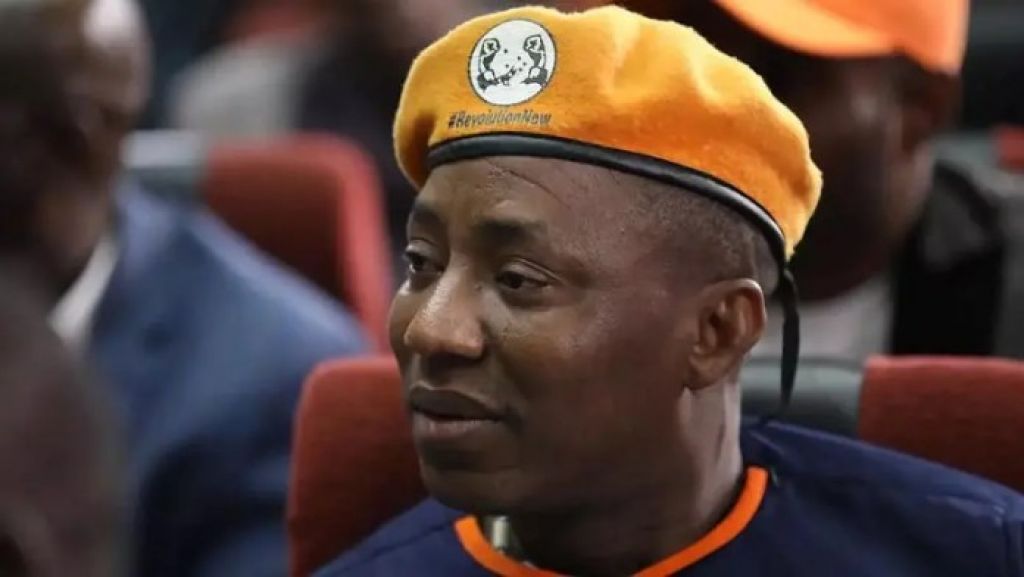
Omoyele Sowore’s latest attempt to recast himself as a victim of state repression is yet another example of selective storytelling dressed up as human rights advocacy.
His claim that his “fundamental human rights” were violated and that he was arrested merely for participating in a “peaceful protest” collapses under even the lightest scrutiny of facts and law.
First, it is important to state clearly that no right in a constitutional democracy exists in isolation. Fundamental rights are guaranteed, yes, but they are also exercised within the bounds of the law.
Peaceful assembly does not include the freedom to deliberately disobey a valid court order. Protest does not become “peaceful” simply because a participant labels it so on social media.
Contrary to Sowore’s narrative, this was not a case of arbitrary arrest for lawful dissent.
On October 18, 2025, the Federal High Court in Abuja granted an interim injunction expressly restraining Omoyele Sowore and his associates from organising, participating in, or promoting the planned October 20 protest calling for the release of the detained IPOB leader, Nnamdi Kanu.
The order went further to specifically bar any such protest around sensitive locations, including the Aso Rock Villa, the National Assembly, and the Unity Fountain in Abuja.
Court orders are not suggestions. They are binding directives backed by the authority of the state. Once such an order is made, the responsible and lawful option is to challenge it through legal channels, not to flagrantly violate it and then cry persecution when consequences follow.
It is, therefore, misleading for Sowore to argue that he was arrested despite not being served a restraining order.
The substance of the matter is not theatrical service drama but deliberate defiance. Evidence abounds that the protest went ahead in clear violation of the court’s directive.
A gathering that openly flouts a subsisting court order, particularly around restricted national assets, cannot by any stretch of logic be described as “peaceful” or lawful.
Equally troubling is the growing habit of weaponising human rights language to shield acts of contempt for the judiciary.
When activists pick and choose which laws to obey, they undermine the very constitutional order that guarantees their freedoms in the first place. Respect for the rule of law is not optional activism; it is the foundation of genuine democratic engagement.
Then there is the almost comical relief sought before the court. The demand for ₦1.2 billion in general and exemplary damages, coupled with a public apology in three national newspapers and sweeping declarations that his arrest was “unlawful, illegal, and oppressive,” reads less like a serious legal claim and more like a practical joke.
In a country grappling with real human rights abuses, such exaggerated reliefs trivialise legitimate struggles and clog the judicial system with theatrics.
The courts are not stages for political performance. They are institutions of reason, evidence, and law. If every lawful enforcement action is reframed as oppression, then the concept of public order itself becomes meaningless.
In the end, this is not about silencing dissent or persecuting an activist. It is about accountability and respect for judicial authority. No individual, regardless of notoriety or ideological leanings, is above the law.
Activism that disregards court orders is not courage; it is recklessness. And attempting to dress recklessness up as a human rights violation does a disservice to genuine advocates and to democracy itself.
Adenike Ajanlekoko writes from Ikeja, Lagos and can be reached via aydalliance@gmail.com