Forgotten Dairies
ICC’s Tumultuous Shift: Democracy or Geopolitical Chessboard? -By Fransiscus Nanga Roka

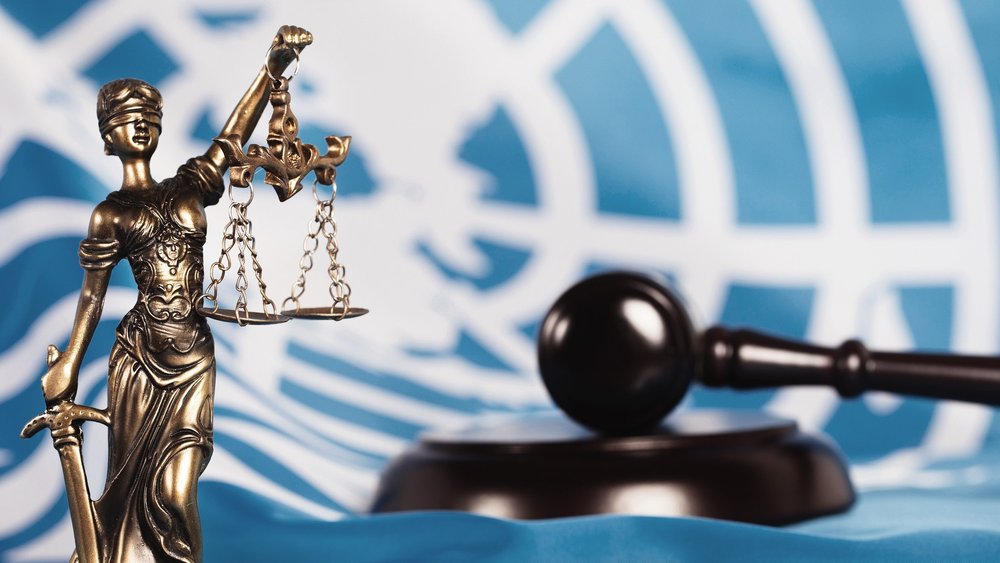
On July 24, 2026, the unprecedented removal of Karim Khan from his position as Chief Prosecutor at the International Criminal Court (ICC) marked a pivotal moment for international justice. The decisive 82-member state vote at the U.N. headquarters in New York came after Guterres was suspended in early June on allegations of ethical breaches and sexual misconduct. However, this shakeup of judges goes deeper than accountability – it raises fundamental issues about the independence and immunity from geopolitical pressures the world’s highest court enjoys, its future as arbiter of global justice.
But Karim Khan earned notoriety when serious allegations of sexual harassment and misconduct emerged, leading to an internal Investigation at ICC. Although Khan was quick to deny all the allegations, the evidence against him along with the ensuing political battle led to his suspension from Parliament on 8 June and eventually being banned for life following a long legal and political fight through June and July. Importantly, his dismissal is not just about individual wrongdoing; it represents a crisis of ICCs highest top administration.
The official reasons given are ethical breaches and unbecoming conduct of the Prosecutors office. But a little context shows that the ICC is firmly enmeshed in much more complicated global power politics. Ever since the ICC began its investigations into Israeli officials such as Prime Minister Benjamin Netnayahu and former Defense Minister Yoav Gallant for possible violations emanating from Gaza in 2024, it has drawn intense criticism. The political reaction was to be predictable the United States, in particular, imposed sanctions against ICC officials and it placed the Court under suspicion of neutrality with Khan’s Office caught in the crossfire of a geopolitical storm.
There are different aspects of column sentences that show the consequences of Khan dismissal. Within the ICC, an internal civil war has been overblown into a crisis of morale and credibility that deters it from its prosecutorial mission at a crucial time. The second of concern for the international community is their votes in this regard reflects a divided international community, with some member states championing rule of law while others contest the indefinite reach of the ICC over sovereign nations or accuse its claim to universal jurisdiction as discriminatory and selective justice practices. The ICC re-asserted that arrest warrants for Israeli leaders are inescapable despite the will of its leaders to separate procedural justice from individual misdeeds, however suspicion about impartiality remains rife worldwide.
Timeline of the scandal is fast but intense The probe and suspension started on 8 June 2026, with extended discussion and reviews by the Assembly of States Parties during the months of June and July. The July 24 vote was the conclusion of a long campaign of threats, legal challenges and convincing by the ICC , a fine line between politics and real member state independence.
The ICC is the pinnacle of international criminal law and accountability, especially for war crimes, genocide and crimes against humanity. Khan’s ouster and the allegations that held sway with U.S. pressure, set a troubling standard: an ivory tower allegedly bent by geopolitics and domestic discontent is no longer one immune to national influence. It raises immediate questions about the Court’s capacity to act impartially against powerful state actors and in contentious jurisdictions.
The International Criminal Court (ICC) needs a thorough strategic overhaul, one that recognises its institutional weaknesses and political pitfalls, if it is to restore its well-worn reputation and take back some authority on the world stage.
The allegations against Karim Khan and the political firestorm that followed have put the ICC’s internal governance to a stern test. Hence, to avert this kind of crises occurring again, its imperative for the Court to create strong, transparent and independent oversight the bodies f or monitoring of ethics in conduct as well as complaining about misconduct fielding within a reasonable time frame and fair manner. It should work independently of partisan interference so that senior politicians do not feel protected from the highest standards of integrity. The ICC has a lot of work ahead, but it can decrease politicization and restore faith more broadly both internally and externally by ensuring proper procedures for investigation and punishment are baked into all processes so that everyone understands no one is too big to be held responsible in the organization.
Second, the fractures revealed through Khan remind all of us that the ICC also faces a perilous relationship with the disparate member states many of whom eye the Court warily or even in an openly hostile manner. To restore confidence, it requires active diplomacy designed to close gaps and get behind a common agenda. In other instances, this may require regular engagement with important stakeholders within a polity including members in dissent and influential non-state actors to satisfy sovereignty, neutrality and legitimacy concerns. The ICC can reduce political intervention that endangers its mandate and build a stronger coalition working to protect justice by fostering an atmosphere of inclusivity where every voice is both valued and heard.
Third, a fundamental part of the ICC’s credibility rests on its capability to engage in investigations and prosecutions free from pressure from states or political coalitions. It must develop its own legal frameworks that define prosecutorial power, and protect against all intimidation, sanctions or coercion as structural independence. This may include stronger immunity protections, well-designed funding incentives, and institutional mechanisms that further insulate prosecutors from political retaliation. Containment of decisions on who and when to prosecute only within the minds of judicial and prosecutorial teams preserves impartiality in ICC work.
Fourth, clear and consistent communication that demystifies intricate ICC processes and unambiguously reiterates the Court’s implacable commitment to justice is vital for Public perception and international legitimacy. The Court is also required to actively reach out to various constituencies such as civil society groups, media sectors, legal communities and the general public in clarifying its mandate, processes it follows and the ethical conduct it undertakes. Frequent progress reports, easy to understand descriptions of pending cases and public opportunities to comment will help dispel disinformation and foster broad-based understanding and support. Good communication also embodies responsibility and can enhance the Court’s reputation as a principled institution.
Lastly, sustainable reform can be achieved only if a more inclusive conversation takes place that brings together various international actors including member states, regional organizations, legal experts and human rights advocates. The dialogue should analyse the ICC not just in terms of its internal rules/law and leadership, but also with respect to structural issues like representational equity among global regions, procedural fairness regarding investigations/trials and capacity gaps on enforcement mechanisms. A more participatory approach would help the ICC to recognize or even match some of its problems and criticisms with innovative solutions that cement its status as a credible, universally respected arbiter in international criminal justice.
All in all, the ICC should use its own internal reforms as well as reinvigoratedic diplomatic efforts to engage positively in the global community to restore lost credibility and solidify its role as an essential mechanism for fighting impunity. The Court can weather the storm unleashed by its latest leadership controversy and continue to advance justice for humanity’s most abhorrent crimes, but only if it dares wholesale confrontation with its weakest points.
The removal of Karim Khan is not just a management question: it reflects the complex, and often dangerous, interplay of law, morals, and geopolitics that lies at the heart of international justice. The ICC can move forward either strong and independent or it will be crushed by relentless political maneuvering, which way does it go now? The only way to ensure that the Court continues to answer a world of impartial justice, not as just another pawn in the global power struggle shaping 21st-century international relations — is by demanding one.
Fransiscus Nanga Roka
Faculty of Law University 17 August 1945 Surabaya and Managing Partner Law Firm Victorious Indonesia