Africa
Inadvisability Of Comparing Fela, A Founder, To His Beneficiaries -By Isaac Asabor
Remembering Fela Anikulapo Kuti for who he truly was should not be dragged into the quagmire of comparisons with today’s artists. He did something far more difficult and far more consequential: he created the conditions that made their existence possible. So, it is inadvisable for anyone to be comparing Fela, who was no doubt a founder to his beneficiaries.

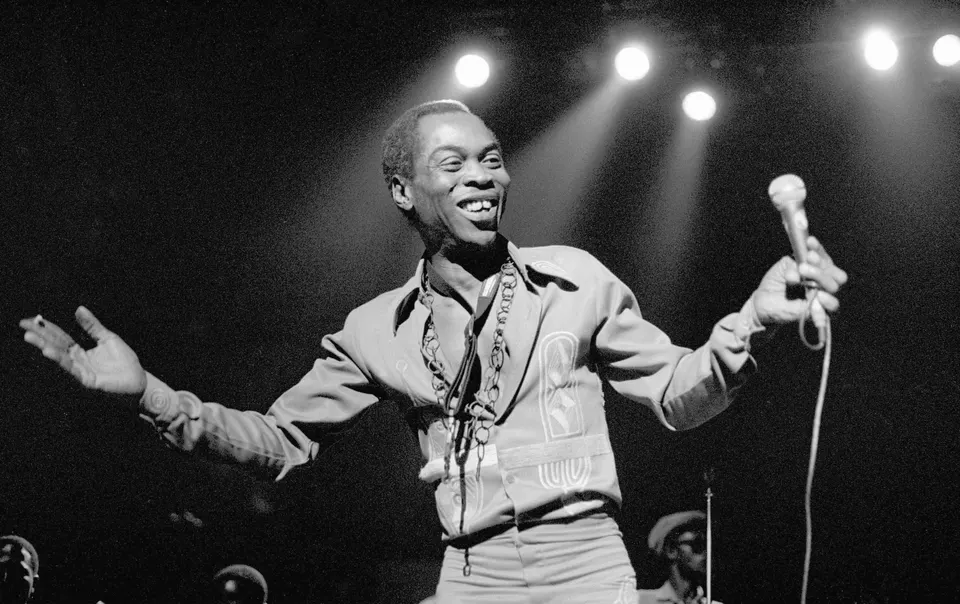
There is a growing tendency in popular culture commentary to flatten history in the name of convenience. In Nigerian music discourse, this flattening has taken a particularly careless form: the comparison of Fela Anikulapo Kuti with modern-day Afrobeats musicians. It is a comparison that may sound flattering on the surface, but it is ultimately foolish, historically ignorant, and intellectually lazy.
You do not compare a founder to his beneficiaries. You do not compare the architect to the tenants. You do not compare the man who built the road to those now driving luxury cars on it. Fela Kuti does not belong in the same comparative frame as today’s Afrobeats stars, not because they lack talent or global success, but because they exist precisely because he came first.
By the time many of today’s celebrated artists were even born, let alone imagined, Fela had already given Afrobeat its name, its face, and its philosophy. Fela did not inherit Afrobeat. He created it. That distinction alone should end the conversation. Afrobeat was not a marketing label, a playlist category, or a vague African-sounding genre. It was a deliberate musical and ideological construction, forged from highlife, jazz, funk, Yoruba rhythms, and political rage.
In the 1970s, Afrobeat was inseparable from Fela’s identity. To say “Afrobeat” was to invoke his sound, his politics, his lifestyle, and his defiance. The genre was not plural. It was not diluted. It was not designed for crossover appeal. It had a spine.
Today’s Afrobeats, plural, expansive, globally successful, is a descendant, not a continuation. It borrows freely, fuses generously, and aims deliberately for mass appeal. That is not a crime. But it is not the same thing. So, confusing Afrobeat with Afrobeats is not just a semantic error; it is a historical one.
For the sake of clarity, Fela’s music was a political act, not a career strategy. Fela did not make music to be liked. He made music to be heard, and feared. His songs were indictments, not metaphors. They named institutions, mocked authority, and confronted military dictatorships directly. He sang in Pidgin English so that market women, taxi drivers, factory workers, and students could understand exactly who he was talking about.
For instance, ‘Zombie’ was not a dance record. It was an insult to the Nigerian military. ‘International Thief Thief (ITT) was not satire. It was accusation. ‘Coffin for Head of State’ was not symbolism. It was protest.
Modern Afrobeats, by contrast, is largely politically noncommittal. Its dominant themes, love, desire, success, heartbreak, enjoyment, are universal and exportable. When political commentary appears, it is often cautious, abstract, or secondary to personal narrative.
This difference is not accidental. Fela was not navigating an industry built to reward silence. He was confronting a state built to punish dissent. So, it is foolhardy to compare eras that did not overlap.
It must be stated plainly: many of the musicians now casually compared to Fela were not even born when he had already become a global cultural force. By the late 1970s and early 1980s, Fela was internationally recognized as the face of Afrobeat, an African icon of resistance, and a permanent irritant to Nigeria’s ruling elite.
To compare him with artists who came decades later, artists who benefited from the pathways Afrobeat helped open, is to collapse time and erase struggle. It assumes a level playing field that never existed. Fela was fighting military regimes, contrary to modern Afrobeats stars who take delight negotiating record deals. These are not equivalent battles.
In fact, in the days of Fela, afrobeat was collective, and quite different from today’s Afrobeats which is Individual. Without a doubt, Fela’s Afrobeat was built on collective musicianship. His bands were large, disciplined, and technically demanding. The music unfolded slowly, deliberately, with extended instrumental sections that required patience and attention. Performances were immersive and confrontational. The Afrika Shrine was not just a venue; it was a political space.
Contrariwise, modern Afrobeats is star-driven. It centres the individual artist, often supported by producers working behind the scenes. Songs are shorter, tighter, and designed for repeat listening. Streaming economics reward brevity and immediacy, not endurance.
Again, this is not a value judgment. It is a structural reality. But it underscores why comparison is misguided. Afrobeat was a movement sustained by collective resistance. Afrobeats is an industry powered by individual brands.
Sad enough, Fela paid the price that success now shields others from. Perhaps the most inconvenient truth in this debate is that Fela suffered for his art in ways that few contemporary artists ever will. He was arrested repeatedly. He was beaten. His home, the Kalakuta Republic, was destroyed by soldiers. His mother, Funmilayo Ransome-Kuti, died from injuries sustained during a military attack linked to his activism.
These were not symbolic sacrifices. They were real, irreversible consequences. Modern Afrobeats artists operate in a vastly different Nigeria, flawed, yes, but not defined by the same level of military repression. Many enjoy state recognition, international partnerships, and corporate endorsements. Their success insulates them rather than endangers them. So, to compare someone who paid with blood to those who profit from stability is not bold analysis; it is moral carelessness.
In fact, success is not the same as significance. Afrobeats has conquered the world. That fact deserves recognition. Nigerian artists now sell out arenas, dominate charts, and shape global pop culture. This is a triumph. But success is not the same as significance.
Without resort to over idolizing Fela of blessed memory, his importance does not lie in numbers, streams, or awards. It lies in impact. He reshaped how African music could speak, boldly, angrily, unapologetically, to power. He proved that African artists did not need Western approval to be globally relevant. Modern Afrobeats artists are successful participants in a global system. Fela was an enemy of systems.
Again, what those who have become so obsessed in comparing Fela to modern day Afrobeats musicians have forgotten is that legacy is not a competition. Therefore, comparing Fela to today’s artists reduces legacy to a scoreboard. It assumes that art exists on a linear scale where newer automatically means better, and popularity automatically means progress. Nevertheless, Fela does not belong on that scale. He is not a benchmark to be surpassed. He is a foundation to be understood. Bluntly put, Afrobeats did not outgrow Afrobeat; it diverged from it. This is as a founder cannot be judged by the standards of his beneficiaries.
At its core, the comparison fails because it misunderstands hierarchy. Fela is not a peer of modern Afrobeats stars. He is their ancestor. His work created space, cultural, political, and artistic, that others later occupied under safer, more profitable conditions. That does not diminish their achievements. But it demands intellectual honesty. You do not compare the man who named the language to those now speaking it fluently. You do not compare the rebel who broke the door to those now walking through it freely. You certainly do not compare a founder to his beneficiaries.
Remembering Fela Anikulapo Kuti for who he truly was should not be dragged into the quagmire of comparisons with today’s artists. He did something far more difficult and far more consequential: he created the conditions that made their existence possible. So, it is inadvisable for anyone to be comparing Fela, who was no doubt a founder to his beneficiaries.