Opinion
Living on Edge: Inside Nigeria’s Declining Happiness and Rising Insecurity -By Abdulazeez Toheeb Olawale
Taken together, the data forms a clear pattern. Rising costs reduce quality of life. Poor infrastructure increases daily stress. Insecurity creates fear that seeps into everyday decisions. Weak support systems deepen emotional strain. These factors do not exist separately but they reinforce one another, shaping how Nigerians answer that simple question about life satisfaction.


At exactly 6:12 a.m. in Ketu, Lagos, the first sound is not birdsong but the low, stubborn hum of generators. For many residents, electricity from the national grid lasted only a few hours overnight. By morning, survival systems are already in motion.
Across Nigeria, this routine has become normal. People wake not with excitement for the day, but with quiet calculations,how to stretch income, how to afford transport, how to navigate rising costs, and increasingly, how to stay safe from kidnapping and other unexpected dangers. For many, even movement has become a risk assessment,what route is safer, what time is safer, who to trust. Survival is no longer just economic; it is physical and psychological. Each day begins not with certainty, but with caution in an economy and a society that keeps tightening.
Recent findings from the World Happiness Report, produced with support from the United Nations, show that Nigeria continues to rank low in how citizens evaluate their own lives. The data, largely drawn from surveys by Gallup, asks a simple question: where do you place your life on a scale of zero to ten? For many Nigerians, the answer is quietly sliding downward.
The reasons are not abstract. They are visible in markets, in homes, and in daily conversations. Data from the National Bureau of Statistics shows that inflation,especially food inflation has remained persistently high. Prices rise faster than incomes. The naira has weakened, pushing up the cost of imported goods. For households, this is no longer just an economic trend; it is a daily compromise.
A civil servant earning a fixed monthly salary now spends most of it on food and transport. But even beyond cost, there is caution. Commutes are planned not just around traffic, but around safety. Late returns are avoided. Certain roads are quietly blacklisted. What used to be routine has become calculated. The numbers explain the trend, but on the ground, it feels like something deeper,a steady loss of both financial stability and personal security.
Electricity supply adds another layer of strain. Data from the Transmission Company of Nigeria shows how unstable the national grid remains. Power generation fluctuates, often far below what is needed for over 200 million people. As a result, households and businesses rely on generators, spending heavily on fuel just to maintain basic activities. In many neighborhoods, darkness is no longer just an inconvenience,it is a vulnerability. Poorly lit streets heighten fear, and every blackout carries not just discomfort, but risk.
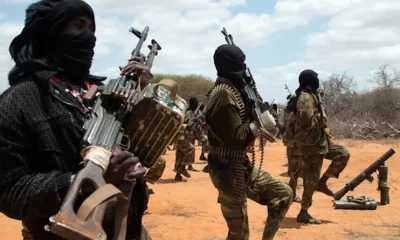
Security concerns continue to shape how people experience daily life. Data tracked by the Armed Conflict Location & Event Data Project shows ongoing incidents of banditry, kidnapping, and communal violence in different parts of the country. Beyond the immediate human cost, insecurity disrupts farming, limits movement, and weakens economic activity. In some regions, farmers have abandoned their land entirely, not just because it is unprofitable, but because it is unsafe. The result is a cycle reduced food supply, rising prices, and deepening hardship.
Even in urban centers, fear has become more subtle but persistent. People share warnings in WhatsApp groups. Families check in more frequently. Strangers are watched more carefully. Safety is no longer assumed,it is constantly negotiated.
The psychological weight of these conditions is becoming harder to ignore. Estimates from the World Health Organization suggest that millions of Nigerians are dealing with mental health challenges, yet access to care remains limited. The pressures are cumulative financial instability, insecurity, unemployment, and uncertainty about the future. Many continue to function, but beneath that functionality is a growing sense of exhaustion.
At the same time, migration is rising. Increasing numbers of Nigerians are leaving the country in search of stability and opportunity abroad. This movement, often described locally as “Japa,” reflects more than ambition. It reflects escape from economic strain, from systemic uncertainty, and for some, from insecurity. For those who leave, it is hope. For those who remain, it is a reminder of limited options.
Public trust also plays a role. Perceptions of governance, corruption, and inequality influence how people judge their lives. When citizens feel unprotected economically or physically,confidence in institutions weakens. Even when policies are introduced, their effects are often slow or uneven, leaving many unconvinced that meaningful change is within reach.
Taken together, the data forms a clear pattern. Rising costs reduce quality of life. Poor infrastructure increases daily stress. Insecurity creates fear that seeps into everyday decisions. Weak support systems deepen emotional strain. These factors do not exist separately but they reinforce one another, shaping how Nigerians answer that simple question about life satisfaction.
Yet, the country continues to function. Markets remain active. Streets are busy. Laughter still cuts through hardship. Nigerians adapt in ways that are both remarkable and necessary. They adjust routes, adjust budgets, adjust expectations. But adaptation is not the same as wellbeing. Endurance is not the same as happiness.
The low ranking in global happiness reports is not just a number. It is a reflection of lived reality. Behind every statistic is a person adjusting,cutting back, staying alert, pushing forward.
Nigeria is not lacking in potential. It is not lacking in energy or resilience. What it lacks, increasingly, is stability,the kind that allows people to move freely without fear, to plan without uncertainty, and to live without constant strain.
Until that changes, the story will remain the same. People will keep waking up early. Generators will keep humming. Life will continue.
But for many, it will continue cautiously measured not just in cost, but in risk and without the one thing the data is trying to measure: a genuine sense of happiness.
Abdulazeez Toheeb Olawale is a Nigerian journalist and storyteller with a focus on social issues, economic trends, and national wellbeing. He writes with a deep commitment to uncovering the human stories behind statistics, highlighting the realities of everyday Nigerians, and providing investigative insight into issues that shape lives across the country.