Forgotten Dairies
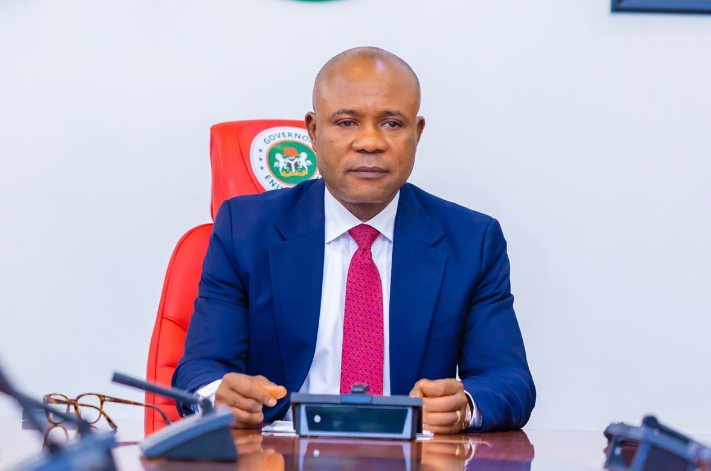
Mediocrity Must Not Define Ebonyi: An Open Letter to Governor Francis Ogbonna Nwifuru -By Engr Chris Ebia
What is needed is sustained alignment between opportunity and competence, authority and accountability, vision and execution. Courage opened the door. Character must now guide the path forward. In the end, governance is not measured solely by projects commissioned or budgets announced. It is measured by the integrity of systems built and the confidence of citizens strengthened. When boldness is matched with structural discipline, administrations do not merely function, they endure.


Your Excellency,
There are moments in public leadership that define more than policy; they define character. Such moments do not arise during commissioning ceremonies or celebratory gatherings. They emerge when a leader confronts uncomfortable truths and speaks with candour about the shortcomings within his own ranks.
Your recent public expression of disappointment over the poor performance of some commissioners and appointees was one of such moments.
In that address, there was visible concern. There was frustration. There was, above all, a sense of burden. The burden that rests on the shoulders of a leader who understands that governance is not an abstract exercise but a living contract with the people. In voicing your dissatisfaction openly, you demonstrated something increasingly rare in public life: the courage to demand accountability from those entrusted with public confidence.
That courage deserves acknowledgement.
History teaches that administrations rarely falter because of a lack of vision at the top. They falter when the machinery beneath the vision grows weak, complacent, or disconnected from purpose. A governor may possess clarity of direction, yet without disciplined execution from those appointed to serve, the noblest aspirations risk dilution. It is therefore significant when a leader signals publicly, that performance is not optional.
However, beyond the immediate issue of underperforming appointees lies a broader philosophical question about representation, generational identity, and the moral narrative of Ebonyi State. When some public officers fail to meet expectations, it is tempting for observers to generalize. It becomes easy to attribute isolated inefficiencies to a wider cultural flaw. In your remarks, there was concern about laziness among some youths and a troubling appetite for quick wealth without proportionate labour. While such tendencies exist in every society, it is important that we resist allowing the conduct of a few to define the character of many.
Ebonyi State is not a land of indolence.
It is a land shaped by resilience. A land whose people rose from modest beginnings through determination and communal strength. A land where countless families have invested in education, sacrifice, and enterprise as pathways to dignity. The story of Ebonyi is not the story of shortcuts; it is the story of struggle transformed into progress. Across Nigeria and in distant parts of the world, Ebonyi sons and daughters are distinguishing themselves quietly but remarkably. They are professors shaping minds in universities. They are medical professionals saving lives in hospitals. They are engineers designing infrastructure, entrepreneurs building companies, technologists innovating solutions, and public servants contributing to policy development. Many operate without fanfare, yet their impact is tangible.
Within your own administration’s initiatives lies clear evidence of this industrious spirit. The decision to sponsor batches of Ebonyi students for overseas studies is not merely an educational policy; it is a philosophical investment in excellence. The recent dispatch of the second batch reflects a belief that when young people are exposed to global standards, they rise to meet them. Those students did not arrive at that opportunity by accident. They represent discipline over distraction, preparation over haste, substance over spectacle. They are proof that when structures reward merit, merit responds with performance. They are not anomalies. They are indicators of a much larger reservoir of capacity.
This is why the present moment must be approached not only as a corrective episode, but as a defining crossroads. It offers an opportunity to reaffirm that governance in Ebonyi State will be anchored on character and competence. Not proximity and convenience. Public service, at its highest conception, is moral stewardship. It is the careful management of collective trust. When individuals entrusted with responsibility fall short, it is not merely an administrative lapse; it is a moral deficit. The remedy is not anger alone, but structural clarity — clear benchmarks, measurable outcomes, and consequences aligned with performance. Your candid remarks have already signalled a refusal to normalize mediocrity. The enduring task now is to institutionalise that refusal.
Strong institutions outlive strong personalities. If evaluation mechanisms are strengthened, if reporting systems are transparent, if public officers understand that stewardship is continuously assessed, then performance ceases to be reactive and becomes habitual.
It is equally important to emphasize that the pool of capable Ebonyians is not shallow. Beyond the visible political circle lies a vast community of professionals, scholars, entrepreneurs, and administrators — within the state and in the diaspora — whose competence is both tested and proven. Many are willing to serve not for applause, but for impact. The existence of underperformance in certain quarters should never be mistaken for a scarcity of capacity in the broader society. The true representation of Ebonyi youth is not found in fleeting social media trends or isolated acts of indiscipline. It is found in the student studying under a dim light yet graduating with distinction. It is found in the young entrepreneur navigating limited capital to build sustainable ventures. It is found in the diaspora professional who carries the name of Ebonyi with quiet pride in global institutions. These are the prevailing realities.
Your administration stands at a philosophical threshold. Boldness in speech must translate into boldness in systemic refinement. Accountability must evolve from episodic expression into enduring culture. Appointments must continually mirror the excellence that already exists within the population. Leadership, in its highest form, is not about avoiding criticism; it is about cultivating credibility. Credibility grows when citizens observe alignment between words and actions. When they see that performance is rewarded, inefficiency corrected, and public trust protected.
There is a deeper legacy at stake.
Long after tenures conclude and political cycles shift, what remains is the institutional culture established during a leader’s time in office. If this period becomes known as the era when standards were clarified and strengthened, when mediocrity was confronted and excellence elevated, then it will stand as a watershed in Ebonyi’s developmental narrative. Your recent remarks have initiated that conversation. The responsibility before all stakeholders — government officials, civil servants, youths, professionals, and community leaders — is to ensure that this moment produces reform rather than rhetoric. Ebonyi State possesses the human capital required for transformation. What is needed is sustained alignment between opportunity and competence, authority and accountability, vision and execution. Courage opened the door. Character must now guide the path forward. In the end, governance is not measured solely by projects commissioned or budgets announced. It is measured by the integrity of systems built and the confidence of citizens strengthened. When boldness is matched with structural discipline, administrations do not merely function, they endure.
May this moment mark a renewed commitment to excellence in public service. May it affirm that the true spirit of Ebonyi — resilient, industrious, and principled — remains alive and unrepresented by the shortcomings of a few.
The future of Ebonyi is not defined by temporary lapses. It is defined by the standards we choose to uphold.
Respectfully,
Engr Chris Ebia
engrebia@gmail.com
A proud Ebonyian