
Forgotten Dairies
Poking the Bear: How Iran Risks Triggering a Unified America -By Vitus Ozoke, PhD
For Tehran, this should sharpen, not dull, its sense of caution. A leader who frames outcomes in absolute, almost existential terms is not one to corner lightly. Pressure applied to such a figure does not always prompt negotiation; it can just as easily provoke escalation aimed at reasserting dominance and avoiding the appearance of defeat.

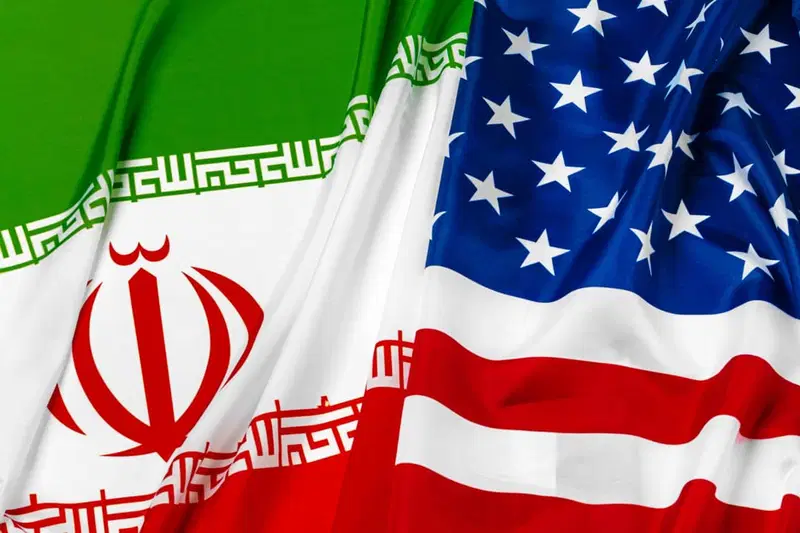
More than fifty days into the conflict, what was once framed as a decisive show of strength now resembles a geopolitical stalemate – an increasingly costly “ping-pong” war with no clear resolution in sight. For Donald Trump, the intervention has evolved into a strategic quagmire: ill-defined at inception, poorly managed in execution, and dangerously ambiguous in its endgame.
Critics argue the war was neither necessary nor aligned with core U.S. national security interests. Instead, it appears to have been shaped heavily by external influence, particularly from Benjamin Netanyahu, raising questions about whether American priorities were subordinated to regional calculations that do not directly serve U.S. stability or prosperity.
The consequences have been both immediate and far-reaching. Domestically, Americans face rising fuel prices, disrupted supply chains, and renewed inflationary pressure. Internationally, U.S. credibility has been strained, with allies distancing themselves as global markets react to instability, especially amid disruptions tied to the Strait of Hormuz.
Militarily, the campaign shows signs of strategic drift. There is no clearly articulated entry doctrine, no coherent sustainment framework, and, perhaps most critically, no viable exit strategy. Leadership instability, including firings and resignations across defense institutions, underscores a lack of cohesion at the highest levels of decision-making. Meanwhile, the financial and human costs continue to mount, with billions spent and casualties steadily rising.
At the center of this dynamic lies a dangerous feedback loop between Washington and Tehran. Iran has adopted a strategy of incremental pressure – economic disruption, asymmetric responses, and prolonged engagement – effectively extending the conflict and raising its cost without triggering full-scale escalation.
There is an even more dangerous dimension to this conflict, one that Tehran may be underestimating. Donald Trump is not operating from a position of calm strategic calculation; he is a leader under pressure, politically cornered, and increasingly unpredictable. His conduct throughout the war, marked by shifting narratives, contradictory statements, and abrupt swings between escalation and diplomacy, has reinforced a perception of volatility at the highest level of command. Analysts have noted that his rhetoric has ranged from claims of imminent peace to explicit threats of devastating force, sometimes within the same news cycle.
This matters because desperation alters decision-making. A leader who feels trapped – militarily, politically, and personally – is more likely to take outsized risks, not fewer. The danger for Iran is that its current strategy of prolonged pressure may be interpreted not as leverage, but as provocation. And provocation, when directed at an erratic and cornered adversary, can produce disproportionate responses.
In that sense, Tehran may be engaging in a perilous gamble: attempting to extract maximum advantage from a weakened opponent without triggering the kind of reaction that weakness sometimes produces – sudden, overwhelming escalation. History is replete with examples where leaders facing perceived humiliation chose dramatic, even reckless, actions to reverse the narrative. If Iran misreads this moment, if it assumes restraint where there may be none, it risks turning a manageable conflict into a catastrophic one. To put it bluntly: Iran may believe it is outmaneuvering a struggling adversary. But it may instead be poking a desperate and unpredictable madman. And that is a far more dangerous game. That volatility is not abstract; it has been expressed in stark and consequential terms.
There is also the matter of stated intent. Donald Trump has, at various points, threatened overwhelming retaliation – language that has ranged from striking critical civilian infrastructure, inflicting damage so severe it would set a country back for generations, to wiping out an entire civilization – never to be reconstituted. Even if such statements are partly rhetorical, they are not meaningless. They shape expectations, signal willingness, and lower the perceived threshold for extreme action. When a leader publicly entertains the destruction of bridges, power grids, and other civilian-linked systems, it introduces a level of risk that cannot be dismissed as mere bluster.
For Tehran, this should sharpen, not dull, its sense of caution. A leader who frames outcomes in absolute, almost existential terms is not one to corner lightly. Pressure applied to such a figure does not always prompt negotiation; it can just as easily provoke escalation aimed at reasserting dominance and avoiding the appearance of defeat.
The combination of personal ego, political pressure, and expansive military capability creates a volatile mix in which miscalculation becomes far more likely. In short, this is not simply a contest of strategy but of psychology. And pushing a leader who has signaled a willingness to consider extreme measures into a position of desperation is a gamble with consequences that could extend far beyond the immediate conflict.
This raises a pivotal question: at what point does calibrated pressure become strategic overreach? From Tehran’s perspective, prolonging the conflict may appear advantageous, particularly if it exacerbates political strain within the United States. However, this approach risks misreading a critical distinction in American public sentiment. While domestic opposition to the war may be significant, there remains a broad and deeply ingrained resistance to the idea of national humiliation on the global stage. This distinction matters.
There is a meaningful difference between a costly or unpopular war and one perceived as a symbolic defeat of national stature. The former can divide public opinion; the latter has the potential to unify it rapidly and decisively. Should the conflict cross that psychological threshold, it could trigger a consolidation of domestic support behind escalation rather than restraint. In that scenario, the strategic calculus shifts dramatically, not just for Donald Trump, but for the entire region.
Tehran, therefore, faces a narrowing window of opportunity. Having already demonstrated resilience and imposed high and significant costs, it is now approaching a point where continued escalation may provoke the very outcome it seeks to avoid: a unified and forceful American response.
De-escalation, paired with a negotiated ceasefire, offers a pragmatic off-ramp. A carefully structured agreement, one that allows both sides to claim a measure of success, could stabilize the situation while preventing further deterioration. In diplomatic terms, even symbolic concessions can serve as critical tools for conflict resolution, particularly when leaders require a face-saving exit. The alternative is a prolonged and increasingly volatile confrontation with unpredictable consequences.
In conflicts such as these, miscalculation, not intent, is often the catalyst for catastrophe. The longer this dynamic persists, the greater the risk that tactical moves will trigger strategic outcomes neither side fully controls.
Dr. Vitus Ozoke is a lawyer, human rights activist, and public affairs analyst based in the United States. He writes on politics, governance, and the moral costs of leadership failure in Africa.




















You must be logged in to post a comment Login