Forgotten Dairies
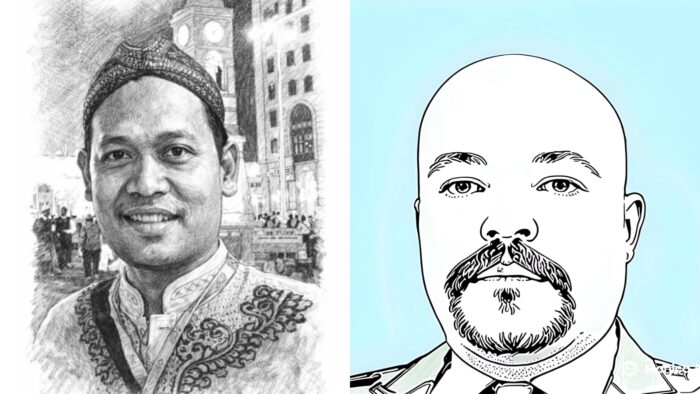
Multipolarity, A Necessary Shift in a Changing World -By Moh. Ja’far Sodiq Maksum & Edy Rudyanto
For countries like Indonesia, this is a rare moment of opportunity. The question is no longer whether the world will become multipolar, it already is. The real question is who will shape this new order, and who will simply adapt to it.

The world is no longer defined by a single center of power. For decades, global order was shaped by the dominance of the United States, particularly in the post–Cold War era. Yet today, that dominance is increasingly challenged by the rise of new powers such as China and India, alongside the growing influence of regional blocs like the European Union and ASEAN. The result is a structural shift toward a multipolar world, one where power is distributed rather than concentrated.
This transition is not merely a geopolitical trend. It reflects a deeper transformation in how global systems operate. A highly centralized order may offer short-term stability, but in an increasingly complex and interconnected world, it also creates systemic vulnerabilities. Multipolarity, by contrast, offers a more adaptive and resilient framework.
From Dominance to Distribution
For much of the late 20th and early 21st centuries, the global system operated under a unipolar model. One state played a central role in shaping international norms, managing conflicts, and driving economic governance. However, this model has become increasingly difficult to sustain.
According to Power Transition Theory, shifts in global power are inevitable. As emerging economies grow and consolidate influence, they challenge established hierarchies. What we are witnessing today is precisely such a transition: a move away from a centralized system toward a more distributed configuration of power.
In this evolving landscape, multipolarity represents not disorder, but adjustment. The distribution of power also means the distribution of responsibility. Global challenges, climate change, economic inequality, geopolitical tensions, can no longer be addressed through unilateral action. They require coordination among multiple centers of influence, making diplomacy more essential than ever.
The Decline of Singular Dominance
The long-standing notion of a single “global policeman” is gradually losing relevance. Contemporary conflicts demonstrate that military superiority alone no longer guarantees control or decisive outcomes. Power is no longer defined solely by conventional strength, but by adaptability, strategic intelligence, and the ability to operate across multiple domains, including cyber and information spaces.
This shift aligns with what scholars describe as the diffusion of power, the spread of influence across a wider range of actors, both state and non-state. As power becomes more decentralized, it also becomes less predictable and harder to control. No single actor can unilaterally manage the complexities of today’s global challenges.
Importantly, this does not signal the collapse of existing powers, but rather a reduction in their ability to dominate outcomes. The world is becoming more fluid and dynamic, requiring cooperation rather than control.
Opportunities for Developing Nations
For developing countries, multipolarity presents a significant opportunity. In the past, bipolar or unipolar systems often forced smaller states into rigid alignments, limiting their autonomy. Today, a more distributed power structure creates space for greater strategic flexibility.
Countries like Indonesia are particularly well positioned to benefit. With its long-standing principle of an independent and active foreign policy, Indonesia is not bound to any single bloc. Instead, it can act as a bridge between competing powers, facilitating dialogue and cooperation.
This role aligns with the concept of middle power diplomacy, where countries with moderate capabilities can exert meaningful influence through mediation, coalition-building, and agenda-setting. However, such influence is not automatic. It depends on credibility, consistency, and the ability to navigate complex global dynamics effectively.
Lessons from Global Crises
Recent global crises have underscored the risks of overreliance on a single center of power. The 2008 financial crisis demonstrated how instability in one part of the system can trigger a global chain reaction. Similarly, the COVID-19 pandemic exposed the fragility of supply chains and the dangers of concentrated production and research capacities.
From the perspective of Complexity and Resilience Theory, resilient systems are not those that are strongest at the center, but those that are most distributed and adaptable. Systems with multiple nodes of strength are better able to absorb shocks, adjust to disruptions, and recover more quickly.
Multipolarity supports this kind of resilience. By creating multiple centers of economic activity, innovation, and decision-making, it reduces systemic risk and enhances global stability. In this sense, multipolarity is not an ideological preference, it is a structural necessity in an uncertain world.
Indonesia’s Strategic Moment
Amid these global shifts, Indonesia faces a critical choice: to remain a passive observer or to emerge as an active participant. With its strategic geographic location, large population, and relative political stability, Indonesia has the potential to play a significant role in shaping the emerging order.
However, this potential must be supported by strong domestic foundations. Economic resilience, technological capability, and human capital development are essential. At the same time, foreign policy must evolve from reactive to strategic, focused on long-term interests and global engagement.
Indonesia’s greatest challenge is not simply readiness, but positioning. In a multipolar world, countries that fail to assert themselves risk being sidelined. To remain relevant, Indonesia must move beyond being a follower and embrace the role of a co-creator in building a more inclusive and balanced global system.
A New Global Logic
Multipolarity is not a temporary phase, but a reflection of deeper structural change. As global systems become more interconnected and complex, centralized models of power become less effective. The future lies in distributed systems that prioritize cooperation over domination.
This shift requires a new way of thinking. Stability will no longer come from control, but from collaboration. Power will no longer be measured solely by dominance, but by the ability to build networks, foster trust, and generate shared solutions.
For countries like Indonesia, this is a rare moment of opportunity. The question is no longer whether the world will become multipolar, it already is. The real question is who will shape this new order, and who will simply adapt to it.
Moh. Ja’far Sodiq Maksum & Edy Rudyanto
Doctoral Students in Law, Universitas 17 Agustus 1945 Surabaya