Forgotten Dairies
Of The Monologue Called Media Chat Where Wike’s Influence Shapes The Questions And Answers -By Isaac Asabor
Until that imbalance is corrected, Wike’s monthly media chat will continue to miss its purpose. It may generate attention, even admiration, but it will not deliver what truly matters. For the sake of clarity, the essence of a media chat is to serve as a direct, interactive bridge between a leader and the public, designed to foster transparency, accountability, and dialogue. For the journalists, until the imbalance is corrected, Wike’s media chat will continue to engender a seemingly sham, scripted encounter between power and accountability.

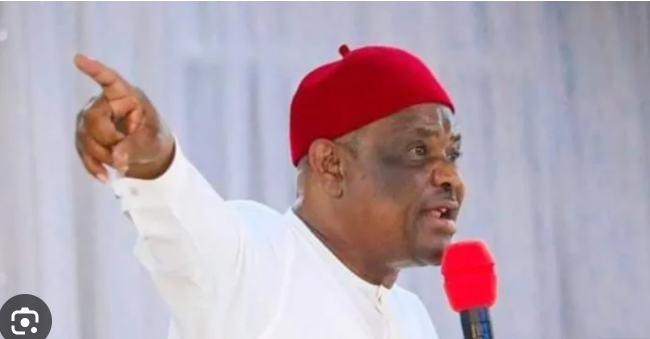
In any functioning democracy, a media chat is not meant to be comfortable. It is designed to be probing, unscripted, and, at times, uneasy for everyone involved. That discomfort is not incidental; it is the very engine of accountability. Yet what increasingly passes for a media chat in the engagements of Nyesom Wike bears little resemblance to this ideal. What is presented is, more often than not, a monologue. Wike hosts the session in his own office, effectively positioning himself as convener and moderator, holding the proverbial yam and the knife, and thereby exerting influence over not just the questions, but the answers as well. In a proper media chat, he ought to be the guest of journalists, with no influence over how questions are framed or answered. The process should be free of such dominance, allowing ethics and professionalism to define the atmosphere.
At first glance, Wike’s version of a media chat appears structurally sound: journalists are assembled, microphones are in place, and cameras are rolling. But beneath this familiar setup lies a fundamental distortion. Wike, who should be the subject of scrutiny, instead assumes command of the process, shaping the tone, redirecting the flow, and, crucially, redefining the substance of the exchange. The journalists, rather than driving the conversation, are relegated to supporting actors in a performance already set in motion.
One of the clearest signs of this shift lies in how questions rarely survive in their original form. They are interrupted, reframed, or preempted altogether. Before a journalist can complete a line of inquiry, Wike often steps in, interpreting the question on his own terms, correcting its premise, or dismissing it outright. In doing so, he does not merely respond; he reconstructs the question to align with his narrative. The outcome is not an answer to the journalist’s question, but to his own version of it.
He is also frequently heard voicing sharp dismissals, phrases such as “That is not correct,” “I have never seen this kind of thing before,” and “Who does that?”, among others that have become characteristic of his public appearances.
This is where the “media chat” transforms into a monologue. When one party dictates both the framing and the response, the exchange ceases to be interactive. It becomes a controlled delivery of viewpoints, punctuated only occasionally by prompts that serve more as cues than genuine inquiries.
Equally troubling is the role of the journalists in this setup. There is little sustained resistance. Follow-up questions, arguably the backbone of serious journalism, are rare. When answers are vague, evasive, or contradictory, they often pass unchallenged. The rhythm becomes predictable: Wike speaks at length, and the journalists listen. What should be an interrogation of power settles into a one-sided broadcast.
This dynamic should not be mistaken for a lack of professional competence. Nigerian journalists are more than capable of rigorous, incisive questioning. The problem is both structural and psychological. The setting, where Nyesom Wike serves as host, convener, and the holder of the proverbial yam and knife, combined with his forceful, sometimes confrontational communication style, creates an atmosphere in which assertiveness is subtly discouraged. In such a space, interruptions and dismissals, especially during live broadcasts, can swiftly stifle momentum and shut down meaningful engagement.
Wike’s version of media chat has unarguably engendered a form of professional restraint which typically compels Journalists diplomatically resort to self-editing, softening their questions, and limiting follow-ups as a way of avoiding confrontation. The consequence is a hollowed-out process: participation without real engagement, presence without influence.
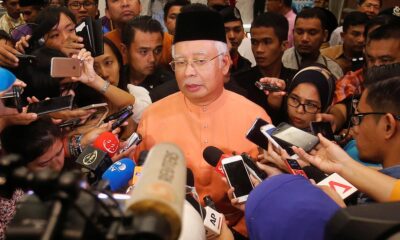
The implications are serious. When the press cannot fully perform its role, the public receives only a curated version of reality. Critical issues are left unexplored, inconsistencies go untested, and scrutiny becomes superficial. Wike’s media chat, instead of serving as a tool of accountability, has become a platform for message control, essentially a monologue dressed up as dialogue, and worse still, a platform for insulting Senator Ireti Kingibe, Governor Siminilayi Fubara, Governor Seyi Makinde, and most recently Seun Okinbaloye.
A genuine media chat operates on very different principles. Roles must be clear: the public official, who is invariably Wike in this context, is there to answer, not to control. Questions must be independently framed and allowed to stand without interference. Follow-ups must be persistent, especially when answers evade the issue. Strong moderation is also essential. A competent moderator ensures balance, prevents domination, and keeps the conversation anchored to the questions asked. Without this, the loudest voice, who is Wike in this context, inevitably takes over.
In a similar vein, diversity among journalists further strengthens the process, introducing multiple angles, political, economic, and social, that prevent the conversation from collapsing into a single narrative. Preparation is equally critical. Journalists armed with facts and contexts are far less likely to be overwhelmed or diverted.
Transparency completes the equation. Live or minimally edited broadcasts allow the public to witness the exchange as it unfolds, reinforcing trust. Excessive control or editing only deepens suspicion.
To be clear, all public officials attempt to shape their narratives, that much is inherent to politics. But when that instinct goes unchecked, as often seen in Wike’s media chats, both the questions and the answers risk being tightly controlled, and that crosses a line. What emerges is no longer a genuine media exchange, but a carefully managed monologue.
Responsibility, therefore, is shared. Media organizations must create conditions that empower journalists to ask hard questions and insist on answers. Access should never come at the expense of accountability. Journalists, for their part, must reclaim their role with clarity and confidence, remembering that their loyalty is to the public.
Ultimately, the value of a media chat lies not in how smoothly it runs, but in how much it reveals. If it informs, challenges, and clarifies, it succeeds. If it simply amplifies one voice, no matter how articulate, it fails.
What is currently presented as a media chat too often by Wike with his “paddy-paddy” Journalists falls into the latter category: a monologue in disguise, where one man sets the script and others follow.
Until that imbalance is corrected, Wike’s monthly media chat will continue to miss its purpose. It may generate attention, even admiration, but it will not deliver what truly matters. For the sake of clarity, the essence of a media chat is to serve as a direct, interactive bridge between a leader and the public, designed to foster transparency, accountability, and dialogue. For the journalists, until the imbalance is corrected, Wike’s media chat will continue to engender a seemingly sham, scripted encounter between power and accountability.