
Forgotten Dairies
Land Governance Without Justice: A Structural Human Rights Failure in Indonesia -By Farah Fahira Putri, SH, MH
Some in Indonesia argue that the country should continue maintaining a system under which law legitimates unequal land distribution, while others are willing to face up to unpleasant facts: the present land governance framework fails those it was designed for.Failure masquerading as success is inevitable where a system claims to provide legal certainty but leads to widespread land conflict. And a government that cannot deliver justice on the land cannot be said to stand up for law and order.When an authority governing land can secure no justice it is no longer governance. It becomes a mechanism for systematic human rights violations.

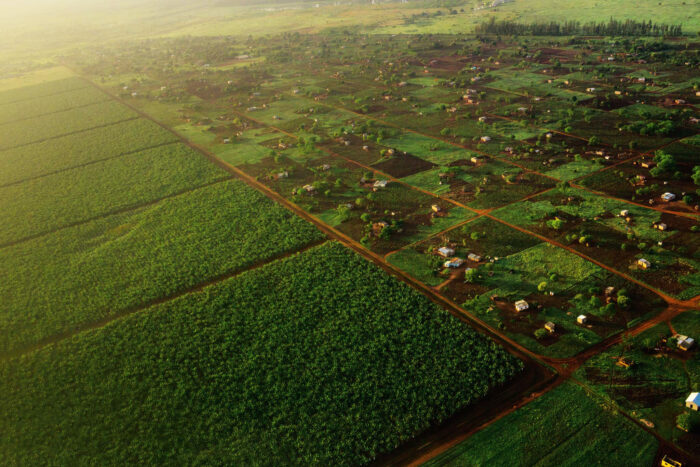
Indonesia doesn’t lack land laws. It makes another obvious and later fatal mistake: its land management system professes legality while so perverse as forests to produce injustice. Beneath certificates, cadastral maps, and official rationalizations of procedure there lies a structural weakness instead one that changes land a basic human rights all around into an area of exclusion, conflict and power consolidation.
National Land Agency (Badan Pertanahan Nasional/BPN) is at the heart of this crisis. This institution should ensure that there is legal certainty over one’s land. Instead, however, the system it oversees typically generates ambiguity. Overlapping land certificates, contradictory spatial data, and compartmentalized digital systems have spawned a legal paradox: a single plot may have multiple “owners,” and there is no settled arbitration authority for the facts. In such a system, legality does not serve its protective function; it becomes a matter of contention.
This failure is not technical. It is systemic.
Land conflicts in Indonesia are not simply local quarrels; they reflect a deeper malaise in governance. Communities are regularly pitched against companies, indigenous peoples in face-offs with state-backed schemes, and citizens at variance with those very institutions which are intended to protect them. The widening spread of plantations, mining concessions, and physical construction programs has only deepened this conflict often under the political catchword “national development”. But development that dispossesses, stymies, and marginalizes is no advance; it is simply depriving people by other means.
In this crisis perhaps the most disturbing part is the survival of land mafias—informal networks that cheat law, exploit administrative lacunae, and, in some instances, so bed with officialdom. When counterfeit certificates are obtainable, when records on land can be altered, when there is no effective mechanism for enforcement the regularization of political power wholesale influences just a marketplace-spectrum corruption. No longer are rights kept by law; they must be paied through might.
Even policies designed to create greater equality, such as land reform, were controlled. Many of them failed their real beneficiaries. Instead of freeing landless farmers, they often gave power back to those already in charge. Farms ended up in the hands of local warlords or well-connected entrepreneurs all too often. This represents no reform at all but rather a transfer of legitimacy to those who are already dominant.
At its heart, Indonesia’s land crisis reflects a deep contradiction between formal legal systems and the actual situation on the ground. Many Indonesians still lack clear titles if any title at all; others have documents recognized by law but which bear little practical impact. Indigenous land rights are frequentlysubject to invasion or occupation by the state or companies. Though the law is on the books, its enforcement is selective, haphazard, and at times even acts in complicity with exclusion.
Under this reality, we must ask: In a system that cannot truly guarantee land rights, what does every person’s right to the land mean? International human rights law means one thing above all else: property as well as adequate housing and freedom from discrimination are not just abstract principles or promises made to people. They are obligations owed by states. When land governance systems encourage people to be unsure, enable them to be kicked out of their homes and fail their most vulnerable citizens, it is not enough to say they are Zexiü streets in; they are indications of Zexiü.
For Indonesia, therefore, the challenge is also one of endowment and structure.
First, land data needs to be consolidated and published. Digital information split between departments is not just inefficient; it is dangerous. It paves the way for corruption and sapstrust. Second, accountability systems have to be strengthened. Officials and individuals involved in land corruption should bear real responsibility, not just talk but no action. Without enforcement, all reform is empty words. Third, indigenous and community land rights must be formally recognized and protected, not seen as obstacles but as integral parts of any just solution.
It’s most important that something be done.Or more precisely, a shift of focus is needed, from treating land as a productive resource to seeing it as the foundation of identity and dignity and a source survival. Some in Indonesia argue that the country should continue maintaining a system under which law legitimates unequal land distribution, while others are willing to face up to unpleasant facts: the present land governance framework fails those it was designed for.Failure masquerading as success is inevitable where a system claims to provide legal certainty but leads to widespread land conflict. And a government that cannot deliver justice on the land cannot be said to stand up for law and order.When an authority governing land can secure no justice it is no longer governance. It becomes a mechanism for systematic human rights violations.
Farah Fahira Putri, SH, MH
Alumni of The Faculty of Law University 17 August 1945 Surabaya and Member of Law Firm Victorious Indonesia

























You must be logged in to post a comment Login