National Issues
On Tinubu’s Timely Address to the Nation, by Zaidu Zaidu

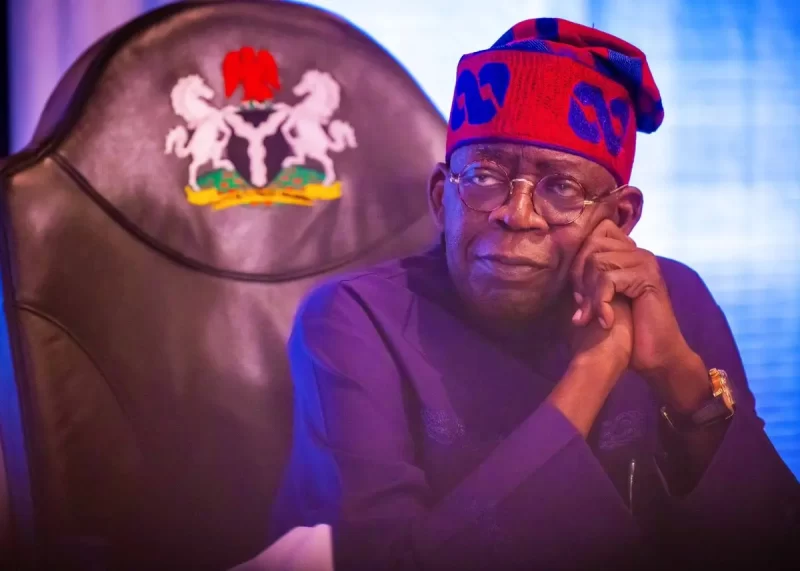
In a bid to ease lingering tensions in the country, President Bola Ahmed Tinubu has addressed the nation with a speech aimed at reconciliation, reassurance, and charting a clear path forward for Nigeria.
The President spoke In sober, yet unmistakable terms. His speech was reminiscent of great leaders throughout history who have faced moments of national crisis with firm resolve and visionary leadership. Like Winston Churchill’s steadfastness during World War II or Nelson Mandela’s calls for reconciliation in post-apartheid South Africa, President Tinubu’s address emphasized unity, resilience, and the imperative of dialogue in overcoming challenges.
The President’s address comes in the wake of the #EndBadGovernance protests, which have caused days of unrest across various states and sadly resulted in the destruction of lives and property. Among other grievances, the protesters are agitating against government policies that have exacerbated existing hardships.
In his address, the President also saluted the bravery of the well-meaning Nigerian youths who are demanding good governance from their leaders, affirming the importance of their voices in shaping a better future for the nation. This was important in order to rebuff detractors who have painted the President as a leader distanced from the teeming youthful population of the country. This generation of youths have demonstrated in recent years a burning desire to see the Nigerian Dream work for good in their lifetimes, and in the President’s speech, he not only acknowledged their importance in the grand scheme of national progress, but also assured them with firm words and clear-cut plans, of his administrationʼs alignment with their best interests.
No country can move forward without the full inclusion of its youth and their enterprising energies. President Tinubu’s speech shows that he is aware of this crucial fact in governance. After all, we have a dark history of numerous youths being easily radicalized to destabilize our nationhood through diverse acts of militancy, terrorism, insurgency, thuggery and outright anarchy. It was even with unmasked disappointment that President Tinubu pointed out that one of the digital training centres in Kano established to help the youths was shamelessly vandalized. His disappointment is understandable. How can one ask for things to be better by giving in to their worst impulses as human beings?
However, President Tinubu did not set out to completely malign the youths in his speech. Of course, he had to firmly restate his commitment to national security as the Commander-in-Chief. And he did this by reminding overzealous and disruptive elements that certain actions would be met with swift and dire consequences. “As President of this country, I must ensure public order,” he said. It is disheartening that even as law-abiding Nigerian citizens trooped out to protest peacefully, what should have been a peaceful protest devolved into an orgy of burning and breaking in, looting and physical violence, with battle lines being drawn on social media platforms. In his speech, the President pleaded for tensions to be doused, and for constructive dialogue to be adopted as a step towards reconciliation. One can only hope that the sensible amongst us will sheathe their swords and give stability a chance. At this point in time, Nigeria cannot afford going down anything resembling a path to chaos.
There is hunger in the land, yes, but we cannot resort to eating ourselves, can we? This is why, with a firm and reconciliatory tone, President Tinubu proposed forward-thinking solutions. And at the top of his progressive priorities was youthful inclusion and empowerment. For one, student loans are being disbursed to cushion the cost of education on students in federal tertiary institutions. Additionally, as the President disclosed, several initiatives and programmes are being put in place to enable Nigerian youths gain capabilities in technology that would make them “globally competitive”, allowing them to be on par with their contemporaries abroad. By stating this, President Tinubu showed that he is more than aware that a good education is no longer enough in this digital age: one must be trained to fit into the global digital economy before they can benefit from the opportunities therein. The ball is now in the court of the Nigerian youths, who should seize the chance to upskill and hone their talents for their own good, as well as for the good of the nation.
Solutions require patience. Sadly, Nigerians are notoriously impatient people, always needing things to come “fast-fast” and “sharp-sharp”. But as President Tinubu pointed out in his speech, our current economic woes are as the result of decades of mismanagement, corruption and bad policies. As such, it is unfair to expect that the President would simply wave a wand to solve our national problems overnight. “Yes, I agree, the buck stops on my table,” the President said, asserting his responsibility as a true leader, before acknowledging the part of the citizenry as he called for an “all hands on deck” approach to national progress. For him, everyone has a role to play in the national scheme of things, even those centrifugal elements out to sew seeds of dissolution. He more or less communicated the fact that a united Nigeria would quickly get back up on its feet, as opposed to a divided one doomed to never rise at all.
The President would go on to outline several plans and initiatives being put in place to ensure that Nigeria works even in these crucial times: from the economy to housing, agriculture, infrastructural development, job creation, education, healthcare, food production and price control. By putting measures in place to enable ordinary Nigerians afford basic food items and medication, including the signing of the new national minimum wage into law, President Tinubu shows that not only has he not stalled after he hit the ground running last year, but he has also remained sympathetic to the plight of those who entrusted him with the reins of leadership. In this vein, it is important to note that the President has proven himself to be a listener, as well as an active force for growth and restoration. He listens to everyone, not just the youths, and when he speaks (as he did in his now iconic address), he is able to make one feel seen, heard, cared for and included in the larger scheme of a national vision. Such is the power and essence of a true leader, that their speeches do not only communicate points, but serve as empathetic bridges to shrink the emotional distance between leaders and their followers.
The era of Renewed Hope Is here to stay in Nigeria, and no amount of division and hate would be enough to take this administration off course. That much is clear, and although it might be a hard pill to swallow for a few, most Nigerians are willing to give President Tinubu’s leadership the chance to succeed. The times are hard, yes, but they present Nigerians with the rare opportunity to achieve a crucial and historical turnaround, the sort that would inspire future generations to come. And with his timely address, President Tinubu basically offered Nigerians the chance to be a part of the solution, rather than remain discontent and frustrated. It is now left for Nigerians to respond positively to this by patiently trusting good captainship to steer our nation out of these turbulent waters and chart a course for greener shores.
One of the attributes of a great leader is the ability to make informed decisions that will have lasting effects on their followers. President Tinubu’s decisive action to address the nation amidst the crisis demonstrates this quality. His speech not only acknowledged the grievances of the protesters but also outlined concrete steps towards resolving national challenges and fostering unity. “I have heard you loud and clear”; “I understand your pain and frustration”; and “I assure you that I will not only listen, but work to effectively address your concerns” are just a few of the ways that President Tinubu’saddress was significant towards the validation of clear issues, establishing empathy, and assuring Nigerians of solutions to alleviate their suffering and pain.
In time, President Tinubu’s timely address will be remembered for the weight of its resonant optimism, and for daring to be focused even in the storm of cynicism, doubt and several other distractions. It did not sermonize, and it did not attempt to sugarcoat reality. Rather, it charged all of us to step up and get to work. “Let us choose hope over fear, unity over division, and progress over stagnation,” the President said, and this can very well be interpreted as a rallying cry for Nigerians at home and in the Diaspora to unite over the things that make us stronger, such as our hard-earned democracy and our values as a people. By doing this, we would not only be saving Nigeria in a moment meant to test our nationhood, but also set a worthy example for posterity.
As the President Tinubu enthused, and as Nigerians should also keep to heart, “FORWARD EVER, BACKWARD NEVER!”
This is how we will save Nigeria.
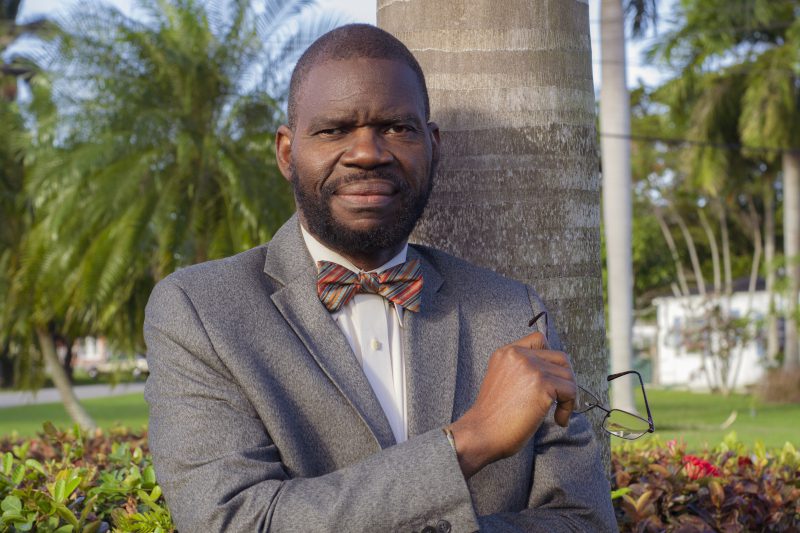
Zaidu Zaidu is a Public Affairs Analyst

![Human rights groups are concerned about further arrests amid continuing raids in the occupied West Bank [File: Jaafar Ashtiyeh/AFP]](https://www.africansangle.com/wp-content/uploads/2023/10/Human-rights-groups-are-concerned-about-further-arrests-amid-continuing-raids-in-the-occupied-West-Bank.webp)