Breaking News
Power Sector Absorbs N10 Trillion in 13 Years as FG Promises Fresh Reforms
Nigeria has spent more than N10 trillion on electricity interventions over 13 years, yet power generation remains stagnant. Minister Joseph Tegbe outlines fresh reforms to reset the sector.

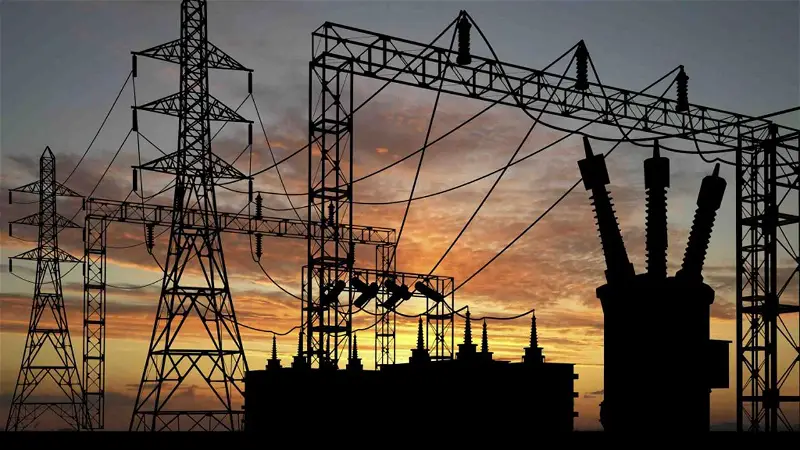
Nigeria has committed an estimated N10 trillion to its electricity sector over the last 13 years through intervention funds, loans, guarantees and infrastructure projects, yet electricity generation remains far below national demand.
The Federal Government says it is now embarking on a comprehensive restructuring of the sector to reverse decades of underperformance.
Power Minister Joseph Tegbe said the reforms target structural weaknesses that have persisted for more than 40 years.
“Within the next two to three years, Nigerians should experience a stronger grid, reduced technical losses, improved market discipline, greater investor confidence, expanded electricity access and significantly higher operational capacity.”
Massive Spending, Modest Output
Government spending since the privatisation of the electricity sector in 2013 has covered intervention programmes including the N213 billion Nigerian Electricity Market Stabilisation Facility, the N701 billion Payment Assurance Guarantee, the National Mass Metering Programme, the N700 billion Presidential Metering Initiative, the €2.3 billion Siemens Presidential Power Initiative, more than $2.4 billion in multilateral projects and the N4 trillion Presidential Power Sector Debt Reduction Programme.
Despite these investments, electricity generation has averaged only 4,500MW, significantly below the country’s estimated requirement of more than 30,000MW.
According to NERC, average available generation in the first quarter of 2026 stood at 4,457.96MW, while actual average hourly generation was 4,112.72MW.
Debt Burden Persists
The Association of Power Generation Companies said outstanding subsidy-related debts had climbed to N6.2 trillion, although the Federal Government maintains verified liabilities amount to about N3.3 trillion following reconciliation.
APGC Executive Director Dr. Joy Ogaji questioned the government’s calculations.
“We have asked them to publish how they arrived at the N3.3 trillion. We are owing gas suppliers about N4 trillion. If government owes us only N3.3 trillion, it raises many questions.”
NBET data also showed that government paid only N76.95 billion out of N1.859 trillion in subsidy invoices received between April 2025 and April 2026.
Bond Programme to Restore Confidence
To improve liquidity, the Federal Government has begun settling debts through a bond programme under the Presidential Power Sector Debt Reduction Programme.
After issuing a N501.02 billion bond earlier this year, authorities have now launched another N729 billion bond, while approximately N333 billion has already been paid to generation companies.
Officials say the initiative is designed to restore financial stability and attract new investment into the electricity market.
Experts Demand Better Governance
Consumer advocate Kunle Olubiyo argued that government involvement has encouraged inefficiency and revenue leakages.
“As much as government is desirous of injecting money, there is a value chain of beneficiaries of leakages and wastages.”
He called for complete privatisation of the sector, including the unbundling and privatisation of the Transmission Company of Nigeria.
Meanwhile, Engr. Israel Abraham, President of the Chartered Institute of Power Engineers of Nigeria, said the industry’s challenges stem largely from placing non-technical professionals in leadership positions.
“The electricity industry is highly technical. Progress has stalled because the right people have not been allowed to manage the sector. Until competent professionals are put in charge, the industry will continue to struggle.”
Tegbe: Sector Is Being Reset
Defending the government’s approach, Tegbe said the Tinubu administration had shifted from policy discussions to implementation.
He highlighted reforms such as the Presidential Metering Initiative, the Power Sector Bond programme, transmission investments, rural electrification, the inauguration of a 5,000-member Power Force for meter installation and improved coordination across the electricity value chain.
The minister said electricity generation had consistently reached 5,000MW over the past two weeks, while acknowledging that generation alone would not solve Nigeria’s electricity challenges.
He said the ministry’s roadmap includes transmission audits, regulatory harmonisation, grid stabilisation, liquidity reforms, strategic asset optimisation and a Super Grid Programme aimed at strengthening the national transmission network and supporting future industrial growth.
Africans Angle News