Forgotten Dairies
Sad, As Nigeria Paradoxically Catches Cold When Strait Of Hormuz Sneezes -By Isaac Asabor
What it lacks is not oil, but the systems to fully claim it. Until those changes, the pattern will repeat itself. The Strait will stir, markets will react, and Nigeria will once again feel the cold, unnecessarily, avoidably, and perhaps most frustratingly, undeservedly.

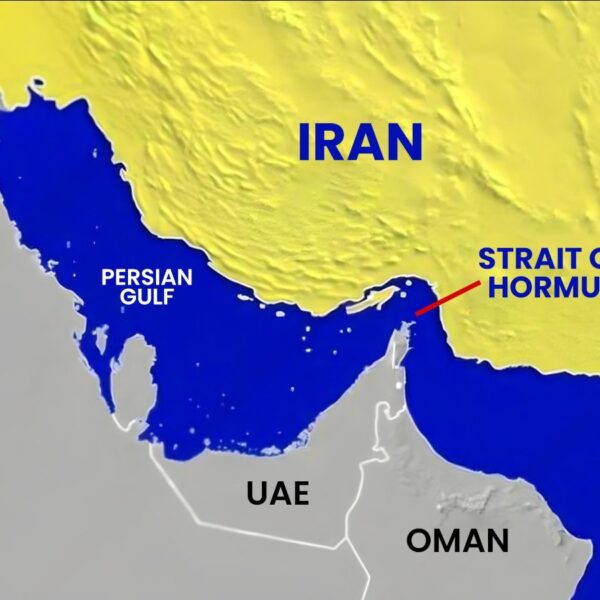
There is something deeply paradoxical, almost unjust, about Nigeria’s relationship with global oil shocks. A country that sits on vast reserves of crude oil, that has for decades been counted among the world’s major oil producers, should not be shivering each time distant waters grow tense. And yet, whenever the Strait of Hormuz trembles, Nigeria feels the chill. It should not be this way.
The Strait of Hormuz is thousands of miles from Nigeria’s shores, a narrow passage between Iran and Oman, carrying a significant share of the world’s oil supply. It is a place defined by its fragility: only a few miles wide at its most critical points, constantly watched by military forces, and perpetually shadowed by geopolitical tension. When conflict brews there, oil prices spike. When threats are issued, markets panic. When ships hesitate, the world reacts.
That much is expected. What is not expected, what should not be normal, is that Nigeria, an oil-producing nation, reacts with the same vulnerability as countries that have no oil of their own. And yet it does.
When the Strait tightens under pressure, Nigeria’s economy loosens under strain. Fuel prices rise. Inflation creeps upward. Transportation costs surge. The ripple travels quickly, from global markets to local petrol stations, from international headlines to everyday hardships. It is as though Nigeria is tethered to Hormuz by an invisible cord, pulled along by events it neither controls nor should depend on. This is the contradiction at the heart of Nigeria’s energy story.
Nigeria exports crude oil in large quantities. That is a fact. But crude oil, in its raw form, is not what powers cars, generators, or industries. It must first be refined into usable products like petrol, diesel, and aviation fuel. And here lies the problem that keeps Nigeria exposed.
For years, Nigeria has lacked sufficient domestic refining capacity. Instead of fully processing its own crude, it exports raw oil and imports refined products. This cycle places the country squarely within the global pricing system. It means Nigeria does not simply sell oil, it also buys it back in a different form, at prices it cannot control.
So when the Strait of Hormuz sneezes, when tensions disrupt supply expectations and drive up global oil prices, Nigeria catches cold. Not because it lacks oil, but because it lacks independence from the global system that determines how oil is priced, refined, and distributed. It is a dependency built not on scarcity, but on structure.
The Strait of Hormuz has become one of the world’s most sensitive energy chokepoints. A disruption there, whether real or threatened, immediately sends signals through global markets. Traders react. Insurance premiums for tankers rise. Supply forecasts tighten. And prices respond almost instantly.
For countries that rely entirely on imported oil, this vulnerability is obvious, and it is understood But Nigeria’s exposure is less intuitive, and therefore more troubling.
Nigeria does not import crude oil from Hormuz in any significant sense. It does not need to. Its soil already provides what the Strait carries. Yet because refined fuel often comes through global supply chains shaped by those same price dynamics, the country ends up paying the price of instability anyway. It is like owning a well but still buying water from a market that sets its price based on distant droughts. That is not just inefficient, it is unsustainable.
Each time tensions rise in the Strait of Hormuz, Nigeria’s economic vulnerabilities are laid bare. Fuel costs increase, placing pressure on transportation and logistics. Food prices follow, as the cost of moving goods rises. Businesses adjust by raising prices or cutting operations. Households, already stretched, absorb the shock in silence or frustration.
The effect is cumulative. It is not one crisis, but many small ones layered over time. And it raises an uncomfortable question: why should Nigeria, with all its oil wealth, remain so exposed? The answer lies not in geology, but in governance and infrastructure. Oil production alone is not enough. Without refining capacity, storage systems, and a resilient domestic supply chain, crude oil becomes a half-finished advantage. Valuable, yes, but incomplete.
Nigeria’s situation reveals a deeper truth about energy security: it is not defined by what a country produces, but by what it can actually use, control, and stabilize within its own borders.
There is nothing inevitable about Nigeria’s dependence on global fuel pricing shocks. It is the result of choice policy decisions, delayed investments, and systemic inefficiencies that have accumulated over time.
The Strait of Hormuz may always be a volatile region. That is beyond Nigeria’s control. But Nigeria’s response to that volatility is not fixed. It can be changed.
With functional refineries, the country could process more of its own crude. With stronger domestic supply systems, it could reduce reliance on imported fuel. With strategic reserves and pricing mechanisms, it could cushion the impact of global fluctuations.
In other words, Nigeria does not need to catch cold every time Hormuz sneezes. It simply has not yet built immunity.
The story of the Strait of Hormuz is often told as a global narrative, a narrow passage carrying a vast share of the world’s energy, vulnerable to conflict and disruption. That story is true. But for Nigeria, the more important story is local.
It is about how a distant chokepoint exposes domestic weaknesses. How global dependency reveals internal gaps. How a country rich in resources can still struggle with access and affordability.
It is not enough to point to Hormuz and say the problem lies there. The Strait may trigger the shock, but it does not create vulnerability. That exists closer to home.
If Nigeria is to escape this cycle, it must rethink what it means to be an oil-producing nation. Production is only the beginning. True energy security lies in control, control over refining, distribution, pricing, and supply stability.
Until that control is strengthened, the country will remain exposed to forces far beyond its borders.
And so the irony persists: a nation rich in oil, yet poor in insulation from oil shocks. A producer that still behaves like a consumer. A country that feels the tremors of a distant strait as if they were its own.
The Strait of Hormuz will continue to matter to the world. It will remain a narrow thread upon which global energy security precariously hangs. But Nigeria does not have to hang from that same thread. It has the resources to stand on its own.
What it lacks is not oil, but the systems to fully claim it. Until those changes, the pattern will repeat itself. The Strait will stir, markets will react, and Nigeria will once again feel the cold, unnecessarily, avoidably, and perhaps most frustratingly, undeservedly.
To cut this opinionative narrative short, It is sad that when Strait of Hormuz sneezes, Nigeria paradoxically catches cold.