National Issues
Sunday Igboho’s Iru Ekun As Sòbìà, The Guinea Worm -By Festus Adedayo
The state police idea is apparently the most effective path to tread. Unfortunately, because of votes, necessity to act right politically, and in supine bow to the region where massive votes could come from, the presidency is dilly-dallying on the implementation of the lofty anti-insecurity idea. IGP Tunji Disu’s timeline implementation of 60 months equally gave indication of the peremptory approach government wanted to give the idea.

Published
3 months agoon
Sending children to school today is risky. It is like hopping over an IED-buried land. The victory of Boko Haram terrorists, who declared war on education, against a Southwest which prides itself as beacon of education, couldn’t receive more fitting finality than now. Late last week, an unverified claim was made that terrorists keeping vigil with menacing guns over our children and their teachers inside the forest of Oyo National Park have made depressing ransom demands.
War has indeed begun. But, for the president, 2027 votes seem more precious than his people’s blood. And since, as his people say, even if one beholds a thousand heads in the marketplace, it shouldn’t be difficult to identify one’s, the people are bothered whether the president has identified his in this cadaver-counting arithmetic. The president has effectively mutated from his constitutionally-guaranteed role as actor-in-chief into a national mourner-in-chief, running a government of bereavement and weekly national condolences.
As I write this, news filtered in that terrorists have again struck Borno State, beheading soldiers and vigilante members. Like other parts of Nigeria, Southwest Nigeria is terrified. It is almost a crime to celebrate. Killings no longer make front page news. Nor the number of our countrymen sent to the graveyards. You can compare our situation to someone’s whose mother was offered as sacrifice to Yemoja, the goddess of the river, for whom smiling is an anathema. Killings by terrorists have become a roulette. Since they stormed Ahoro-Esinele and Yawota, killing a teacher, abducting 46 pupils, teachers and decapitating one, Southwest has been the proverbial cycle of conspiracies (Egbìnrìn òtè) which, as you attempt to grapple with one, a multitude spring up.
Many parts of Nigeria bear virtually all chaotic symptoms of rebel-occupied spaces in far-flung places of Africa. Anarchy is fast becoming the new normal. Indices of ungovernable Nigeria are evident.
The chaotic, violent and blood-soaked situation today in Southwest Nigeria is almost akin to that of the 19th century. According to J. F. Ade Ajayi and S. A. Akintoye, in their “Yorubaland in the Nineteenth century” published in Groundwork of Nigerian history (1980) edited by Obaro Ikime, it was the century the Binis succeeded in making incursion into Northern Yoruba towns of Owo, Akoko, Ekiti and Ikare. Between 1830 and 1850, extreme Northeastern Yorubaland towns of Oworo, Bunu, Iyagba, Owe and Ijumu had been taken over by Jihadist Fulanis. Led by the Nupe Malam Dendo, the Jihadists later made incursions into Igbomina, Akoko and northern Ekiti. Ilorin cavalry’s forays also met with huge success. The rivalry between the Ibadan and Ijaye for dominance left blood and sorrows. By 1847, highly feared Ibadan forces had occupied Ekiti, expelled the Ilorin and by 1860, spread their tentacles of dominance over it, Ijesa, Akoko, Igbomina and vast territories of Osun and Ife kingdom. The 16-year war against the Ibadan in the Kiriji war, also known as the Ekitiparapo war, was to later truncate Ibadan’s dominance.
All these led to, in the words of Ade-Ajayi in another journal article with the title, “Professional Warriors in 19th century Yoruba politics” a shift from part-time militias to professional standing armies. Leaders of the armies of Yorubaland during this troublous era were: Aare Latoosa, who commanded Ibadan forces in the Kiriji War; Balogun Oderinlo, a tactical genius who fought and decimated Fulani forces in the Osogbo War; Balogun Ogunmola, a ruthless strategist; as well as Basorun Oluyole and Balogun Ibikunle. The Kiriji war also produced Ogedengbe Agbogungboro of Ilesa, who became the supreme commander of the allied Ekiti-Parapo forces. He was renowned for his military prowess. Then, we had Fabunmi of Oke-Mesi, who was a dreaded key strategist whose beheading of an Ibadan tax administrator became the catalyst of the Ekitiparapo war; as well as Ijaye and Abeokuta (Egba) Commander Kurunmi of Ijaiye.
These militia leaders were spurred on by the collapse of the Old Oyo Empire in the same 19th-century. They became a new class of warlords who rose from the ashes of the incursions of external and internal forces into the domains of territorial powers. These militias sidestepped traditional hereditary lines and went ahead to acquire immense political power. By doing this, they fundamentally transformed the powers of Yoruba constitutional monarchies. Their military expeditions also led to a shift and reshape of Yoruba societal norms, recalibrating might to be right. As said by Ade-Ajayi, the control of violence, access to firearms, and war tactics during this time became central pillars of political authority. It led to a total militarization of the whole of Yorubaland. This pervaded the land until British colonial intervention became the sole enforcer of normalcy and peace in the late 1890s.
Another example was the Agbekoya Parapo Revolt of 1968–1969 led by Tafa Adeoye. It was a peasant revolt in the Western Region, fought and won against the Federal Government by the Ibadan, spearheaded by two villages of Akanran and Akufo.
To validate why a people who lay store by good conduct could accommodate bandits as their leaders, Yoruba validate this in a saying that weaponizes necessity as mother of invention. It is rendered as, “ojó t’áa bá pà’jùbà làá níran àdá, ojó ogun bá le làá níran omo t’ó le”. Literally, it means, it is on the day of cultivation of a virgin forest that a machete becomes a close companion, just as a moment of being besieged makes the tough son in the closet the most useful weapon of defence. By the way, Ibadan veteran broadcaster, Fresh FM’s Abolade Salami gave me this saying some years ago.
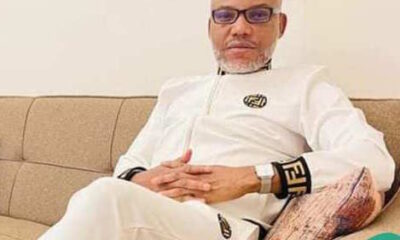
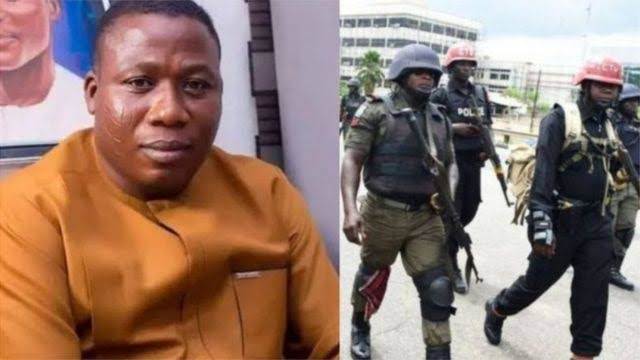
A few weeks ago, self-labeled Yoruba nation activist, Sunday Adeniyi Adeyemo, popularly known as Sunday Igboho, again hit headlines. He had earlier come into national reckoning in January 2021 when he gave a controversial seven-day ultimatum to suspected Fulani herdsmen allegedly terrorizing the Ibarapa area of Oyo State to vacate the space. Public accusation then was that these herders were behind the orgy of kidnapping and killing of local farmers in the area. He instantly hit the klieg light as a folk hero in Yorubaland. The Muhammadu Buhari government however hounded him. It led to an Operation Get Igboho which, on July 1, 2021, had a joint team of security operatives haunt him at his Soka, Ibadan, residence. The Department claimed it recovered seven AK-47 assault rifles, three Pump Action guns, 30 fully charged AK-47 magazines, 5,000 rounds of 7.62mm ammunition, and 18 Walkie-Talkies, among others, from his house. Igboho thereafter fled the country.
After being granted pardon and he returned from exile, Igboho recently announced the formation of a security outfit he called “Ìrù Ekùn Security Network”. In his words, it would collaborate with the Police, Department of State Services, Nigeria Army and other relevant stakeholders to flush out terrorists, kidnappers, bandits, and other hoodlums, who are threatening the peace and safety of the people. He also claimed to want to work with South-West governors to fortify state-backed
In the wake of the abduction of pupils and teachers at Oriire, Igboho has again come out to say he knew the politicians behind it. He said they were Tinubu haters.
Voluble, illiterate, unpretentious but bold, those who know Igboho know of his trajectory as an anvil in the hands of politicians. He is also a notorious land-grabber. The Elebu area in Ibadan has repeatedly witnessed his notoriety in this regard. However, this is not a time for recriminations. It is a time to seek ways of wiping away the caked blood of sorrow from our brows as a people and who can effectively do this. Thus, Igboho’s offer to tame insecurity in the Southwest, even claiming to be able to spread his Ìrù Ekùn’s tentacles to Kogi and Kwara States, deserves thorough examination.
Thus, that Igboho is transmuting from villainy into a people’s heroes has its historical trajectory as analyzed above. However, if the aim is for the Yoruba, through Igboho, to harvest their share of the national cake as Niger Deltans are doing with the Tantita Security Services, which claims to be protecting critical oil pipelines and gas sector installations, Igboho’s Ìrù Ekùn is all well and good. If, conversely, the aim is to provide security for the Southwest, it may be deadly in the long run. Igboho may succeed in bailing out some children from the grips of terrorists inside the Oyo National Park. Many may even die in the process. Ultimately, the end result may prove catastrophic for the people.
First is, to hand over such tremendous power to a non-state actor of Igboho’s pedigree and educational depth is dangerous. What knowledge does he have in modern warfare? A similar outing proved fatal which Nigeria has yet to recover from. Mohammed Yusuf, founder of Boko Haram, was known as provider of security cover for then Borno governor, Ali Modu Sheriff. In the 2003 elections, Sheriff reportedly provided him financial backing, government appointments and even protection. His sect, in exchange, then gave him grassroots support and protection. By 2003, the glue to the rapport came in the form of political alliance, with a deal struck to give the sect concessions. One was the release of its imprisoned members and appointment of its allies into local government offices. Yusuff however sensed betrayal and abandonment. After election and Sheriff government sought to do away with Yusuff, the bubble burst. This led to its radicalization and clashes with local security forces. The subsequent deadly 2009 uprising which later arose became a fait accompli. And Yusuff’s elimination. The whole of Nigeria is today suffering from this unholy alliance.
Second, as the Yoruba say, even when a mad person is cured of their malady, there always remains fragments within them, a moment of insanity in sanity. To give Igboho, an ally of political players, such huge security powers is potentially dangerous for the polity. The timing of the outfit is everything but right. Handing total security to a non-state actor, one who has expressed his angst at alleged persons who want to stop “our son” from being president, would be akin to arming deadly political thugs. HURIWA, the human rights group, might have had this in mind when, in its reaction to Igboho’s Ìrù Ekùn, said it would threaten national security
Third is that Ìrù Ekùn Ekun would empower other nationalities facing insurgency like the Southwest to equally demand national imprimatur for their own militia. It will be unfair not to grant them, or else it becomes an exercise in ethnic favouritism.
The president’s immediate response to the Oriire kidnap, after the tragedy of his sending a delegation to the place last Sunday, rather than his physical presence, is equally a placebo that cannot cure this national ailment. He had announced the recruitment of 1000 forest guards to be deployed to the forests, in partnership with the Oyo State government. Not only will the presidency, as usual, dilly-dally on this, no one knows the guards’ modus operandi nor when it will take off. Its effectiveness is also suspect except government veers off constitutional provisions by empowering it to carry sophisticated guns.
If, almost three weeks after 46 pupils and teachers were taken into captivity, 1000 forest guards idea is the only plausible word we have heard from government, it is frightening and disheartening. Government should confess its limitations. When a person exhibits palpable incapacity as this, Yoruba compare them to the scruffy whom they ask to confess their dirt affliction so that they could receive help. They say, “Jéwó, òbùn k’án dáso ró e”. It is apparent that government is too tame to rescue us. Could it confess?
In all, the current state of insecurity in Nigeria is the ripening of fruits of decades of neglect of security issues. A Buhari minister once openly told Nigerians that Fulani herders of all countries in Africa were free to ingress and egress into Nigeria. Current holders of power were too timid, apparently due to their eyes on power, to condemn the seeds of sorrow Buhari sowed.
The state police idea is apparently the most effective path to tread. Unfortunately, because of votes, necessity to act right politically, and in supine bow to the region where massive votes could come from, the presidency is dilly-dallying on the implementation of the lofty anti-insecurity idea. IGP Tunji Disu’s timeline implementation of 60 months equally gave indication of the peremptory approach government wanted to give the idea.
To combat guinea worm, which Yoruba call Sòbìà, native doctors found a herbal remedy in the Olúgànbe leaf. It is usually boiled and its water used to clean the ulcer. The leaves are then used as plaster on the burst worm site. So, as a tribute to the rescue that the Oluganbe leaf provides those who suffer the strike of Sòbìà, a traditional Yoruba aphorism was invented as salutation to the Oluganbe. They say, “tí Sòbìà y’óó bá d’egbò, Olúgànbe làá ké sí,” translated to mean, before guinea worm transmutes into a dangerous sore, Oluganbe is always called to the rescue. Beyond the strike of the Sòbìà, this wise saying has assumed a broader context as call on those who have ears, upon noticing early signals of an impending disaster, to immediately seek timely solutions to it. However, what do we do when the Oluganbe is itself the affliction? That is the complexity of the Nigerian security challenge. And Igboho’s Ìrù Ekùn.