Africa
The Irksome Question Of The National Minimum Wage, by Ike Willie-Nwobu
While there was a consensus that 30,000 Naira had become desperately inadequate as the minimum wage, the Congress and the government differed significantly on what the new amount should be. While the Federal government wanted a more conservative review of the wage, the union wanted something fairer and higher, and why not?

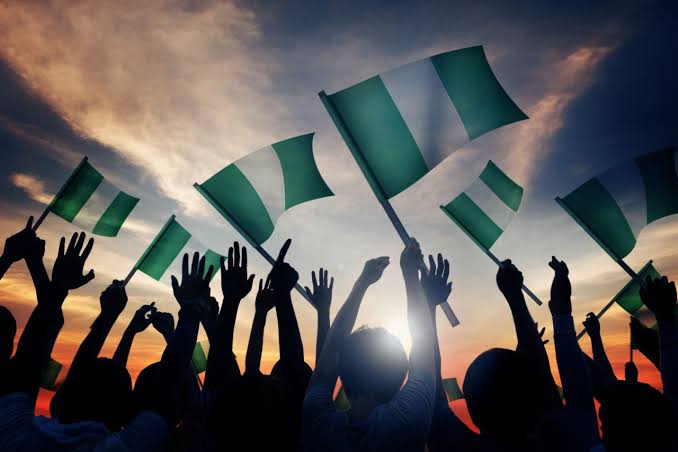
For many of Nigeria’s 250 million people, life is a daily, desperate grind below the international poverty line. With many families and households mired in the muck of such relentlessly suffocating poverty, the standard of living haunted by the rising costs of living has only continued to plummet.
Take bread for example which used to be a staple for many Nigerian families who favour a hastily prepared cup of tea before school or work or to bat away hunger or cold. It has gradually become unaffordable for many, its price rising with the moans of bakers about increasing costs of production. Who will blame them?
Noodles which used to be the go-to quick fix for many Nigerian stomachs, especially children has become another flash point registering sharp spontaneous price hikes. For the everyday Nigerian for whom life is lived only in crumbs and drops, life, already tough before the removal of fuel subsidy, has become wildly unbearable.
Nigeria is a red-tape democracy. Its ponderous bureaucracy, which is the backbone of this democracy, has civil servants as its beating heart. These humble workers who make the rounds of routine and promotion, counting off years until they retire into an often restless retirement of paltry pension, turn the wheels of Nigeria’s slowly turning machine.
For them, work has not always historically equated to a fair wage, and because of their status as frontline partners with the government in the Nigerian experiment, they serve as a barometer for the quality of life in the country, and a thermometer for the country’s social temperature. Like ants, they congregate under the colony of the Nigeria Labour Congress, a controversial but crucial cog of work
For two days last week, the NLC banged the reveille for its members to down tools. It successfully disrupted life in the country, with the shutdown of the national grid as emblematic of the strike action as anything else. The NLC grouse was the failure of the Federal Government to accede to its claims for a minimum wage reflective of the existing economic conditions in Nigeria.
While there was a consensus that 30,000 Naira had become desperately inadequate as the minimum wage, the Congress and the government differed significantly on what the new amount should be. While the Federal government wanted a more conservative review of the wage, the union wanted something fairer and higher, and why not?
The question is why should the NLC have to down tools to force the government to act. Why is the government finding it so difficult to make what will be a significant decision for millions of Nigerian households.
There is something inherently wrong with a country where jeopardy must be employed before justice results. That workers must down tools to force home their demands for better wages says a lot about the readiness of a country that aspires to be a model democracy.
It Is not exactly to compare wages or wounds, but the select political establishment in Nigeria earns astronomical wages, enjoy maximum security and live in opulent conditions for doing next t to nothing for a country that continues to be bogged down by desperately poor leadership. So comfortable is Nigeria’s political establishment amidst the groans gagging other Nigerians that it can afford to nibble at nostalgia just as it recently did in reinstating the old nation anthem that has become a dirge to Nigeria’s demise.
Affordability has since become a battle for existentialism. Those who can afford the basics are living, while those who can’t are shuffling closer to their graves. While Nigeria’s Vice President can swap his current tastefully appointed quarters for a new one worth an eye watering 21 billion Naira, large families crammed into squalid accommodations are about to be priced out of even those.
The question of minimum wage is also an excursion into the effect of ravenous hunger. If only the men who make these policies go to the market; if only they don’t eat but shop and prepare meals as well, maybe they will feel the impossible burden millions of Nigerian households have to shoulder.
There is a need for those who lead the country to balance the books as well as perception. While they are at it, it is also important to ensure that those who toil for the country do not labour in vain.
Outrageous ostentation in the corridors of power cannot be justified in the face of the poverty crushing about half of Nigeria’s population.
The increase in minimum wage won’t serve as a magic wand to fix Nigeria’s deep-seated poverty. It can’t because many of Nigeria’s poorest are unemployed and unconnected to the minimum wage. But it will go a long way.
The Increase will trickle downwards. It will bring respite to countless who are unjustifiably living hand to mouth in a country whose steep poverty levels does not reflect its staggering wealth.
However there are lessons in this for all those who occupy leadership positions on the negotiation table: the question of minimum wage is not about an individual or a group of individuals within Nigeria. It is about a whole country and countless families forced to live hardscrabble lives.
It Is also about the future. Maybe if those fighting against Nigerian workers truly know what they are doing, they may have a change of heart.
Ike Willie-Nwobu,
Ikewilly9@gmail.com