
Africa
President Bola Tinubu and Spiritualist Ejike Mbaka: Confronting the Crisis of Inequality Amidst Looming Unrest, by John Egbeazien Oshodi
In an era where digital news is accessible with a simple click, the allowance for newspaper subscriptions is not just outdated but comically absurd. This, especially for lawmakers and ministers, who already enjoy a range of unjustified perks, begs the question: where does it end? One might sarcastically wonder why there isn’t an allowance for girlfriends and other sweethearts, given the extensive list of frivolous benefits. Such practices mock the very principles of governance and fairness, fueling public outrage and deepening societal divides.

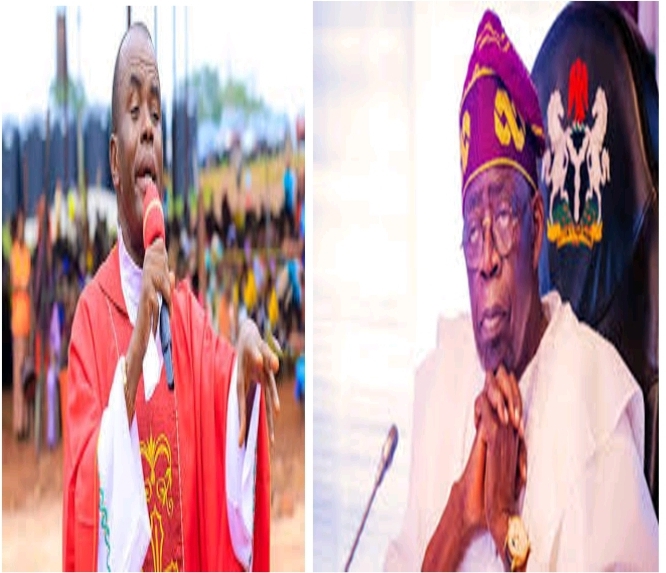
The discourse on unequal pay within the Nigerian government has reached a critical and alarming juncture. It is no longer merely a matter of economic policy but a reflection of the deep-seated unfairness tearing at the fabric of our society. The psychological, ethical, and democratic implications of these disparities cannot be ignored.
The unequal distribution of wages within the Nigerian government, highlighted by Ejike Mbaka, spiritual director of Adoration Ministry, and echoed by Adewole Adebayo, a former Social Democratic Party (SDP) presidential candidate, reflects deep-seated feelings of inequality and injustice experienced by many Nigerians. This issue is not just a challenge; it is a crisis that demands immediate and comprehensive action.
If President Tinubu’s government is to be truly objective, fair, and forward-thinking, it must confront these disparities head-on. Minister of Finance Wale Edun has a pivotal role to play in this regard. He must be bold enough to make aggressive recommendations that address the root causes of these inequalities. Band-Aid solutions are insufficient; a comprehensive overhaul of the wage structure is required to ensure a fair distribution of the nation’s wealth.
These nonsensical practices, remnants from the colonial era, continue to siphon resources from Nigeria, perpetuating a cycle of inequality and exploitation. The plethora of allowances—including sitting allowances, wardrobe allowances, and newspaper allowances—exemplifies this systemic absurdity. But it doesn’t stop there; personal assistant allowances, entertainment, furniture, hardship, and motor vehicle allowances further highlight the grotesque misallocation of public funds.
In an era where digital news is accessible with a simple click, the allowance for newspaper subscriptions is not just outdated but comically absurd. This, especially for lawmakers and ministers, who already enjoy a range of unjustified perks, begs the question: where does it end? One might sarcastically wonder why there isn’t an allowance for girlfriends and other sweethearts, given the extensive list of frivolous benefits. Such practices mock the very principles of governance and fairness, fueling public outrage and deepening societal divides.
Adding to the irony, many governors claim they lack the funds to meet the wage demands of the Nigeria Labour Congress (NLC). Yet, the moment they assume office, these opportunists—along with ministers—somehow find the means to build or purchase lavish mansions in Abuja. This blatant misappropriation of public funds not only underscores their hypocrisy but also highlights the systemic corruption that drains Nigeria’s resources. The contrast between their claims of financial insufficiency and their personal extravagance is a bitter pill for struggling Nigerians to swallow, exacerbating the already growing discontent and mistrust in the government. U na yeye too much ooo.
Father Ejike Mbaka’s words serve as an alarm, highlighting the potential for social unrest if the government does not address the disparities in pay. He warns, “We can push these poor Nigerians to the point of rebellion. That is my fear.” His concern is not unfounded, as evidenced by the recent actions of the Nigeria Labour Congress (NLC), which brought the nation to a standstill by shutting down airports and other operations. The Nigeria Labour Congress’s strike and the subsequent shutdown of airports in Lagos served as a wake-up call, demonstrating the power of collective action and the frustration that simmers among the populace.
The government’s traditional tactics of fear and intimidation are losing their grip on the Nigerian people. The deployment of armed police, civil defense forces, the military, and even sponsored violent political thugs to suppress peaceful protesters is now met with resistance. The era of ENDSARS has taught the youth and the wider population the power of social media, turning smartphones into tools of activism that can no longer be silenced.
The government’s attempts to find compliant judges willing to issue unjust anti-protest restraining orders, along with their reliance on compromised media and biased NGOs to suppress dissent, are proving increasingly ineffective. Nigerians have become astutely aware of these tactics and are leveraging online platforms to amplify their voices, organize, and draw global attention to their cause. The resilient spirit of protest that courses through the veins of the Nigerian populace cannot be quelled by brute force or intimidation. In this digital age, where truth and resistance can spread rapidly, the government’s oppressive measures are not only outdated but futile. This highlights the urgent need for genuine reform and a government that is truly responsive to the demands of its people.
In this new age of digital activism, President Tinubu and his administration must understand that the old ways of governance are obsolete. The use of force to suppress dissent will only serve to exacerbate tensions and push the nation further towards instability.
The Nigerian people, long perceived as a collective easily subdued by fear and intimidation, have reached a tipping point. The adage of a hungry man’s fury finds its echo in the streets of Nigeria, where economic disparities have grown into chasms and basic needs remain unfulfilled. The government’s tactics of intimidation, once thought to be sufficient to quell dissent, now serve only to fuel the flames of defiance. The people’s declaration that they have nothing to lose is a chilling realization of their desperation. It is a clarion call that the status quo is no longer tenable, born not of a desire for strife but of a deep-seated injustice and a yearning for the dignity and prosperity that has been elusive for too long.
To the government, it must be said with unwavering clarity: the spirit of the Nigerian people cannot be extinguished by intimidation. It is a lesson that history has taught time and again. The more you attempt to suppress, the more resolute the people become. The nation has reached its boiling point, and the heat of the people’s anger cannot be cooled by the mere show of force.
In the face of intimidation, a new resolve has emerged among the people. They assert that they have nothing to lose, a declaration that is both poignant and alarming. It is a testament to the desperation that has set in, a clear signal that the status quo is no longer sustainable. This newfound defiance is not born out of a desire for conflict, but rather out of a profound sense of injustice and a determination to reclaim the dignity and prosperity that have been denied to them for so long.
The government must recognize this sea change in public sentiment. It is a call to action, a demand for leadership that is responsive, empathetic, and committed to the welfare of all Nigerians. The time for complacency is over; the people have spoken, and their voices echo with the urgency of their plight. The path to peace and progress lies in heeding their call and working tirelessly to build a Nigeria where every citizen, regardless of their station in life, can live with hope, dignity, and opportunity.
In a sarcastic twist, one might say to the government: “You can’t kill the spirit of the people with so-called intimidation. It’s like trying to douse a flame with gasoline. The more you try to suppress them, the more their resolve ignites. So, go ahead, keep underestimating the Nigerian people. Keep thinking that a few shows of force will quell the storm. But remember, you’re dealing with a nation that has reached its boiling point, and no amount of intimidation can cool the anger of a people who have nothing left to lose.”
The government must awaken to this sea change in public sentiment. It is a summons to action, a plea for leadership that is not only attentive to the people’s needs but also proactive in dismantling the structures of discontent. This is the moment for a leadership that is responsive, empathetic, and dedicated to the well-being of every Nigerian.
The path to peace and progress is illuminated by the voices of the people, whose urgency cannot be ignored. It is a journey that requires listening, understanding, and decisive action to forge a society where equity and justice are not just ideals but lived realities. Nigeria stands at a pivotal moment, where the choices made today will etch the course of the nation’s future.
This is a time that demands courage, a vision that transcends the present, and an unwavering commitment to the common good. It is the moment for Nigeria to rise, not just from the ashes of discontent, but towards a horizon where every citizen can live with hope, dignity, and opportunity. The future beckons, and it is within the grasp of a united people and a government that serves their true interests.
The self-destructive nature of unequal pay within the Nigerian government is a symptom of a deeper malaise that requires urgent attention. It is a clarion call for leadership that is willing to confront the uncomfortable truths about our society and take decisive action to correct them. The time for half-measures is over; what is needed now is courageous leadership that prioritizes fairness, justice, and the collective well-being of all Nigerians. It is through dialogue, empathy, and genuine efforts to address grievances that the government can hope to bridge the divide and foster a more harmonious and equitable society.
In conclusion, President Tinubu and Minister of Finance Wale Edun must heed the words of Mbaka and the lessons of the recent NLC strike, recognizing the need for a comprehensive overhaul of the wage structure that ensures a fair distribution of the nation’s wealth. The future of Nigeria hangs in the balance, and it is up to our leaders to steer the ship towards a more equitable and prosperous destination. The eyes of the world are watching, and the time to act is now. Nigerians deserve a government that respects their rights, listens to their demands, and works tirelessly to ensure that every citizen, from the highest judge to the lowest civil servant, is compensated justly. The path to a better Nigeria starts with fairness and justice for all.
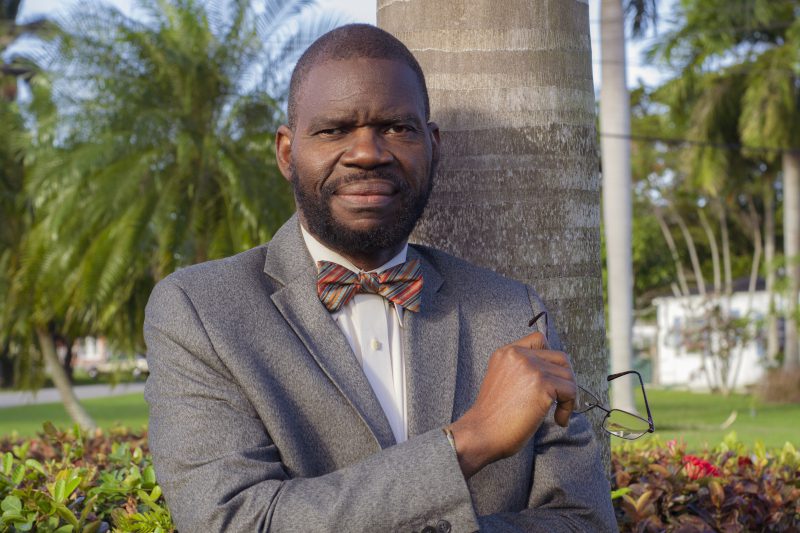
Professor John Egbeazien Oshodi, born in Uromi, Edo State, Nigeria, is an American-based police and prison scientist, forensic psychologist, public policy psychologist, and legal psychologist. He’s a government advisor on forensic-clinical psychological services in the USA and the founder of the Dr. John Egbeazien Oshodi Foundation for Psychological Health. With a significant role in introducing forensic psychology to Nigeria through N.U.C. and Nasarawa State University, he’s also a former Secretary-General of the Nigeria Psychological Association. He’s taught at esteemed institutions like Florida Memorial University, Florida International University, Nova Southeastern University, and more, and is currently an online faculty member at Weldios University, Nexus International University, and Walden University. John.Oshodi@mail.waldenu.edu

















You must be logged in to post a comment Login