Opinion
The Once Loud Godfather Who Thought He Was ‘god’ and the Insulting Stubborn Chair: Fubara’s Clever Rise While Wike Goes Quiet and Nwanosike Packs His Bags, by John Egbeazien Oshodi
Governor Fubara’s response to Nwanosike’s insults was marked by restraint and reflection. He did not anticipate an apology from Nwanosike but instead highlighted the unusual boldness of the chairperson’s actions.

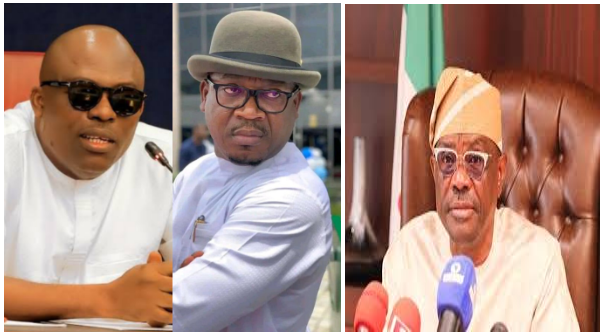
In the intricate landscape of Nigerian politics, the interaction between Rivers State Governor Siminalayi Fubara and Ikwerre Local Government Area (LGA) Chairperson Samuel Nwanosike has unfolded as a compelling narrative that intertwines themes of respect, ethical governance, and the psychological dimensions of political communication. This discourse, initiated by Nwanosike’s public insult and characterized by Governor Fubara’s reflective response, offers a rich exploration of the expectations, boundaries, and ethical imperatives that define political interactions.
The episode began with Nwanosike’s public denigration of Governor Fubara, specifically using derogatory language to label the governor as “foolish and naive.” This act not only constituted a personal affront but also challenged the norms of respect and decorum within political hierarchies. The use of such language sparked a significant discourse on the ethical standards expected of public officials and the nature of respect in political discourse.
Nwanosike’s actions can be seen as a convincing manifestation of his allegiance to former Governor Nyesom Wike, who has been causing quite the stir from Abuja as the Federal Capital Territory (FCT) Minister. Wike, in his characteristic bravado, has been boasting that he made Fubara the governor, seemingly believing he holds the strings to Fubara’s political puppet. This unusual belief, considering power fundamentally comes from the voters, has driven much of the conflict. Wike’s desire to keep Fubara as his political subordinate has been evident. However, in a delightful twist of fate, the people of Rivers State have rallied behind Fubara in recent weeks, leading to a noticeable silence from Wike. Perhaps he finally realized that the strings he thought he held are, in fact, imaginary.
Governor Fubara’s response to Nwanosike’s insults was marked by restraint and reflection. He did not anticipate an apology from Nwanosike but instead highlighted the unusual boldness of the chairperson’s actions. The governor’s acknowledgment that such behavior would not be tolerated by other governors underscored his understanding of the broader implications of this incident on the norms of political engagement and the respect due to elected leaders.
From an ethical perspective, Governor Fubara’s stance reflects a profound commitment to the principles of respect and the ethical conduct of public officials. His recognition of the exceptional nature of Nwanosike’s actions serves as a reminder of the importance of upholding the dignity of public office and engaging in political discourse that is respectful and constructive. It challenges the notion that political rivalry should descend into personal attacks and disrespect, advocating instead for a culture of governance that values integrity, respect, and the ethical use of public platforms.
Psychologically, this discourse unveils the intricate dance of power, respect, and the human propensity to assert dominance or challenge authority within political structures. Nwanosike’s actions can be interpreted as a manifestation of these dynamics, while Governor Fubara’s response exemplifies a thoughtful navigation of these complexities with a focus on the ethical imperatives of governance. No matter how bitter political fights become, adults should watch their public words, be role models to children, students, and youths, and demonstrate how to engage in healthy, respectful discourse.
Amidst this discourse, a significant development has emerged with the expiration of the tenure of local councils in Rivers State. The Chairperson of Ikwerre LGA, Nwanosike, has asserted that Governor Fubara lacks the legal authority to constitute caretaker committees for the local government councils, following a Court of Appeal ruling. This assertion adds a layer of legal and ethical complexity to the governance dynamics in Rivers State, raising questions about the legitimacy of governance structures and the respect for legal and democratic processes.
In a comedic twist to the narrative, Nwanosike seems to harbor a fantasy that the courts will protect him and other chairpersons from the inevitable end of their tenure. He also appears to depend on the Amaewhule-led state assembly, which has been banned from acting as the house of assembly of the state. Consequently, any law they passed, including extending the tenure of the local government chairs, is now void. The image of Nwanosike clinging to the hope that a defunct assembly will save his tenure is almost Shakespearean in its tragic comedy. However, the law is clear on the matter, and the governor has the right to set up caretaker committees to manage the local administration in Rivers State once the current tenure expires. No man, not Wike, no legislature, no judge can change the fact that today, June 17, marks the end of the tenure for Nwanosike and the other chairs. As Nigeria celebrates Eid-ul-Adha with public holidays on the 17th and 18th of June, perhaps it’s the perfect time for Nwanosike and his fellow LGA chairs to quietly pack their things and vacate the office. They could even use the festive break to avoid the rush and quietly pack up their desks, maybe slipping out with a smile and a wave, blending into the joyous crowd. After all, there’s nothing quite like a public holiday to soften the blow of an enforced exit!
In the intricate dance of political engagement, the discourse between Ikwerre LGA Chairperson Samuel Nwanosike and Rivers State Governor Siminalayi Fubara, framed by a tenure crisis, reveals a profound moment of contemplation on the essence of political communication, the bedrock of respect in governance, and the ethical north star that ought to guide the steps of public leaders. Governor Fubara’s deliberate and principled stance, which transcends the conventional expectation of an apology and instead seeks a higher ground of ethical clarity, and the belated, apparently half-hearted apology from Nwanosike, underscore the critical importance of respect, integrity, and ethical behavior in the quest for impactful and dignified governance. As Nigeria navigates its complex political terrain, these interactions serve as potent reminders of the perpetual struggle to harmonize power, respect, and ethical governance, in the unwavering pursuit of a more cohesive, democratic, and thriving society.
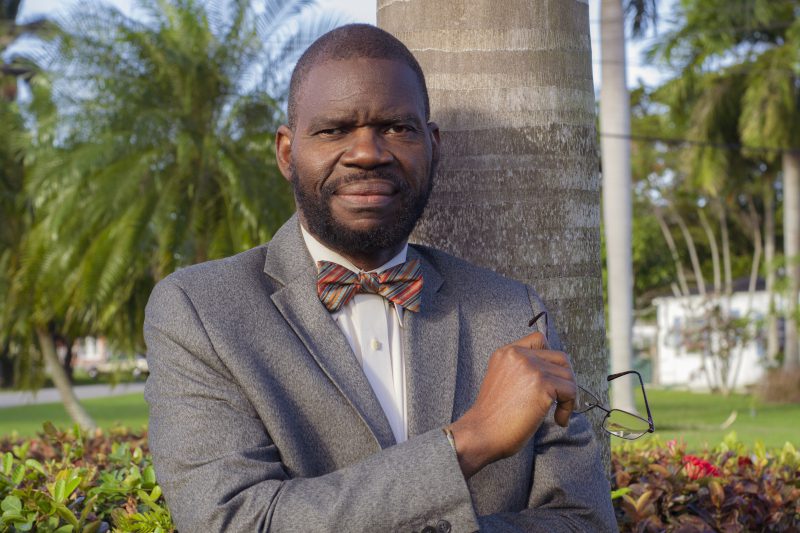
Professor John Egbeazien Oshodi, born in Uromi, Edo State, Nigeria, is an American-based police and prison scientist, forensic psychologist, public policy psychologist, and legal psychologist. He’s a government advisor on forensic-clinical psychological services in the USA and the founder of the Dr. John Egbeazien Oshodi Foundation for Psychological Health. With a significant role in introducing forensic psychology to Nigeria through N.U.C. and Nasarawa State University, he’s also a former Secretary-General of the Nigeria Psychological Association. He’s taught at esteemed institutions like Florida Memorial University, Florida International University, Nova Southeastern University, and more, and is currently an online faculty member at Weldios University, Nexus International University, and Walden University. John.Oshodi@mail.waldenu.edu