Forgotten Dairies
The Politics Of CNG Buses -By Nurudeen Dauda
The consumption subsidy was finally removed in 2023 by President Tinubu’s administration. There are now more resources being generated by governments at all levels, but the results on the provision of social amenities at all levels are not showing. The federal and state governments are now super rich, but no one is asking his or her state governor to account for the huge resources he is receiving from FAAC. It is high time this question is being asked.


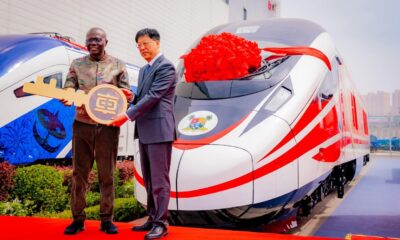
To begin with, the federal government has just announced its plans to provide a cheaper transportation system for commuters in collaboration with the Nigerian Governors’ Forum using the Compress Natural Gas (CNG) Buses across the country from 1st October, 2026 as a counter reaction to the campaign promise made by the former Vice President Alh. Atiku Abubakar to restore a targeted fuel subsidy if elected in 2027. We really need a healthy political opposition in order to keep the government on its toes.
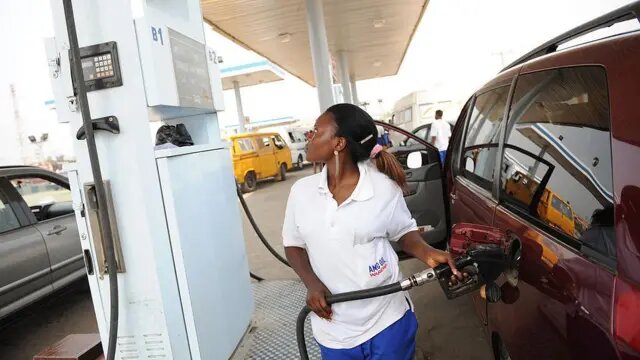
So, commuters in Nigeria can now get cheaper transport fares? But why now? Courtesy of healthy political opposition. But food inflation is now a major issue as a result of fuel subsidy removal. What about cheaper fuel for heavy duty cars which are being used for the transportation of goods which have direct effect on food inflation? Why don’t we have cheaper transport fares for heavy duty cars?
For three years no one was there to keep the government on its toes. So, had the oppositions were alive to their responsibilities Nigerians would have had the opportunity to enjoy cheaper transportation system from 29th May, 2023 , but for weak and or lack of strong political opposition here we are.
Healthy political opposition is a necessary ingredient in a multi party democracy. From 1999 to date weak and or absence of strong political oppositions from the federal to other levels of government is partly responsible for the governance failure we have been witnessing. This is why Nigeria’s democracy cannot afford to live under a one party democracy and or a unitary democracy. We dearly need a vibrant political opposition at all levels in Nigeria for good governance.
After the removal of fuel subsidy revenue shares to the Federation Account Allocation Committee (FAAC) multiple by at least six (6) times, but at the same time cost of living multiple by almost the same rate. Life is now very expensive!
In 2016 when the price of crude oil was below $30 per barrel at some point less than ₦400b was shared amongst the federal government, the thirty- six states and the FCT, but in last month FAAC shared ₦3.007trillion. A state that used to get about ₦5 billion to ₦6 billion now gets up to about ₦28 billion to ₦30 billion some times, but the results are not showing in terms of the provision of social amenities to the citizens.
The major argument promoted by Pro subsidy removal is that the government often spends virtually all its revenues on consumption subsidy at the expense of the provision of social amenities which is the engine of economic development. These patterns of spending often makes the government financially weak and unable to support roads & rails infrastructure, jobs creation, education, healthcare, water supply, and electricity supply etc.
The theoretical argument is that if the government removes consumption subsidy it will generate more resources that could be channeled to roads & rails infrastructure, jobs creation, education, healthcare, water supply and electricity supply etc., which will bring about economic development in the country.
The consumption subsidy was finally removed in 2023 by President Tinubu’s administration. There are now more resources being generated by governments at all levels, but the results on the provision of social amenities at all levels are not showing. The federal and state governments are now super rich, but no one is asking his or her state governor to account for the huge resources he is receiving from FAAC. It is high time this question is being asked.
Resources are not being redirected to infrastructure development as envisage by the theoretical argument of subsidy removal. Unfortunately, even the advocates of subsidy removal have not been asking the government the right questions. It is high time the subsidy removal advocates begin to challenge the government to spend subsidy funds on social amenities.
May God bless Nigeria!