
Politics
Enugu 2027: When Good Governance is not Good Enough -By Mon-Charles Egbo
The message is clear: good governance is actually measured by well-being, life expectancy, literacy rates, and economic mobility, not by metric tons of concrete poured. Therefore, a government that prides itself on infrastructure alone, without sustainable, people-centred development, is evidently bereft of ideas, overwhelmed by the basic challenges of governance, and creating problems rather than providing solutions.

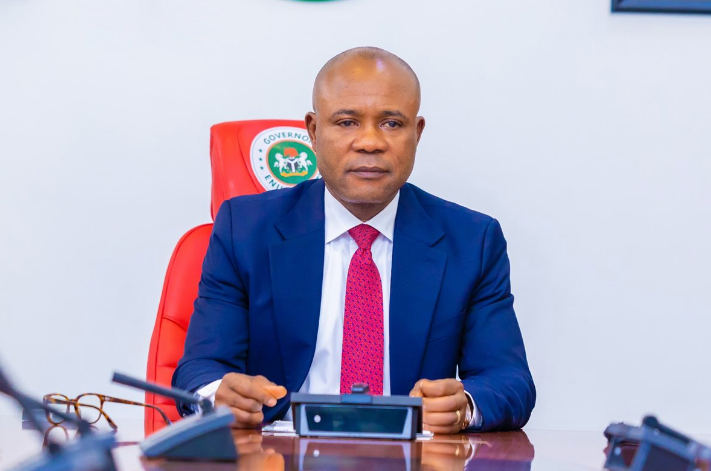
One of the greatest tragedies of the Nigerian state is the redefinition of good governance, where public leaders are roundly celebrated for doing what they are mandated to do. This aberration is propagated because the people, the major stakeholders in the business of governance, have either sold their “birth-right” or been manipulated into surrendering their sovereignty. The people forget that these individuals signed up to serve the masses after begging for the rare opportunity to enjoy public trust, or lobbying to be chosen among competing interests.
So, in this mortgaged state, especially when survival opportunities are limited, the people, rather than holding their supposed servants accountable, desperately celebrate their beneficiaries as their benefactors. Still in that compromised state, where food has become the immediate need, the people now see their supposed messengers as messiahs who do them a favour.
Hence, when the government does even a fraction of what its primary responsibility requires, the people feel highly favoured and full of praise. Oh yes, those in authority now determine how the people think and express themselves.
This is the pitiable situation of democratic governance in Nigeria today.
When the government spends taxpayers’ money and revenues generated from the land’s natural endowments, it is good governance. If a government spends so much, even through inflated and indecent contract processes, on providing infrastructure and services that do not effectively reflect in the standard of living and overall well-being of the masses, it is good governance. When the government pays salaries that are provided for in the budget, it is good governance. If the government abandons already abandoned projects and initiates new ones with no significant differences in socio-economic deliverables, a superlatively performing government is in place.
As such, in this conventional Nigerian definition of good governance, infrastructure is not a means to an end, but the end itself, and again, it is normal for a government to tick the boxes of “performance” by building infrastructure worth billions of naira but fail to move the needle on human development indices like poverty alleviation, affordable healthcare, quality public education, food security, and higher purchasing power for the average citizen.
However, the Enugu State government has seemingly paid a premium on infrastructure provision such that, aside from paying salaries and wages, the rest of the budgetary allocations so far went into physical development.
Among other things, the government committed billions of naira to build 260 “Smart Green Schools” (one per political ward). While the “New Enugu Smart City” project is ongoing, the government completed the abandoned international conference centre and the international hospital, and remodelled the Hotel Presidential.
Similarly, the administration invested heavily in rolling out modernized Type-2 Primary Health Centres, expanded the ESUT Teaching Hospital, and constructed five ultra-modern bus terminals to sanitize urban transit.
Then, quite miraculously, Enugu’s internally generated revenue (IGR) skyrocketed aggressively from N26.8 billion to over N406.8 billion.
But as commendable as they appear, if good governance means using power and managing resources with accountability, transparency, the rule of law, efficiency, participation, and responsiveness to meet society’s needs, then these achievements amount to motion without movement.
This isn’t about a lack of effort or vision. It’s a flaw in prioritization—where visible optics take precedence over basic human survival.
No doubt, the smart school initiative is lofty and has the noblest intentions. But in reality, it is merely a strategy that masks the collapse of basic education.
No community in Enugu State lacked a primary school before this administration, regardless of standard.
As such, it only takes simple administrative ingenuity to recognize that improving upon the dilapidated schools and ensuring that basic, healthy, and competitive learning environments, including, for the smart schools, specialized teachers, are in place with minimal costs is better than the massive investments where only an insignificant portion of the smart schools is completed but not yet optimally functional. Beyond unsavoury stories of embezzlement and shady contract awards, there are complaints of shoddy work with attendant threats of varying magnitudes. Forensic analysis is not needed to establish that none of those schools has reached the projected operational status.
Even some smart schools are built in locations that pose severe safety hazards and make it difficult for children to reach them on foot. Meanwhile, to staff the new facilities, existing rural public schools are abandoned, leaving them with teacher deficits.
While the bus terminals are architecturally impressive and enhance aesthetics, they do not align with the organic economic behaviour of commuters and operators.
For example, drivers accustomed to picking up passengers roadside have resisted using the facilities, and displaced roadside petty traders have swarmed the terminals, creating immediate management issues.
In addition, immediate maintenance failures and unmanaged waste from underutilization have undermined the initiative.
Similarly, commercial drivers lament that the sudden transition to state-backed Compressed Natural Gas (CNG) buses and enforced terminal routes has deeply threatened the livelihoods of independent commercial drivers already struggling with the socioeconomic pains of the subsidy removal.
A proactive and pragmatic government would have, through a needs assessment, deployed a stakeholder engagement strategy to secure citizen buy-in for efficiency and productivity.
On the rural healthcare project, state interference in local government autonomy has significantly undermined healthcare service delivery. The widely celebrated local government financial independence exists largely on paper, as rural health centres mostly struggle with an acute lack of qualified medical personnel, no reliable power supply, and a severe scarcity of affordable, essential drugs, leaving the poorest citizens to depend on open markets.
This is also why the international hospital concept remains questionable. Except for a hidden agenda, building a state-of-the-art hospital means little if it does not meet the immediate needs of every stratum of the citizenry. Furthermore, what about the maintenance trap associated with such expensive projects in a political environment where every regime wants something new that offers political and economic capital?
Once again, these structures are justifiably dismissed as misplaced priorities or prestige projects built for optical impact rather than daily utility. Surely, it smacks of a lack of pragmatism for a government in a state with low commercial volume to contemplate massive investments in bus terminals, hotels, and urban beautification projects while rural communities lack clean drinking water, connecting roads, and viable rural economies.
Until proven otherwise, empirically, the development of a brand-new, elite “Smart Green City” satisfies foreign investment checklists but stands in stark contrast to the surrounding reality, especially given that the average Enugu resident, in the hinterland, is still battling with the fundamental challenges of pipe-borne drinking water, basic electricity, and eroding interior neighbourhood roads.
This further strengthens the opinion that this administration is governing for an abstract external audience rather than the local population because it is easier to photograph a shiny “Smart School” or “Bus Terminal” for a public relations booklet than it is to systematically fix the pay, welfare, and deployment of the civil servants, particularly teachers. Again, “we built 50km of roads” sounds better in a campaign speech than “we reduced infant mortality by 4%”.
Therefore, dear Governor of Enugu State, concerned citizens truly appreciate your vision and leadership, especially at a time like this. Still, they believe you chose this path of optical governance for political expediency because physical projects are easy to photograph for billboards, social media, and campaign posters. Also, they know that large infrastructure projects involve massive contract awards, which are often used to reward political cronies, pocket kickbacks, or maintain political patronage networks. Human capital development by contrast, doesn’t offer the same lucrative contracting opportunities.
That is why the government doesn’t conduct needs assessments. You build what you think the people want, rather than asking communities what they actually need.
Concerned citizens are still forced to pay heavily for private water, private schools, and private healthcare because the public alternatives—despite the fancy buildings—are dysfunctional. The local economy is choking as small businesses collapse under the heavy taxation being used to fund the “developmental strides”. Despite the shiny infrastructure, the citizens’ lives reflect the state’s multidimensional poverty index and unemployment rates.
Your Excellency, the concerned citizens acknowledge the friction between visible infrastructure projects and the basic standards of living under this administration. They recognize the paradox of a historic surge in Internally Generated Revenue (IGR) and massive building projects that simultaneously alienate them.
While the government is commended for the initiatives to block revenue leakages, a government that offers no immediate relief to citizens already crushed by federal subsidy removals does not appreciate the role of empathy in governance.
Or is the government feigning ignorance that the unprecedented rise in the IGR is built on the backs of micro-enterprises through unrelenting tax-net expansion?
When a state grows its IGR astronomically in a short period without a corresponding boom in local industry, and does so by forcefully imposing a westernized administrative model on a particularly fragile, survivalist informal economy, the government extracts wealth rather than creates it.
Of course, the citizens have continued to echo this through sustained massive protests and revolts against heavy taxation and rising operational costs.
The message is clear: good governance is actually measured by well-being, life expectancy, literacy rates, and economic mobility, not by metric tons of concrete poured. Therefore, a government that prides itself on infrastructure alone, without sustainable, people-centred development, is evidently bereft of ideas, overwhelmed by the basic challenges of governance, and creating problems rather than providing solutions.
Egbo is a parliamentary affairs analyst.





















You must be logged in to post a comment Login