Forgotten Dairies
Thirty-Seven Lives Lost In Custody: How Much Is A Nigerian Life Worth? -By Isaac Asabor
Nigeria must not allow their deaths to become another case file gathering dust. Because if 37 people can die behind a government-controlled door and the country eventually shrugs its shoulders, then the question is no longer only what happened to them. The question becomes: “What has happened to us?”

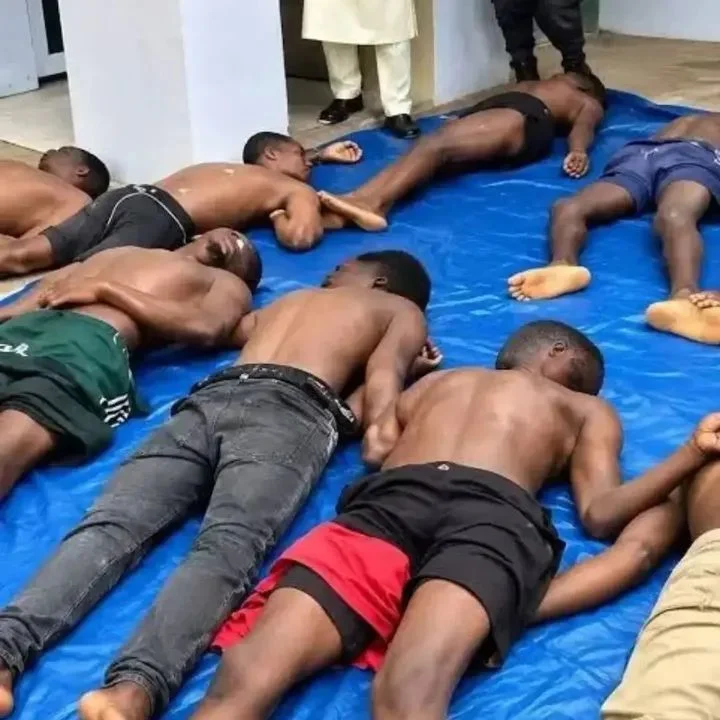
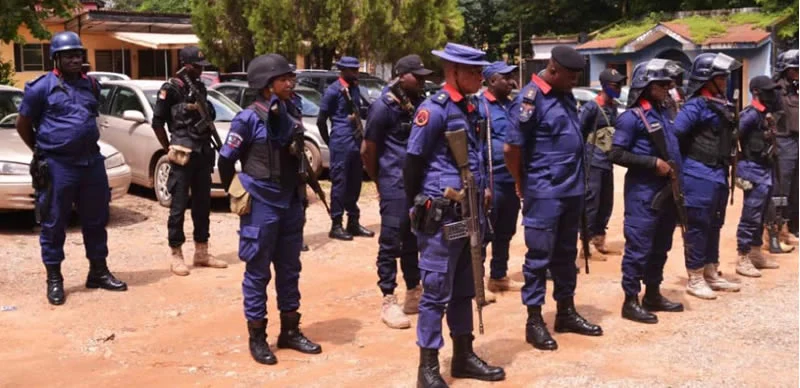
There are moments when a nation must stop talking and listen to the cries of its own conscience. The deaths of 37 suspected illegal miners in the custody of the Nigeria Security and Civil Defence Corps (NSCDC) in Minna, Niger State, should be one of such moments. Thirty-seven people went into government custody alive. Thirty-seven human beings, sons, brothers, fathers, friends and, according to reports, some teenagers, were arrested on suspicion of illegal mining. They had not been convicted by any court.
Unfortunately, they had not been sentenced to death. Yet, before they could stand before a judge to answer whatever allegations were brought against them, 37 of them were dead. That is the part of this tragedy that should keep Nigeria awake. Not 37 statistics. Thirty-seven lives. Thirty-seven families. Thirty-seven empty spaces at dinner tables. Thirty-seven mothers, fathers, wives, children, siblings and friends now asking questions that no condolence message can answer. What exactly happened inside that detention facility? That question must not be buried with the dead.
The NSCDC initially attributed the deaths to a suspected disease outbreak, while subsequent official statements stressed that the actual cause had not yet been established. Governor Mohammed Umaru Bago, however, said authorities were considering possible suffocation arising from overcrowding and exposure to hazardous substances associated with mining activities. Reports also indicate that dozens of detainees were held in the facility at the time.
Then came the accounts of survivors. One survivor, Dauda Shehu, reportedly described detainees struggling for air inside an overcrowded and poorly ventilated cell, with some allegedly banging on the door as the situation deteriorated. His account remains an allegation requiring investigation, not a final determination of what killed the victims.
But surely, in a country that claims to value human life, such testimony cannot simply be waved away. Imagine being locked behind an iron door with dozens of other human beings. Imagine the heat. Imagine the panic. Imagine struggling to breathe and discovering that the only people who can open the door are the same people responsible for keeping it locked. Imagine someone calling for help while another human being beside him or collapses.
Imagine a mother in a remote Nigerian community waiting for her son, only to be told that he died in government custody. This is not merely an administrative failure to be discussed in the language of memos and official communiqués. It is a human tragedy.
And it raises a question that Nigeria must confront without fear: “when a citizen dies in the custody of the state, who answers for that death?”
The authorities have every right, and indeed the responsibility, to fight illegal mining. Illegal mining poses serious environmental, economic and security challenges. Those involved in criminal mining activities should face the law. But the war against illegal mining cannot become a war against human dignity.
Saddening enough, an arrest is not a conviction. A suspect is not a criminal until a competent court says so. And detention is not a death sentence.
In fact, once the state takes a person’s liberty, it assumes an even greater responsibility for that person’s safety. A detainee cannot open the cell door, seek medical assistance, find drinking water or escape a dangerous environment. The state controls the walls, the doors, the ventilation, the food, the medical attention and virtually every condition of confinement. That is why 37 deaths in custody cannot be treated as just another unfortunate incident. Something went terribly wrong. The nation needs to know what. Were 37 people, or more placed in a detention facility capable of safely accommodating them? Who authorized the detention conditions? Were the detainees medically examined? Did officers notice that people were struggling? Did anybody raise an alarm? Was medical assistance sought? How quickly was help provided? Were there complaints about overcrowding? Were proper detention procedures followed?
And if there was an emergency, why were so many people unable to survive it? These are not unreasonable questions. They are the minimum questions a grieving nation deserves to have answered.
President Bola Tinubu has ordered a comprehensive investigation, while the Federal Government has constituted a 10-member independent committee. Officers allegedly involved have also been suspended, and the police have commenced their own investigation. Good. But Nigeria has heard the language of “investigation” too many times.
We have seen committees inaugurated with fanfare and forgotten quietly. We have seen reports promised and accountability postponed. We have watched families bury their loved ones while official attention moved on to the next crisis. This time must be different.
The investigation must not become another bureaucratic exercise designed to calm public anger until the anger disappears. The families deserve the truth. Nigerians deserve the truth. And the dead deserve justice.
There must be an independent, transparent and credible determination of what happened. Every relevant piece of evidence must be preserved. Surviving detainees must be protected and heard. Officers involved must be questioned. The detention facility must be examined. Medical and forensic evidence must be subjected to credible scrutiny.
And where negligence, abuse or criminal wrongdoing is established, nobody should be protected because he wears a uniform or occupies an office. That is what the rule of law means. It is easy to demand justice when the victim is powerful. The real test of a society is whether it can demand justice for the powerless. These were suspects. That is precisely why their deaths in custody should concern us.
If the state can take away your freedom, put you behind a locked door and then fail to keep you alive, what protection does the ordinary Nigerian really have? That is the frightening question buried beneath the tragedy in Minna. We must also resist the temptation to allow the label “illegal miners” to dehumanize the victims.
Even if every allegation against them were eventually established, they would still be human beings entitled to life and humane treatment. The criminal justice system exists precisely because accusations must be tested before punishment is imposed. When punishment comes before trial, the very principle of justice is turned upside down. And perhaps that is the deepest lesson from Minna.
A nation cannot claim to respect human life while becoming casual about deaths that occur behind the walls of its own institutions. Thirty-seven people are dead. The state owes their families more than condolences. It owes them answers. It owes them accountability. It owes them justice.
The flags may fly at half-mast. Politicians may issue statements. Committees may be inaugurated. Officials may visit Minna. Cameras may record solemn faces and carefully chosen words. But none of these can bring back the dead.
The only meaningful tribute now is to ensure that their deaths are not reduced to another forgotten Nigerian tragedy. Let the investigation be fearless. Let the findings be public. Let the guilty answer for their actions. Let the innocent be cleared. And let Nigeria finally send a message that should never have needed repeating: A Nigerian life is not cheap because its owner is poor, young, detained or accused of a crime. Thirty-seven Nigerians entered state custody alive.
Nigeria must not allow their deaths to become another case file gathering dust. Because if 37 people can die behind a government-controlled door and the country eventually shrugs its shoulders, then the question is no longer only what happened to them. The question becomes: “What has happened to us?”