Africa
Thumb Up For Davido’s Father As He Powers Nigeria’s Future With Largest Thermal Plant Project, by Isaac Asabor


Nigeria’s energy sector, long plagued by inefficiency and under capacity, is on the verge of a monumental transformation, thanks to the visionary efforts of Dr. Deji Adeleke, father of Nigerian music superstar Davido. In a remarkable initiative that promises to bring substantial relief to the nation’s persistent energy woes, the billionaire businessman and industrialist is in the process of constructing Nigeria’s largest thermal power plant. This ambitious project, expected to cost a staggering $2 billion, will add 1,250 megawatts to the national grid, providing much-needed power to millions of Nigerians.
Scheduled for completion in January 2025, the plant marks a significant milestone in Nigeria’s energy sector. At a time when the country is struggling with inconsistent power supply, this massive venture stands as a beacon of hope for industries, businesses, and households. Dr. Adeleke’s determination to see this project through, despite bureaucratic challenges and security breaches, underscores his commitment to the nation’s development and the potential for private enterprise to drive substantial progress.

Dr. Adeleke shared his journey and vision for the project during the Seventh Day Adventist General Conference Annual Council held in Maryland, USA, where he participated as a representative of the West-Central Africa Division. His revelation about constructing Nigeria’s largest thermal plant struck a chord with many, showcasing his dedication to tackling one of the country’s most pressing issues, the electricity deficit.
“I am a businessman in Nigeria. I’m into the electricity business. I own a power plant; I generate about 15 per cent of Nigeria’s electricity needs. I have Chinese engineering companies that work for me. I’m building the biggest thermal plant in Nigeria, which will be completed in January 2025. It is a 1,250-megawatt power plant,” Dr. Adeleke proudly stated.
However, his journey has been far from smooth. Adeleke revealed that during the planning stages, the project faced significant setbacks due to government bureaucracy. Environmental permits for the plant were initially denied, and the businessman recounted a particularly demoralizing meeting where a government official bluntly told him that the project would never see the light of day.
“Despite the challenges, especially from certain government officials who didn’t believe in the project, we pushed through,” Adeleke said. His resilience in the face of adversity has been nothing short of inspiring. The refusal to give up on a project of this magnitude shows a deep-rooted desire not just for personal success but for the broader development of Nigeria.
In addition to bureaucratic roadblocks, the construction of the thermal power plant also faced significant security challenges. Theft and vandalism disrupted the progress of the project, causing delays and financial losses. Adeleke shared how looters stole valuable copper components from the plant’s turbine machines, which pushed back the plant’s completion by a year and resulted in an estimated loss of $5 million.
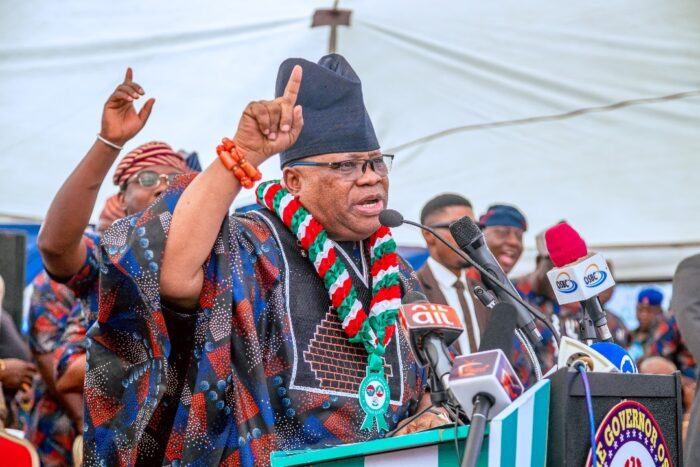
These challenges, though costly and frustrating, did not deter Adeleke and his team. The loss of precious resources may have delayed the project, but it also exemplified the kind of obstacles that major infrastructure projects face in Nigeria. Yet, Adeleke’s ability to navigate these difficulties and continue moving forward highlights both his business acumen and his commitment to Nigeria’s development.
Dr. Adeleke’s power plant is expected to have a transformative impact on Nigeria’s energy landscape. By contributing 1,250 megawatts to the national grid, the plant will significantly enhance the country’s power generation capacity. For a nation where erratic power supply has hampered economic growth and everyday life, this project offers a glimmer of hope for a more stable and prosperous future.
Currently, Nigeria’s energy sector struggles to meet demand. Most of the country’s power plants are old and operate far below their capacity, leading to frequent blackouts and reliance on costly diesel generators by businesses and households. With the completion of Adeleke’s plant, Nigeria will not only increase its energy output but also improve its capacity for consistent supply, reducing the economic and environmental costs associated with fuel-based power solutions.
Adeleke’s companies already contribute 15% of Nigeria’s current power consumption, but this new thermal plant will push those contributions even higher. The significance of this project cannot be overstated. It holds the potential to boost industrial productivity, create jobs, and support a higher standard of living by providing reliable electricity to millions of Nigerians.
Dr. DejiAdeleke is no stranger to making impactful contributions to Nigeria. As the founder of Adeleke University, a private institution in Ede, Osun State, he has long been invested in the educational and economic development of the country. His philanthropy is well-documented, and his business ventures, spanning sectors such as real estate, manufacturing, and now energy, are a testament to his entrepreneurial vision.
What makes Adeleke’s contributions stand out is not just their size or scale but the personal commitment he brings to each project. His son, Davido, has frequently spoken about his father’s work ethic and drive to uplift others. This latest project, a multi-billion-dollar power plant, is perhaps the most ambitious reflection of that ethos yet. It is a bold statement of confidence in Nigeria’s future and a recognition that, with the right infrastructure, the country can unlock its enormous potential.
Beyond the immediate benefits of increased electricity generation, the construction of Nigeria’s largest thermal power plant will have far-reaching effects on the economy. The power plant will create jobs during its construction phase and upon completion, both directly and indirectly. Improved power supply will stimulate growth in other sectors such as manufacturing, telecommunications, and agriculture. With more reliable electricity, businesses can reduce overhead costs associated with backup power solutions, making them more competitive and profitable.
Moreover, the plant could serve as a catalyst for attracting foreign investment. One of the key deterrents for international companies looking to invest in Nigeria has been the unreliable power supply. With infrastructure improvements like this, the business climate in Nigeria could become much more favorable, spurring even more economic growth.
As the completion date for the thermal power plant draws closer, the excitement and anticipation grow. For Dr. DejiAdeleke, this project is not just about providing electricity, it is about leaving a lasting legacy. It is about demonstrating the power of private enterprise to effect real change in a country that so desperately needs it.
Dr. Adeleke’s determination to see this project through, despite the obstacles, serves as an inspiration to entrepreneurs and policymakers alike. It shows that with vision, resilience, and a commitment to the greater good, it is possible to achieve great things, even in the face of adversity. When Nigeria’s largest thermal power plant comes online in January 2025, it will be a symbol of hope, progress, and the power of one man’s unwavering belief in the future of his country.
Given the foregoing, there is no denying the fact that Davido’s father deserves a thumb up for Davido’s father as he powers Nigeria’s future with largest thermal plant project