Forgotten Dairies
Tinubu Must Go : Who Can Match The Record? -By Sani Danaudi Mohammed
The evidence-based response is therefore simple: where the reforms are producing results, sustain them; where they are falling short, improve them; and where Nigerians need greater protection, strengthen it. That is why, for those who believe continuity, reform and long-term economic transformation matter, the answer is clear: Tinubu Must Stay beyond 2027.

For the past one week, the Nigerian media and social-media space has been subjected to an intense conversation around the slogan “Tinubu Must Go,” championed by human-rights lawyer Abba Hikima and his Tinubu Must Go movement. The campaign has gone beyond a simple criticism of government policies, with the group now calling on leading opposition figures to unite behind a single candidate for the 2027 presidential election.
Yet, beneath the volume of hashtags, interviews and online conversations lies a question that deserves a serious national answer: why must President Bola Ahmed Tinubu go, and what exactly is the alternative being offered to Nigerians? It is not enough to repeat a political slogan until it becomes familiar. A government that embarked on difficult reforms must be judged by the problems it inherited, the policies it introduced, the measurable results emerging from those policies and the alternative being proposed by those seeking to replace it.
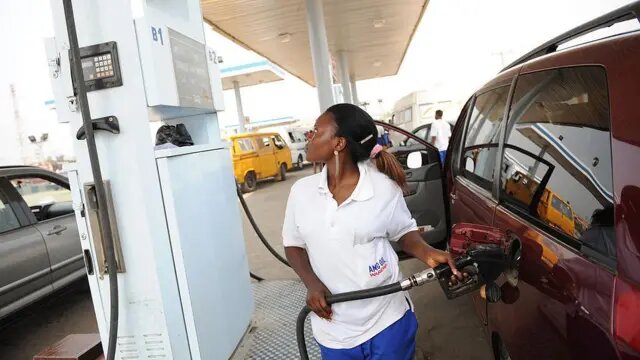
President Tinubu’s administration has never pretended that its reforms would be painless. The removal of the petrol subsidy and the unification of the foreign-exchange market were among the most consequential decisions taken since 2023, precisely because successive administrations had struggled with the structural weaknesses surrounding subsidy payments, public finances and currency management. The Presidency has acknowledged the hardship associated with the transition while maintaining that the reforms were designed to restore economic stability and create a stronger foundation for growth.
By August 2026, the State House reported National Bureau of Statistics figures showing real GDP growth of 4.43 per cent in the second quarter of 2026, compared with 4.23 per cent in the corresponding quarter of 2025. The administration has also pointed to stronger oil production, improving investor confidence, infrastructure investment, student financing and reforms in the electricity sector as evidence of the direction of travel. These developments do not mean that every Nigerian is already experiencing prosperity, but they provide concrete issues against which the government’s performance can be evaluated rather than allowing the debate to be determined by hashtags alone.
This is where the “Tinubu Must Go” argument requires a deeper examination. If the objection is to subsidy removal, what is the sustainable alternative to the system that consumed enormous public resources? If the objection is to exchange-rate reform, what alternative would preserve foreign-exchange stability while avoiding the distortions of the previous system? If the criticism is about the cost of living, what credible programme would increase domestic production, reduce transportation costs and strengthen household purchasing power? These are not questions that can be answered by social-media slogans.
The administration itself has argued that the difficult phase of reform was intended to create the fiscal and economic space for investment in infrastructure, agriculture, education, healthcare, energy and social support. The 2026 budget was explicitly presented as a consolidation phase after the initial period of structural reform. Nigerians therefore deserve to hear not only why the incumbent should leave, but what the proposed alternative would retain, reverse or improve and how those promises would actually be financed.
The experience of 2023 also offers an important lesson. President Tinubu entered that election facing intense political competition, extensive media scrutiny and powerful narratives across both traditional and social media. Yet the election was ultimately decided not by online hashtags but by voters across polling units and the constitutional electoral process. The same principle will apply in 2027. Social media can shape conversation, amplify grievances and mobilise supporters, but Nigeria is not governed on Facebook, X or any other digital platform.
Political narratives must eventually meet citizens in their communities and at the ballot box. The appropriate response to “Tinubu Must Go” is therefore not another slogan, but a broader examination of the record: what has changed since 2023, what remains unfinished, what policies are producing results, what difficulties remain, and most importantly who among Tinubu’s contemporaries can present a more credible and sustainable alternative? That is the conversation Nigerians deserve.
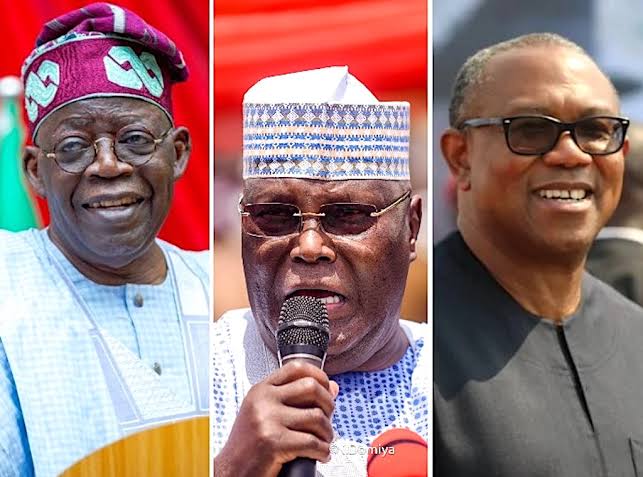
A proper cross-examination of the current debate must begin with the subsidy question, because it exposes a striking difference between political rhetoric and policy consistency. In 2023, both Atiku Abubakar and Peter Obi supported the removal of petrol subsidy, although they proposed different approaches to implementation. Atiku, then the PDP presidential candidate, said he would remove the subsidy within his first 100 days and described the subsidy regime as unsustainable, while Obi publicly described subsidy as “organised crime” and said it should go.
Today, Atiku, now the ADC presidential candidate, has reversed that position and says he would restore a targeted petrol subsidy if elected, arguing that Nigerians have not seen sufficient benefits from its removal. Obi, now associated with the NDC, has maintained that subsidy should remain removed, arguing in August 2026 that mismanagement of the proceeds not the removal itself should not be a reason to restore it. This creates a legitimate question for Nigerians: if subsidy removal was considered necessary in 2023, what fundamentally changed in the argument, and what precisely is the alternative being offered today?
The issue becomes even more important when the financial consequences of the reform are examined beyond the federal government. The removal of petrol subsidy substantially increased the resources distributed through the Federation Account. NEITI-related data reported that total FAAC distributions to the Federal Government, states and local governments rose to N10.14 trillion in 2023, with state allocations increasing by about 30 per cent and local-government allocations by more than 26 per cent compared with 2022. By 2024, FAAC distributions reached N15.26 trillion, with the increase attributed partly to fiscal reforms including subsidy removal and foreign-exchange reforms.
More recently, reported Finance Ministry figures showed that about N47.25 trillion was distributed among the three tiers between 2023 and 2025, while states reportedly received about N9.17 trillion in additional allocations above the pre-subsidy-removal monthly run-rate during that period. These figures matter because the resources do not belong to political office holders personally; they are public resources that create greater fiscal responsibility for every tier of government. The question should therefore extend beyond Abuja: what are state governments doing with the additional resources available to them for healthcare, education, agriculture, roads, water, security and other responsibilities?
This is where the conversation around President Bola Ahmed Tinubu deserves greater balance. The removal of subsidy undoubtedly imposed severe short-term pressure on households, transportation and businesses, and those consequences deserve honest acknowledgement. But it is equally important to examine what the reform changed in the public-finance structure rather than judging it solely by the immediate increase in petrol prices. The government has defended the reform as a means of eliminating a costly system and redirecting resources toward development, while critics argue that the benefits have not been sufficiently visible to ordinary Nigerians.
Reuters reported in July 2026 that much of the financial gains from subsidy and foreign-exchange reforms had been absorbed by higher debt-servicing costs and increased government expenditure—an important qualification to simplistic claims that every naira saved became freely available for new projects. That complexity is precisely why Nigerians need communication, evidence and accountability, not twisted political language. If Atiku now proposes restoration, Nigerians deserve to know the fiscal cost, the mechanism, the beneficiaries and how such a subsidy would avoid the problems that both he and Obi criticised before 2023.
And that brings us to the larger question: Why Tinubu always? Why should every national economic debate begin and end with a demand for his removal when the same political class contains leaders who previously advocated some of the very reforms now being attacked? The democratic test should not be whether a hashtag trends, but whether those demanding a change of government can demonstrate a substantially different and credible path for Nigeria.
Tinubu should certainly be subjected to scrutiny, just as every president should be, but scrutiny must include the alternatives. If the argument is that subsidy should return, explain the cost. If it should remain removed, explain how the savings and additional revenues should be better utilised. If the problem is implementation, identify what should change. Nigerians deserve a debate in which records are confronted with records, policies with policies, and promises with workable alternatives because governing Nigeria requires much more than winning the argument on social media.
The most revealing way to test the “Tinubu Must Go” narrative is to temporarily remove the politics from the conversation and examine what independent economic evidence says about the direction of policy since 2023. The World Bank has described Nigeria’s post-2023 reforms as “necessary and urgent” to avert an outright fiscal crisis and place the country on a stronger development path. Its assessment identified the removal of the petrol subsidy, exchange-rate reform, improved revenue mobilisation and tighter fiscal and monetary discipline as central to the emerging macroeconomic improvement.
By 2024, according to the World Bank, Nigeria’s fiscal deficit had fallen from 5.4 per cent of GDP in 2023 to 3.0 per cent, while Federation revenues increased from N16.8 trillion to an estimated N31.9 trillion. These are not campaign hashtags or government publicity figures; they are findings from one of the world’s leading development institutions. Therefore, anyone arguing that Tinubu must leave has a responsibility to confront this evidence and explain why a policy direction that the World Bank says has improved fiscal and macroeconomic stability should simply be abandoned.
The data becomes even more significant when the reform is examined from the standpoint of what Nigeria was avoiding. The World Bank estimated that the combined fiscal cost of petrol and foreign-exchange subsidies reached 5.2 per cent of GDP in 2022, equivalent to roughly three-quarters of the revenues flowing to the Federation. It described the previous arrangement as costly, regressive and opaque, while warning that the resulting fiscal pressures contributed to deficits, monetary financing, declining reserves, inflationary pressures and weakening confidence.
The same institution subsequently reported that the difficult reforms undertaken since 2023 were beginning to pay off, with improved fiscal and external positions and stronger economic growth, while stressing that further work was still required to translate macroeconomic gains into jobs, poverty reduction and better living standards. This distinction is crucial: supporting the direction of reform does not require pretending that every Nigerian is already comfortable. It means recognising that economic transformation can involve difficult adjustments while demanding that government continues to convert improved public finances into tangible improvements in people’s lives.
So, can the advocates of “Tinubu Must Go” simply dismiss this evidence? They can disagree with it, challenge its methodology, or argue that the social costs outweigh the benefits—but they cannot responsibly pretend that the evidence does not exist. The more intellectually serious question is what alternative they are offering to the reforms that have produced these documented changes. The World Bank itself has warned that Nigeria must stay the course while simultaneously expanding social protection, improving expenditure efficiency and accelerating job creation.
That is a much more demanding standard than a hashtag. It requires those seeking power to explain what they would reverse, what they would retain and how they would finance their alternative. For Nigerians, the debate should therefore move beyond “Tinubu Must Go” to the harder question: if this policy direction is abandoned, what replaces it and can that alternative deliver greater fiscal stability, investment, jobs and prosperity without returning the country to the distortions that produced the crisis in the first place?
This is precisely why the argument for “Tinubu Must Stay” deserves to be heard not as a claim that every problem has been solved, but as a case for continuity with reforms that independent evidence has identified as necessary for Nigeria’s economic stability. Changing direction simply because reforms are difficult would risk sacrificing long-term structural gains for short-term political comfort. The more responsible course is to demand that the administration deepen the reforms, strengthen social protection, improve accountability and ensure that stronger public finances translate into better healthcare, education, agriculture, infrastructure, jobs and living standards.
Nigeria therefore needs an election campaign built around evidence rather than emotional slogans. President Tinubu should be judged on what his policies have changed, what the data says about their impact, what remains unfinished and what his opponents can credibly offer in their place. “Tinubu Must Go” may be a powerful political slogan, but slogans do not balance budgets, attract investment or reform an economy.
The evidence-based response is therefore simple: where the reforms are producing results, sustain them; where they are falling short, improve them; and where Nigerians need greater protection, strengthen it. That is why, for those who believe continuity, reform and long-term economic transformation matter, the answer is clear: Tinubu Must Stay beyond 2027.
Danaudi, Writes From Bauchi Via danaudicomrade@gmail.com