Forgotten Dairies
Human Rights Lawyer Ifeanyi Ejiofor Petitions Gov. Soludo Over Alleged Agunechemba Abuses in Anambra -By Daniel Nduka Okonkwo
When the Commander had still not responded after receiving the requested materials, this reporter wrote again to Commissioner Mefor, setting out the sequence of events and requesting his assistance in obtaining an official response within 24 hours, after which the report would be published noting the absence of a response.

The Anambra State Government cannot afford to treat allegations of human-rights violations, unlawful detention, excessive use of security powers, or unprofessional conduct by state security personnel as matters that can be left to internal silence. Where credible evidence establishes that officers or operatives have acted outside the law or violated the rights of citizens, the appropriate authorities must investigate, hold those responsible accountable, and, where necessary, remove personnel whose conduct is found to be incompatible with professional security standards. The state should also ensure that detention facilities used in connection with security operations are subject to proper oversight and inspection, particularly where allegations concern the treatment of civilians.
This is ultimately a test of institutional accountability. Human-rights concerns do not disappear because an allegation is politically inconvenient, nor do they become less important because they involve personnel operating under a state security structure. Past abuses in Nigeria and elsewhere have demonstrated that conduct that appears to have gone unnoticed can later become the subject of investigations, litigation, official inquiries, and international scrutiny. For Anambra State, the appropriate response is therefore transparency, evidence-based investigation, and lawful oversight, rather than silence or institutional defensiveness.
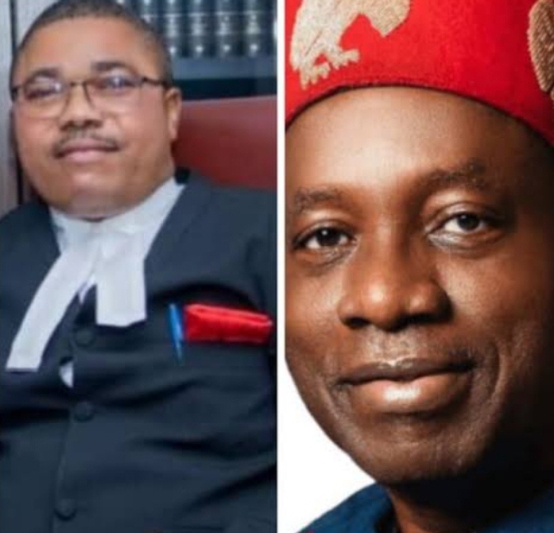
Governor Chukwuma Charles Soludo, as Governor and Chief Security Officer of Anambra State, bears constitutional responsibility for the overall security administration of the state. The allegations contained in this report, therefore, warrant serious institutional attention, not because they have been established as fact, but because allegations involving the exercise of coercive state power and the treatment of citizens demand a credible process capable of establishing what actually happened.
Constitutional lawyer and human rights advocate, Sir Ifeanyi Ejiofor, has called for an independent investigation into the operations of Agunechemba and Operation Udo Ga-Achi in Anambra State, raising allegations concerning the treatment of civilians, possible interference in political processes, the conduct of security operatives, and an alleged threat to his safety.
In an open letter dated September 17, 2026, and addressed to Governor Chukwuma Charles Soludo, Ejiofor said his intervention was not intended to undermine the state’s security architecture or the many personnel who perform their duties conscientiously.
Rather, he said his objective was to draw attention to what he described as the need for greater discipline, professional supervision, constitutional restraint, and strict compliance with the law governing the state security outfit.
The allegations contained in the letter have not been independently established by this publication. They are presented as allegations made by Ejiofor and are being reported in the public interest because they raise questions about the exercise of coercive powers by a state-established security structure, the boundaries between community security and conventional law enforcement, and the need for effective civilian and institutional oversight.
The concerns Ejiofor raises cover incidents he says occurred between August 2025 and September 2026, including an alleged operation during the Anambra South Senatorial District bye-election, an alleged disruption of an APGA State House of Assembly primary in Ekwusigo, a September 14, 2026 operation in Oraifite, and an audio recording he says contains threats directed at him.
One of the incidents highlighted in the letter concerns August 16, 2025, when the Independent National Electoral Commission conducted the Anambra South Senatorial District bye-election.
Ejiofor alleges that a large contingent of Udo Ga-Achi security operatives went to the residence of a prominent Oraifite indigene in the community. According to the account in the letter, the operatives arrived in Sienna buses and Hilux vehicles and allegedly attempted to gain entry into the compound after sporadic gunfire lasting approximately 30 minutes.
He further alleges that the operatives were acting on an assertion that electoral materials were being kept at the residence, an allegation he maintains was subsequently found to be without basis.
Ejiofor also questions whether Agunechemba had any lawful mandate to participate in electoral operations, arguing that the statutory functions of the security outfit do not expressly authorise intervention in electoral processes.
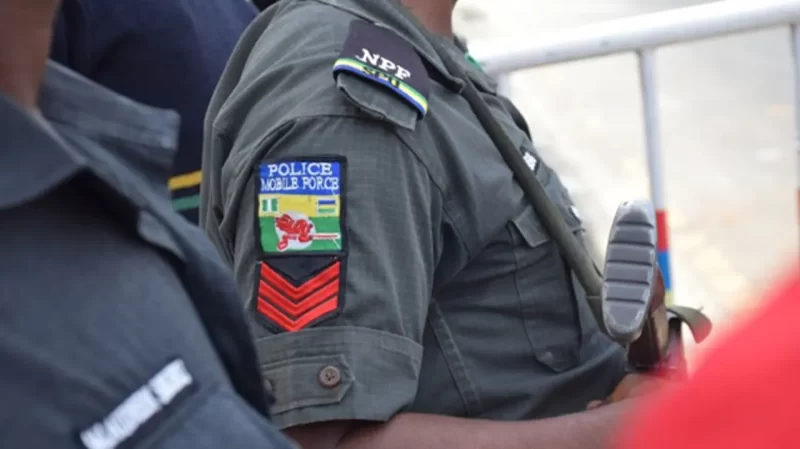
The Anambra State Homeland Security Law 2025 establishes Agunechemba as the security outfit of Anambra State and provides it with specified security functions and powers, including assisting the police in preventing and detecting crime, preserving law and order, protecting lives and property, and arresting persons who commit crimes for handover to the police.
The law also provides for patrols, security barricades, questioning of suspicious persons, and other specified security functions.
The issue Ejiofor raises is therefore narrower and concerns whether the particular operation described in his letter fell within those statutory powers and whether the manner in which it was allegedly conducted complied with applicable law, regulations, and operational procedures.
The letter also raises concerns about an alleged incident during an APGA State House of Assembly primary in Ekwusigo Local Government Area.
Ejiofor alleges that a political office holder entered the electoral venue accompanied by armed Agunechemba operatives and that their presence and conduct disrupted the collation and counting process, creating circumstances in which the integrity of results already recorded was called into question.
He is asking for an impartial investigation into whether security personnel were deployed in a manner capable of influencing, intimidating, or otherwise interfering with the process.
The most recent operational incident cited in the letter occurred on September 14, 2026, in Oraifite.
Ejiofor says Udo Ga-Achi operatives entered parts of the community at approximately 6 p.m., during an operation in which several youths and other road users, particularly motorcycle riders, were allegedly taken away, while motorcycles, mobile phones, and other personal belongings were allegedly confiscated.
According to the account in the letter, some of those allegedly taken away were transported to detention facilities in Oba before being moved to Awka.
Ejiofor maintains that the affected persons were exercising their constitutional right to freedom of movement and questions the legal basis for their alleged arrest and detention.
The circumstances of the alleged arrests, the identities of those detained, the legal basis for the detentions, and the duration of any detention could not be independently established by this publication before press time.
The letter also describes an alleged confrontation between Udo Ga-Achi operatives and a community security outfit at a junction along the Nkwo-to-Nkwo Road in Oraifite.
According to Ejiofor, one vehicle belonging to the Udo Ga-Achi team was seized by the community security outfit and kept at a facility under its control before reportedly being released following intervention from Udo Ga-Achi’s leadership in Awka.
A separate allegation concerns an audio recording said to have circulated on September 16.
Ejiofor says the recording contains a voice that he alleges belongs to a person associated with the Udo Ga-Achi operation, giving instructions concerning the preparation and deployment of charms allegedly intended for an attack against him.
Ejiofor says the alleged recording heightened concerns for his safety and that of members of his family. He has asked the authorities to investigate whether there is any connection between the alleged statements and the persons or institutions referred to in his letter, while leaving responsibility to be determined by evidence and applicable law.
The issues Ejiofor raises extend beyond the individual incidents described in the letter.
At their core is a broader question concerning the exercise of statutory security powers by state-established security structures: how such organisations can assist in combating crime while remaining within their legal mandates and avoiding improper involvement in political, personal, or communal disputes.
Ejiofor does not call for Agunechemba to be dismantled or weakened. Rather, he argues that the institution should be strengthened through professional retraining, legal re-orientation, operational supervision, and human-rights sensitisation for personnel operating under Agunechemba and Operation Udo Ga-Achi.
He has also called for particular scrutiny of individuals exercising command or significant operational influence in the affected areas.
A security organisation entrusted with protecting citizens must operate within the law, while allegations of misconduct should be examined through credible and impartial mechanisms.
Ejiofor’s letter also recognises the legitimate security challenges confronting Anambra State and acknowledges the contribution of personnel who perform their duties responsibly.
His position, as presented in the letter, is that the conduct of individual operatives should not be allowed to undermine the legitimacy of the broader security institution.
The allegations, therefore, raise questions that can only properly be resolved through evidence, including CCTV footage, video recordings, the identities of personnel involved, operational orders or directives, detention records, electoral records, and any other relevant material.
An independent inquiry could establish what happened during the incidents described, determine who was involved, examine the evidence Ejiofor cites, and establish whether any laws, regulations, or operational procedures were breached.
It could also provide an opportunity for the individuals and institutions referred to in the allegations to respond publicly and place their own evidence on record.
This publication made sustained efforts over several days to obtain an official response before publication.
The ten questions arising from the allegations in the open letter were first sent to the Anambra State Commissioner for Information and Value Reformation, Dr. Law Mefor, who redirected this reporter to Kenneth Emeakayi, Commander of Agunechemba.
The questions and a copy of the open letter were subsequently sent to Commander Emeakayi. He asked this reporter to provide the September 16, 2026, audio recording referenced in the questions before responding.
The audio recording, together with the open letter, was subsequently sent to the Commander. Both communications showed as read. No substantive response followed, while repeated telephone calls to the Commander went unanswered.
This publication also contacted several other highly placed Anambra State Government officials whose offices were relevant to the issues raised in the letter. They were provided with the questions and the opportunity to respond to the allegations before publication.
The Deputy Governor took this reporter’s call once and explained that poor network reception while he was in transit prevented a substantive discussion. Subsequent attempts to reach him were unsuccessful, and no substantive response was received before publication.
Other highly placed officials contacted by this publication did not provide substantive responses before publication.
When the Commander had still not responded after receiving the requested materials, this reporter wrote again to Commissioner Mefor, setting out the sequence of events and requesting his assistance in obtaining an official response within 24 hours, after which the report would be published noting the absence of a response.
Commissioner Mefor responded that he had forwarded the message to the Commander and that “that’s all I can do.”
A further call placed to Commander Emeakayi the following afternoon also went unanswered.
Follow-up messages carrying a final 24-hour deadline, together with a copy of the open letter, were subsequently sent to the officials and offices contacted by this publication.
As at the time of publication, no substantive response addressing the allegations and questions raised had been received.
The allegations concerning the individuals and institutions referred to in this report remain allegations and should not be understood as findings of guilt or proof of wrongdoing.
Should any of the officials, agencies, or persons whose responses were sought provide substantive information after publication, this publication will fairly reflect such responses in an update.
The central issue is therefore not whether the allegations should automatically be accepted or dismissed. It is whether they will be subjected to a credible process capable of establishing the facts.
In a constitutional democracy, security and accountability should not be competing objectives. The legitimacy of a public security institution ultimately depends on its ability to protect citizens while exercising its powers within the law and remaining subject to appropriate oversight.
Daniel Nduka Okonkwo is an investigative journalist, human rights advocate, and policy analyst based in Nigeria. He is the founder and publisher of Profiles International Human Rights Advocate (PIHRA), a platform documenting the courage of human rights defenders and examining issues of governance, accountability, security, and fundamental rights.
His reporting on Nigerian governance, security-sector accountability, public finance, and human rights has appeared in Sahara Reporters, Vanguard, Daily Trust, African Defence Forum, Opinion Nigeria, and Daily Intel.
Read more of his work on the PIHRA website:
https://www.profilesinternationalhumanrightsadvocate.com.ng/
For tips, feedback, or collaboration, contact him at dan.okonkwo.73@gmail.com.