Economy
Recalibrating MPR, A Proud Moment of Macroeconomic Stability from Volatility -By Isah Aliyu Chiroma
This strategic decision to reset the Monetary Policy Rate is a bold and necessary step—one that acknowledges both the progress made and the challenges that remain. By realigning its operational framework, the CBN is taking decisive action to fortify the credibility of monetary policy, enhance its effectiveness, and position Nigeria’s economy for sustained growth and stability. As the dust settles, what is clear is that the CBN has not merely changed a number; it has charted a new, confident course for Nigeria’s economic future.

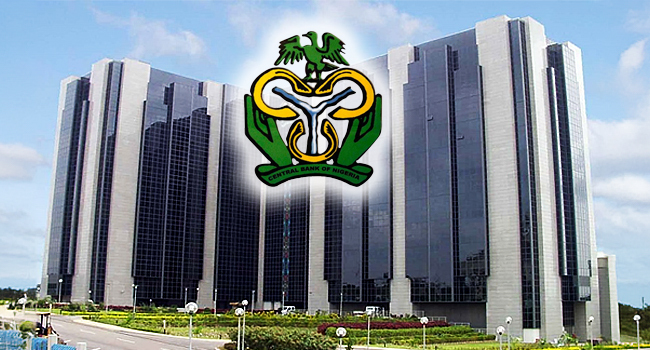
In a move that has sent clear ripples across Nigeria’s financial landscape, the Central Bank of Nigeria’s Monetary Policy Committee (MPC) has taken the bold step of resetting the Monetary Policy Rate (MPR) to 23 percent. This significant decision, reached at the MPC’s 307th meeting on September 21 and 22, 2026, is not just a technical adjustment, but a profound statement of intent, a recalibration designed to reinforce the primacy and effectiveness of monetary policy in steering the nation’s economic direction.
The MPC’s action to reset the Monetary Policy Rate and recalibrate the Standing Facilities Corridor (+50/-300 basis points) around the MPR marks a strategic operational realignment, aimed at enhancing the transmission of monetary policy throughout the economy. While the Committee was clear that this recalibration does not constitute a shift in the overall monetary policy stance, it is an unmistakable signal of the CBN’s resolve to strengthen its policy toolkit and support Nigeria’s transition towards an inflation-targeting framework.
For years, the effectiveness of Nigeria’s monetary policy transmission had been challenged by a divergence between the MPR and prevailing market rates. This disconnect weakened the capacity of the CBN to influence market outcomes, dulled the signaling power of the MPR, and threatened the credibility of monetary policy as a whole. The Committee’s decision to reset the MPR, therefore, is a bold acknowledgement of these challenges and a determined effort to restore the MPR as the anchor of the country’s monetary policy framework.
The timing of this move is as significant as the decision itself. The MPC cited a host of positive macroeconomic indicators that provided the necessary “headroom” for this operational reset. Among these is the steady moderation in inflation, headline inflation slowed to 15.39 percent in August 2026, marking three consecutive months of decline, and food inflation fell to 19.57 percent. On a broader scale, the 12-month moving average for headline inflation has declined for twenty consecutive months, a testament to the sustained easing of underlying price pressures.
Alongside this, Nigeria’s external sector has shown robust improvement. The balance of payments recorded a surplus of US$3.51 billion in Q2 2026, up from US$2.38 billion in the first quarter, and the current account surplus surged by nearly 68 percent. These trends have been bolstered by strengthening external reserves, which stood at US$55.25 billion as of mid-September—enough to finance over 11 months of imports, the highest level in 18 years.
Real GDP growth has also accelerated, reaching 4.43 percent in Q2 2026, up from 3.89 percent in the previous quarter. Both the oil and non-oil sectors have contributed to this growth, with the non-oil sector expanding by over 4 percent, driven by information and communications technology, agriculture, real estate, and trade. Importantly, the banking sector has strengthened further following the successful recapitalisation programme, enhancing the sector’s resilience and capacity to finance long-term projects.
The recalibration of the MPR also comes at a time of improved policy coordination. The Committee welcomed the recent Memorandum of Understanding between the Federal Government and the CBN on fiscal-monetary coordination, providing a structured framework for policy harmonisation and the pursuit of low and stable inflation. Measures such as the Presidential Initiative on National Affordable CNG Transit Programme are expected to further support the disinflation process by reducing transportation costs—a major input in Nigeria’s price structure.
Investor confidence has been buoyed by these positive developments, as reflected in a strengthening naira, robust external reserves, and improving macroeconomic fundamentals. The MPC’s bold action serves to reinforce this confidence, signaling to both domestic and international stakeholders that the CBN is proactively addressing structural impediments to policy effectiveness.
The MPC’s decision takes place against the backdrop of a challenging global environment. While global growth is projected to slow to 3.0 percent in 2026 due to Middle East conflict, persistent trade uncertainty, and elevated energy prices, Nigeria’s economy has demonstrated increasing resilience. Domestic output growth is set to remain robust, supported by improved oil production, expanding agriculture, and positive business sentiment—as indicated by a rising Purchasing Managers’ Index.
Risks to global inflation remain, with supply chain disruptions, commodity price volatility, and geopolitical tensions posing upside risks. However, the MPC remains confident that Nigeria’s policy environment and recent operational adjustments will help buffer the domestic economy against external shocks.
The recalibration of the MPR and policy corridor is not a one-off event but part of a broader commitment to data-dependent policymaking. The MPC has pledged to closely monitor the effectiveness of these adjustments, ensuring that they deliver the intended outcome of reinforcing monetary policy transmission. Future decisions, the Committee assures, will remain grounded in empirical evidence and responsive to evolving macroeconomic realities.
This strategic decision to reset the Monetary Policy Rate is a bold and necessary step—one that acknowledges both the progress made and the challenges that remain. By realigning its operational framework, the CBN is taking decisive action to fortify the credibility of monetary policy, enhance its effectiveness, and position Nigeria’s economy for sustained growth and stability. As the dust settles, what is clear is that the CBN has not merely changed a number; it has charted a new, confident course for Nigeria’s economic future.